Boat Traffic, Floats and Being Visible
A hose diver spends the whole dive attached to something that floats, and almost nothing on the surface is looking for it. How to be seen, and where not to dive at all.

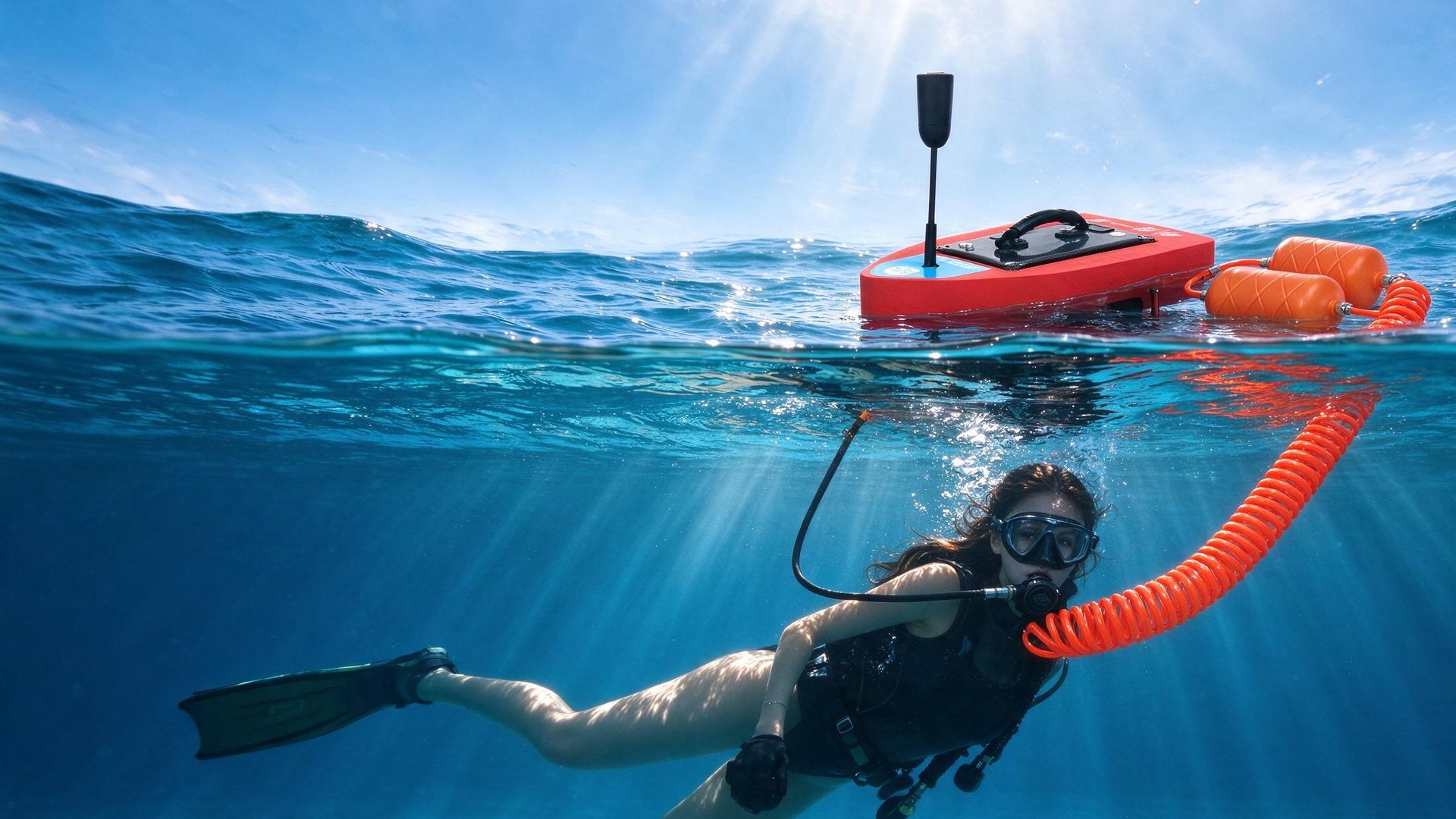
Almost every piece of dive safety equipment assumes you are managing the water. A floating surface unit introduces a hazard that most training does not cover, because the diver is attached to an object on the surface for the entire duration of the dive, and that object is not obviously a diver. A boat approaching a bay sees what looks like a small float, a buoy, or someone’s marker. It does not necessarily see a hose, and the diver is ten metres below the thing it is looking at. The whole category of risk here is about being seen by people who are not looking for you.
Making a float visible
- A tall dive flag on a rigid mast, not a sticker or a painted patch
- Bright colour that contrasts with the water — orange or yellow, not white or blue
- A flag of at least the local legal minimum size, checked, not guessed
- A surface marker on a line you can deploy if the float drifts out of position
- Nothing that shades the flag: check it reads from the direction boats arrive from

Where the float goes, and where you do not
Position the float so it is outside the channel and visible from both approach directions, which usually means not tucked into a corner or behind a moored hull. Then the harder decision: whether to dive the site at all. If a route requires the float to sit in a fairway, or in the blind spot of a bend, or anywhere a boat has to deviate to avoid it, then the route is wrong — not the flag. A hose diver cannot move out of the way quickly; a float cannot either. That combination removes negotiation from the situation, so the only reliable strategy is not to be there.

The three-way handover
Being seen is not the same as being understood. A boat that has spotted your float may still pass close because it assumes you are freediving or simply surface swimming — both of which move out of the way. Make the situation legible: a dive flag, a person visible on the surface, and a hose running from the float into the water together say the one thing a skipper needs to know. That is why the person on the float matters even more near traffic. Divers who dive busy water with nobody visible on the surface are relying on a stranger to make a correct inference.
Current, drift and the plan falling apart
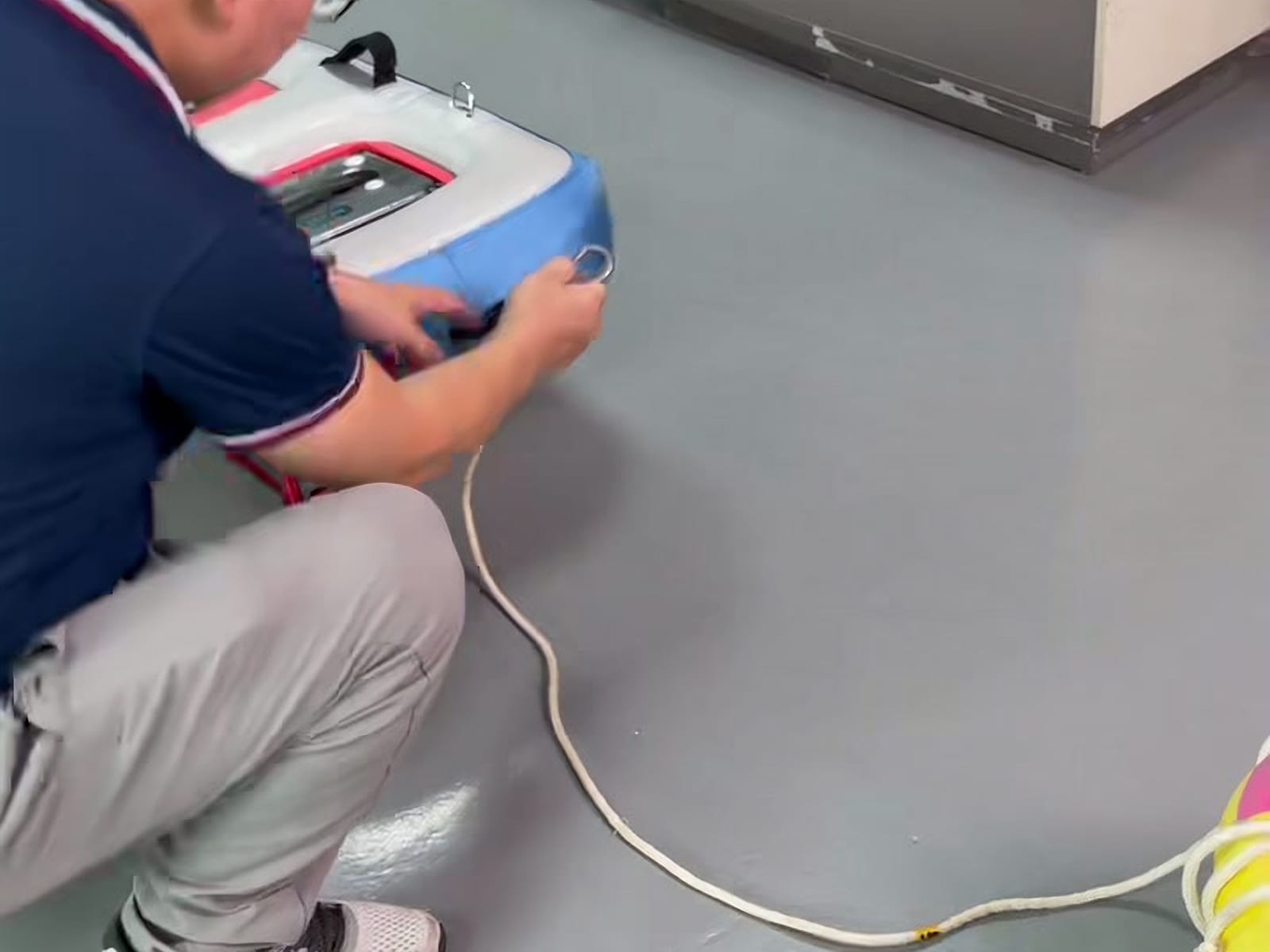
The scenario worth rehearsing is the one where the float drifts into somewhere you did not plan. A hose diver cannot simply swim back against a current, and the float is going where the water sends it. So agree in advance what happens: the surface person holds the float against the drift if they can, follows it if they cannot, and the diver comes up the hose rather than trying to outswim the situation. Planning that conversation takes thirty seconds on the deck and is the difference between a drifting float and a diver out of sight.
The short version
- Assume no boat is looking for you. Visibility is manufactured, not expected.
- A rigid mast and a full-size dive flag. A sticker is not a marker.
- Never let the float sit in a fairway or a bend. If the route needs that, choose another site.
- Being seen is not the same as being understood: flag, person on the surface, hose visible.
- Agree what happens if the float drifts — hold it, follow it, or come up the hose.
- A hose diver cannot move quickly and neither can a float. Do not rely on either.
FAQ
Do I need a diving certification?
How deep can I go?
What happens if the battery runs low?
Keep reading
Scuba Tank vs. Tankless Hookah Diving: The Complete 2026 Comparison
Cost, bottom time, depth, safety and logistics — an honest, side-by-side look at when a surface-supply system beats a tank, and when it doesn’t.
How Deep Can You Go on a Hookah System?
Rated depth is not tested depth, and hose length is not depth at all. The three numbers people confuse, and the no-decompression limits that apply to a hose exactly as they do to a tank.
S6 vs S7 vs S9 vs S77: Which WOLACH Is Right for You?
Four machines, one air path, three numbers that decide it. How to pick by the diving you actually do rather than the depth rating you aspire to.