Fitting and Swapping the Spare-Air Cylinder
The redundancy bottle is optional, but the mounting is not an afterthought. How it attaches, when to swap it, and why we do not recommend diving without one.
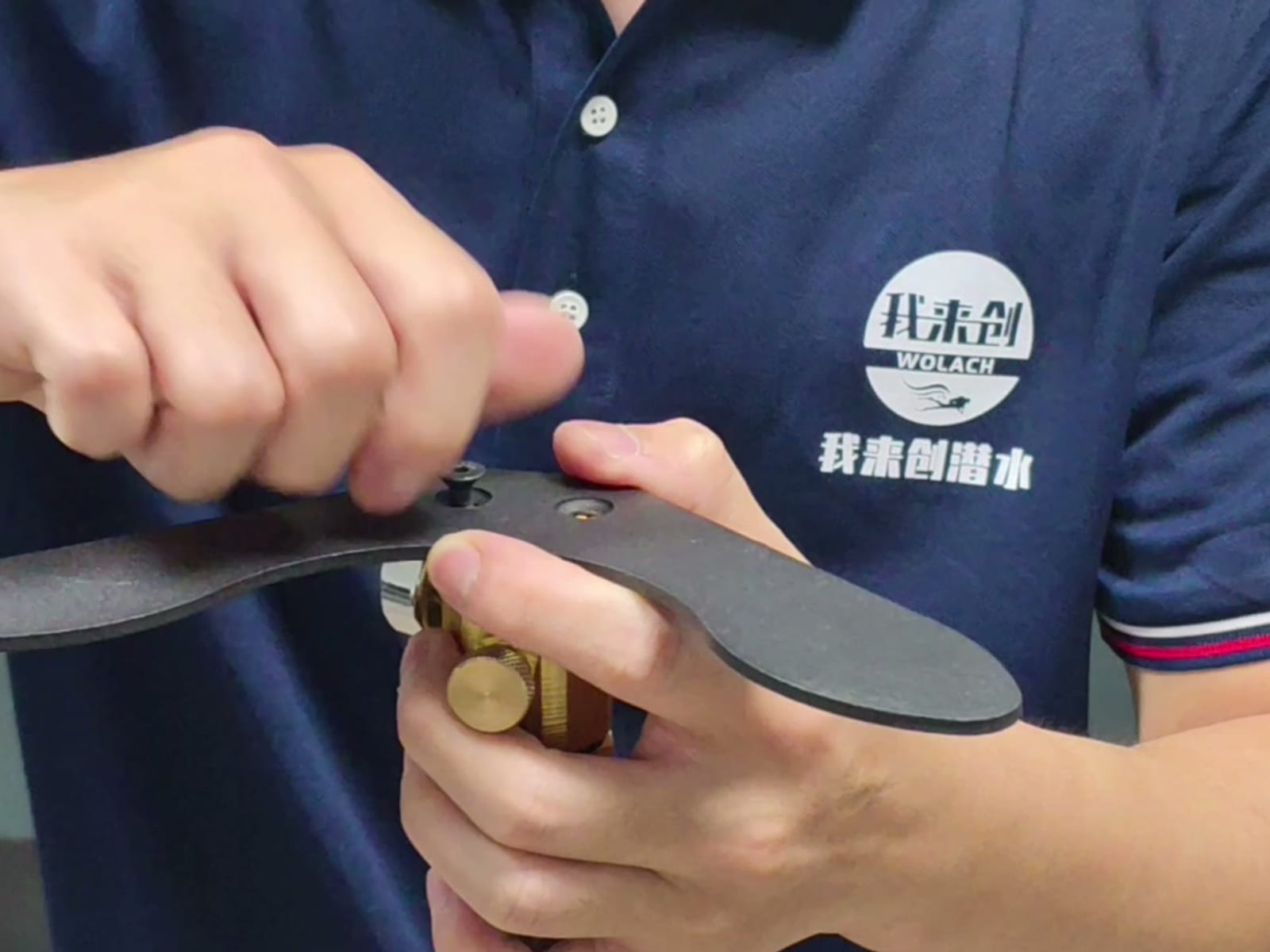
Why the bottle matters on a hose-fed system
On scuba your gas supply is finite but entirely yours. On a surface-supply system it is effectively unlimited but it depends on a machine floating above you. The spare-air cylinder is what covers the gap if that machine stops, the hose is severed, or you need a few minutes to reach the surface calmly. It is the one accessory we recommend to every owner, including pool users.
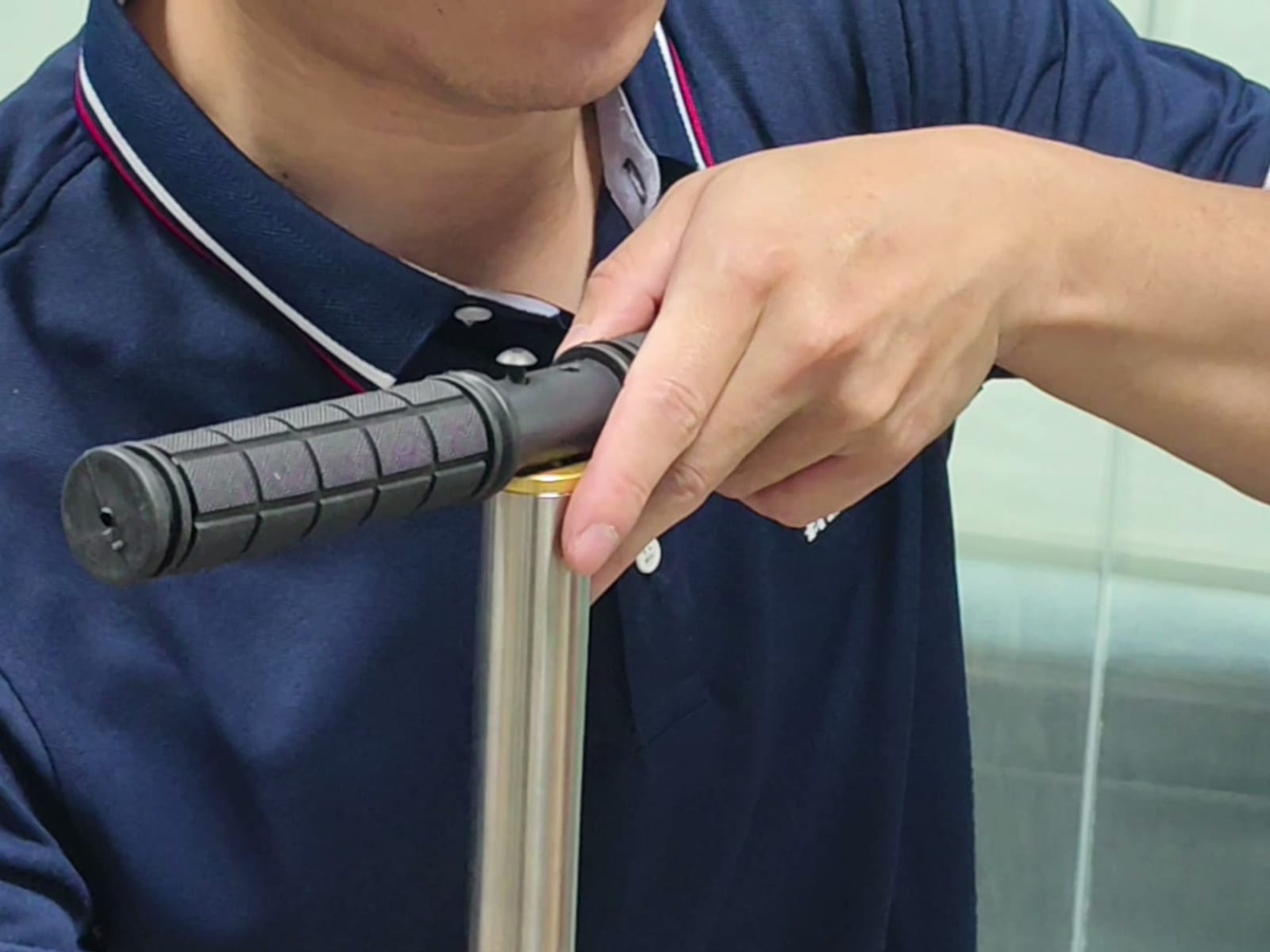
Fitting it in under ten minutes
The bracket clamps to the harness webbing with two bolts, and the regulator screws onto the bottle valve hand-tight. Do not use a wrench on the regulator coupling — the O-ring does the sealing, and a wrench flattens it. Charge the bottle from a standard scuba fill station or from the supplied hand pump if you ordered the mini configuration.
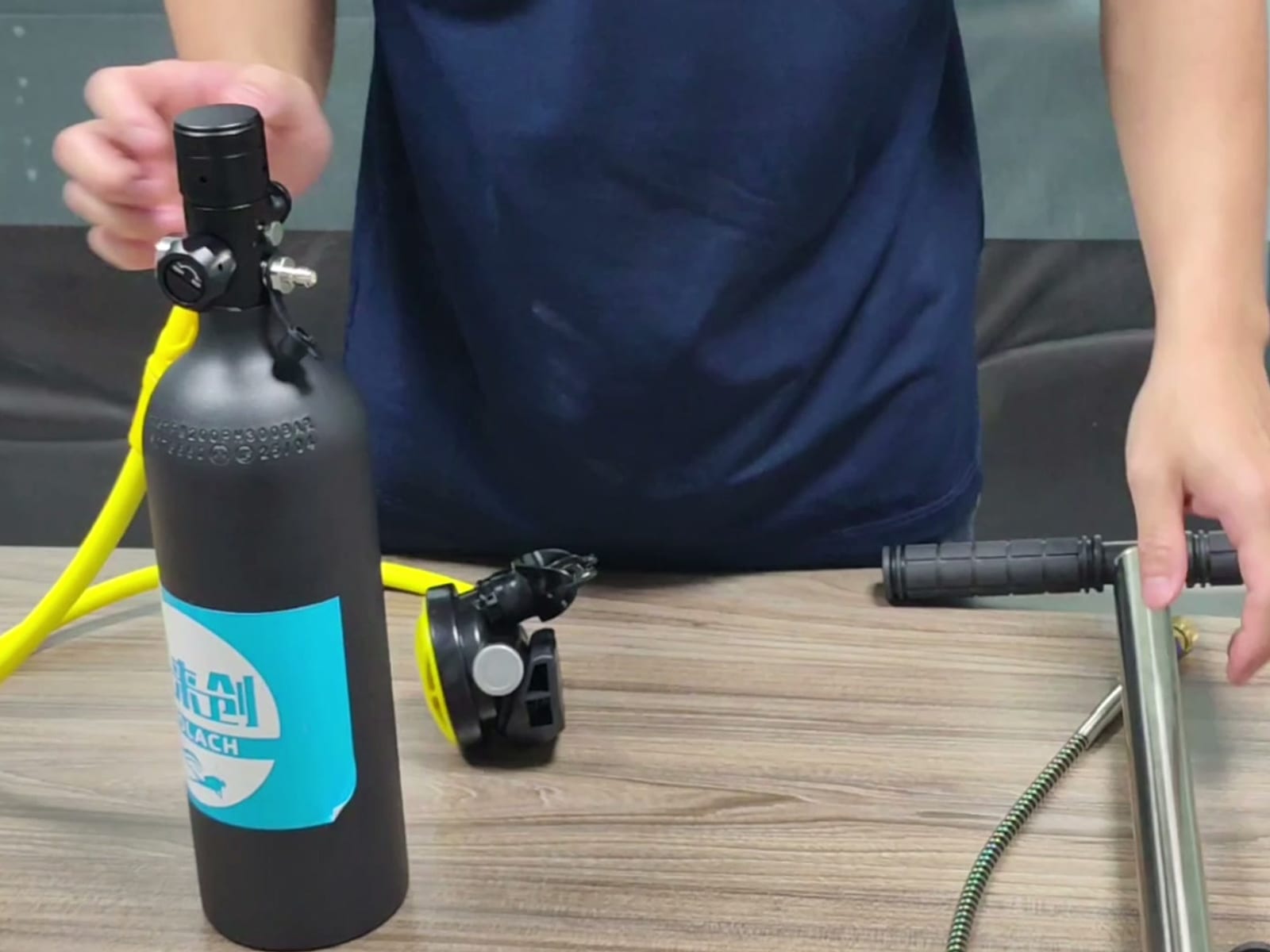
Before every dive
- Bottle pressure at or above the level you planned for
- Regulator coupling hand-tight, and the bottle held firmly when you breathe from it
- Both hoses routed so neither can end up between you and the surface
- Buddy briefed on your hand signal for "switching to the bottle"
Swapping bottles between dives
Close the valve, breathe the regulator down to purge the line, then unscrew. Because the coupling is hand-tight this needs no tools and no thread sealant. If you swap bottles often, inspect the coupling O-ring every few months — it is a cheap part that fails quietly, and the failure shows up as a slow hiss at depth rather than anything dramatic on the surface.
FAQ
Do I need a diving certification?
How deep can I go?
What happens if the battery runs low?
Keep reading
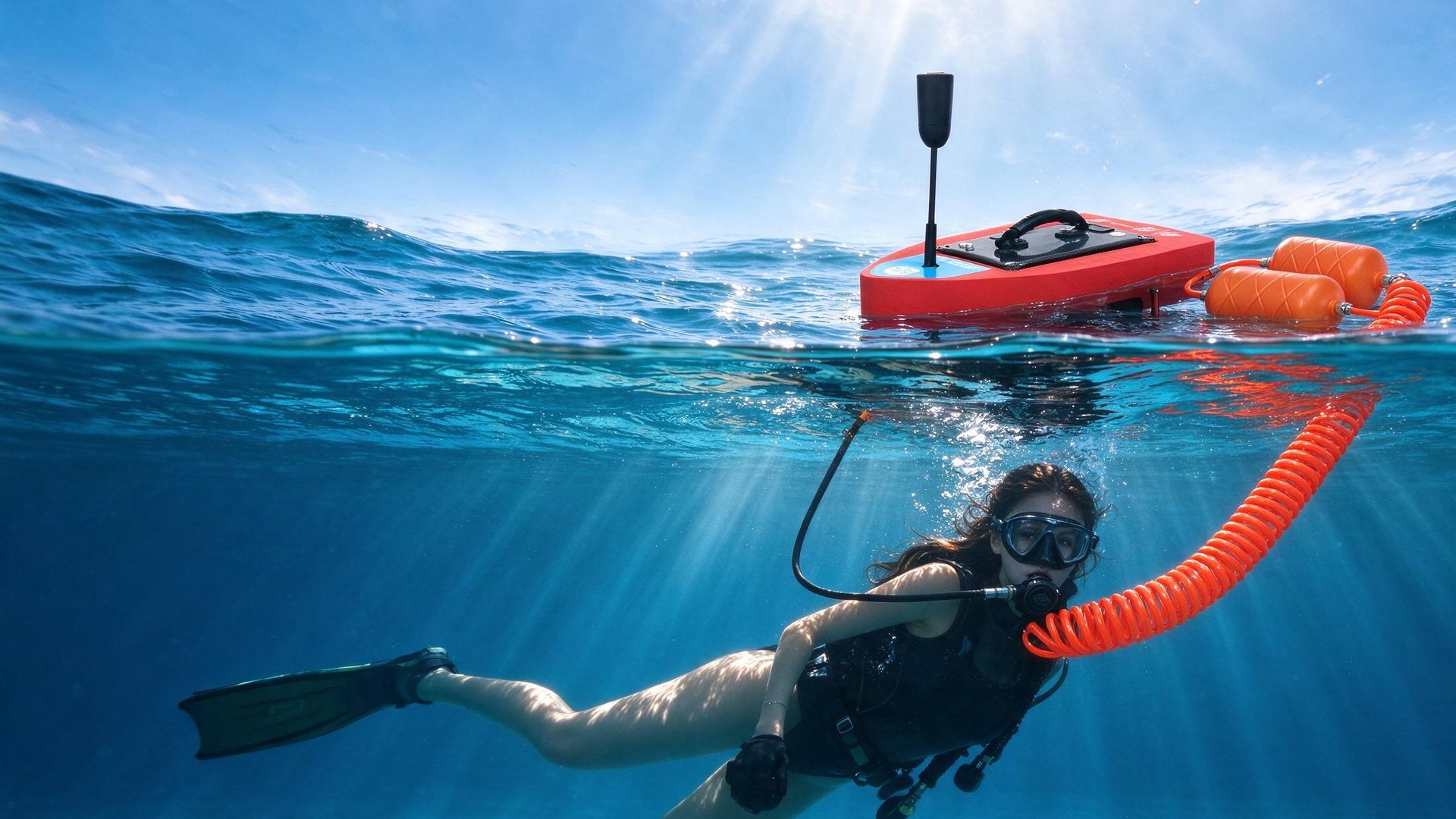
Scuba Tank vs. Tankless Hookah Diving: The Complete 2026 Comparison
Cost, bottom time, depth, safety and logistics — an honest, side-by-side look at when a surface-supply system beats a tank, and when it doesn’t.
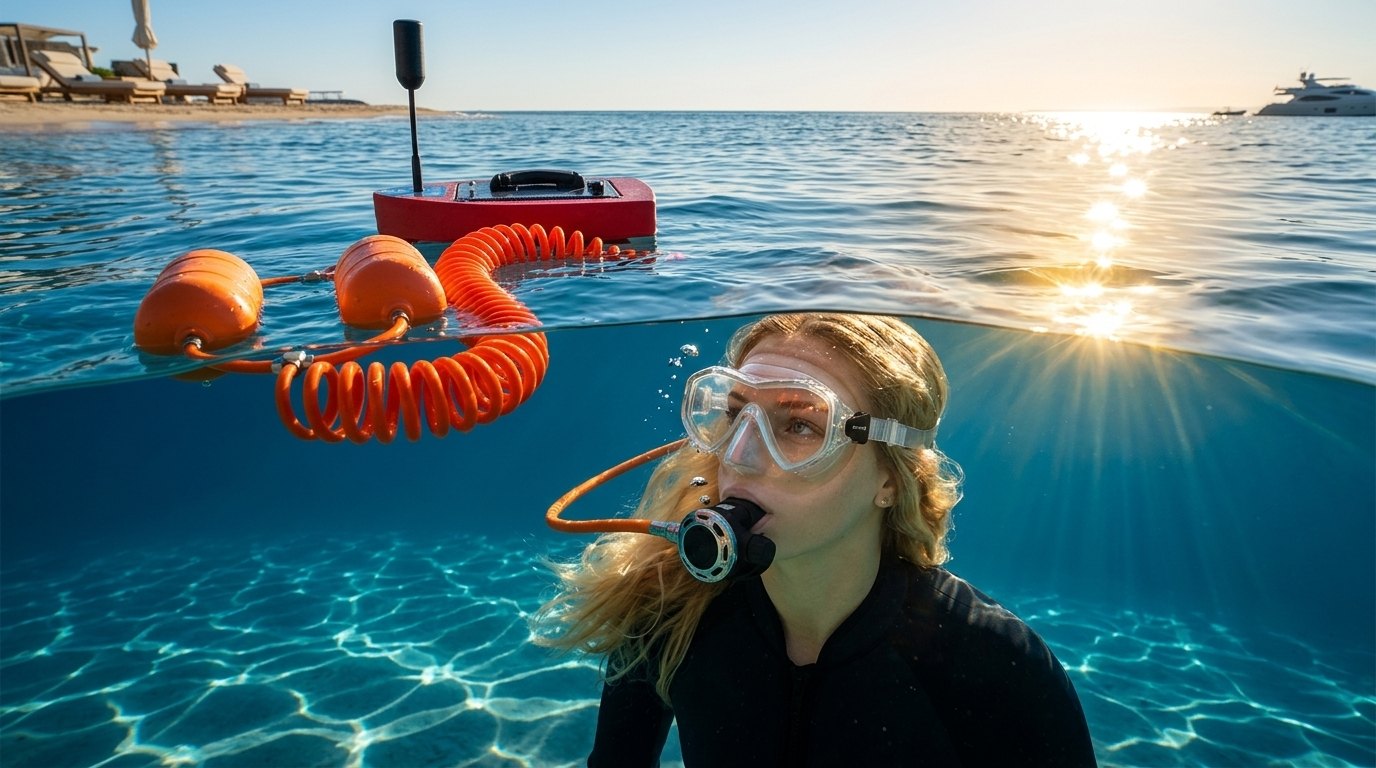
How Deep Can You Go With a Hookah Diving System?
Rated depth vs. tested depth, why hose length is not depth, and the no-decompression limits that still apply.
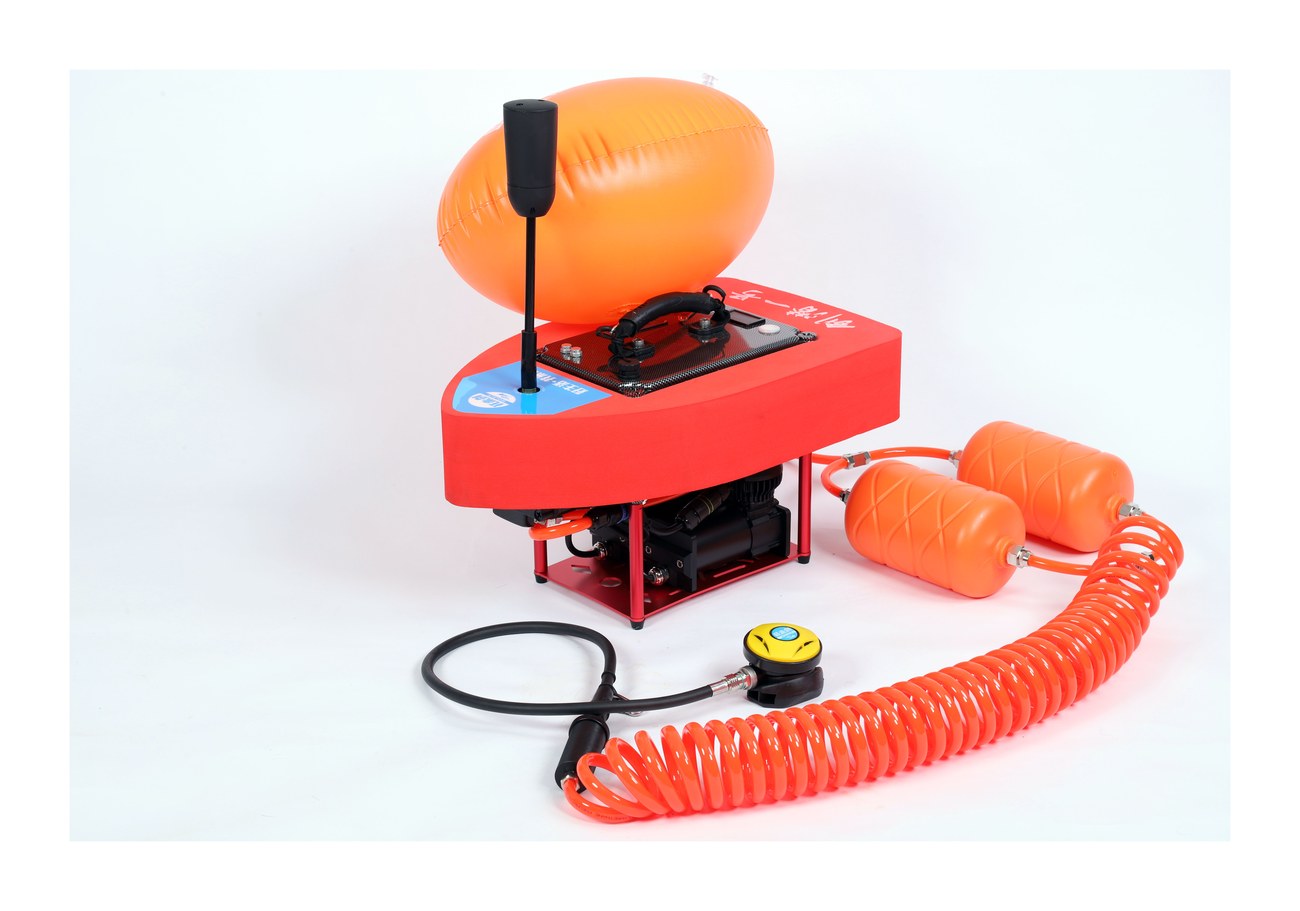
S6 vs S7 vs S9 vs S77: Which WOLACH Is Right for You?
Four models, one air path. Pick by how deep and how long you actually dive — the differences that matter are runtime, delivery and hose length, not features.