Hose Management: The Skill Nobody Teaches
Your air supply is now a rope that crosses open water, takes the shape of whatever it touches, and pulls on you when the surface drifts. Four ways it goes wrong, and one habit that prevents most of them.
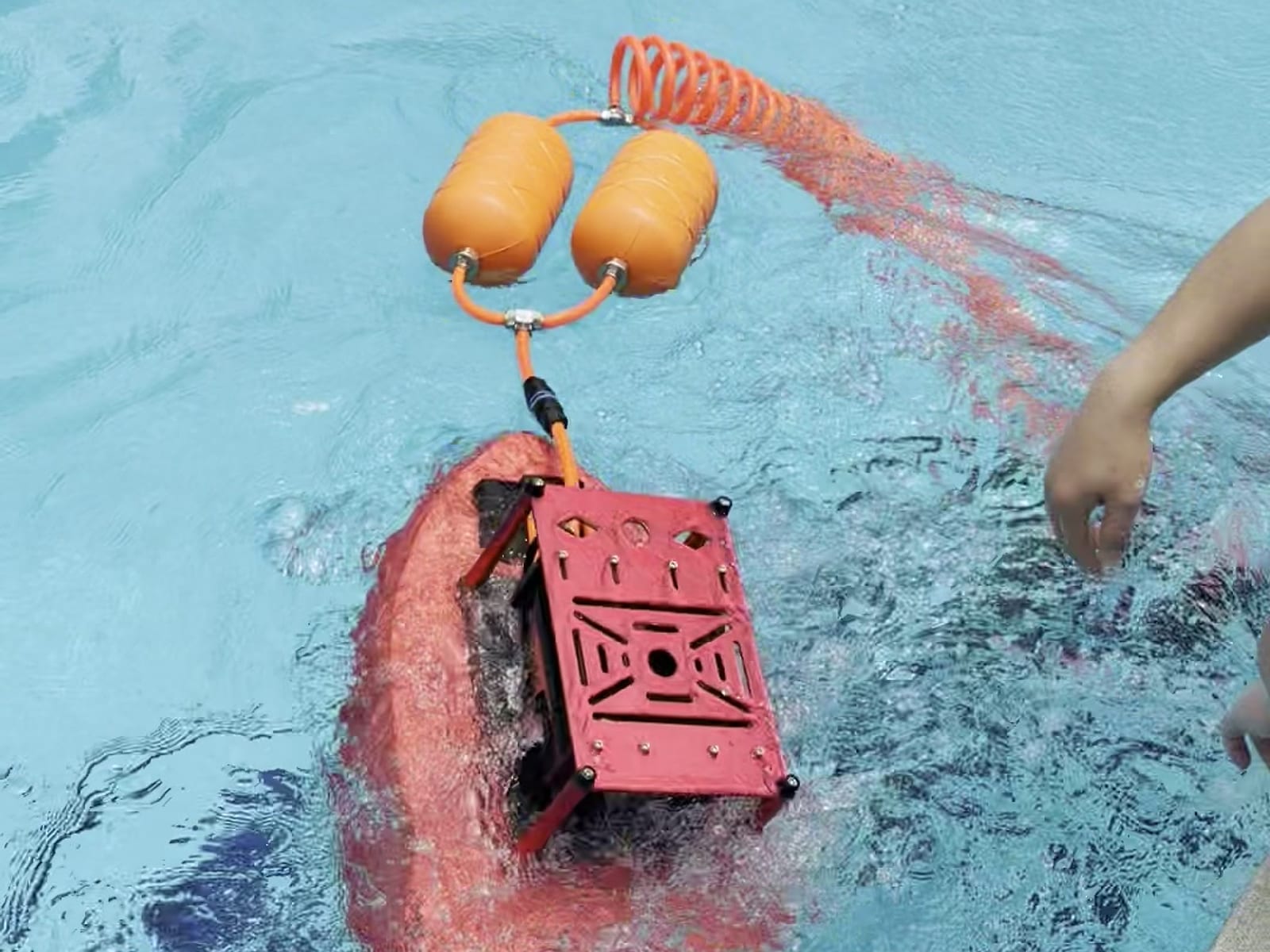
Every piece of scuba equipment travels with you. Your regulator is on your face, your cylinder is on your back, your computer is on your wrist, and none of them can end up somewhere you did not put them. A hose breaks that rule. It is a physical object crossing ten metres of open water between a floating machine and your mouth, and it behaves exactly like a rope: it takes the shape of whatever it passes over, it sags into a catenary rather than running straight, and it transmits force. When the surface unit drifts with the wind, you feel it in your jaw. None of this is taught on a scuba course, because on a tank there is nothing to teach.
Where the hose wants to go
On a still day in a shallow pool, the hose hangs in a gentle curve and is genuinely possible to forget about for twenty minutes at a time. Add three things and it stops being forgettable. Current, which pushes the hose sideways and adds a constant load in one direction. Swell, which lifts and drops the surface unit and therefore your head, once every few seconds, in a rhythm you did not choose. And a tether — a mooring, an anchor line, a boat — which changes the geometry entirely, because now the hose runs from a fixed direction rather than from directly above you. A diver who learns to read that pull rather than resent it can tell where the float is without looking. A diver who ignores it discovers the problem when the hose is already around something.
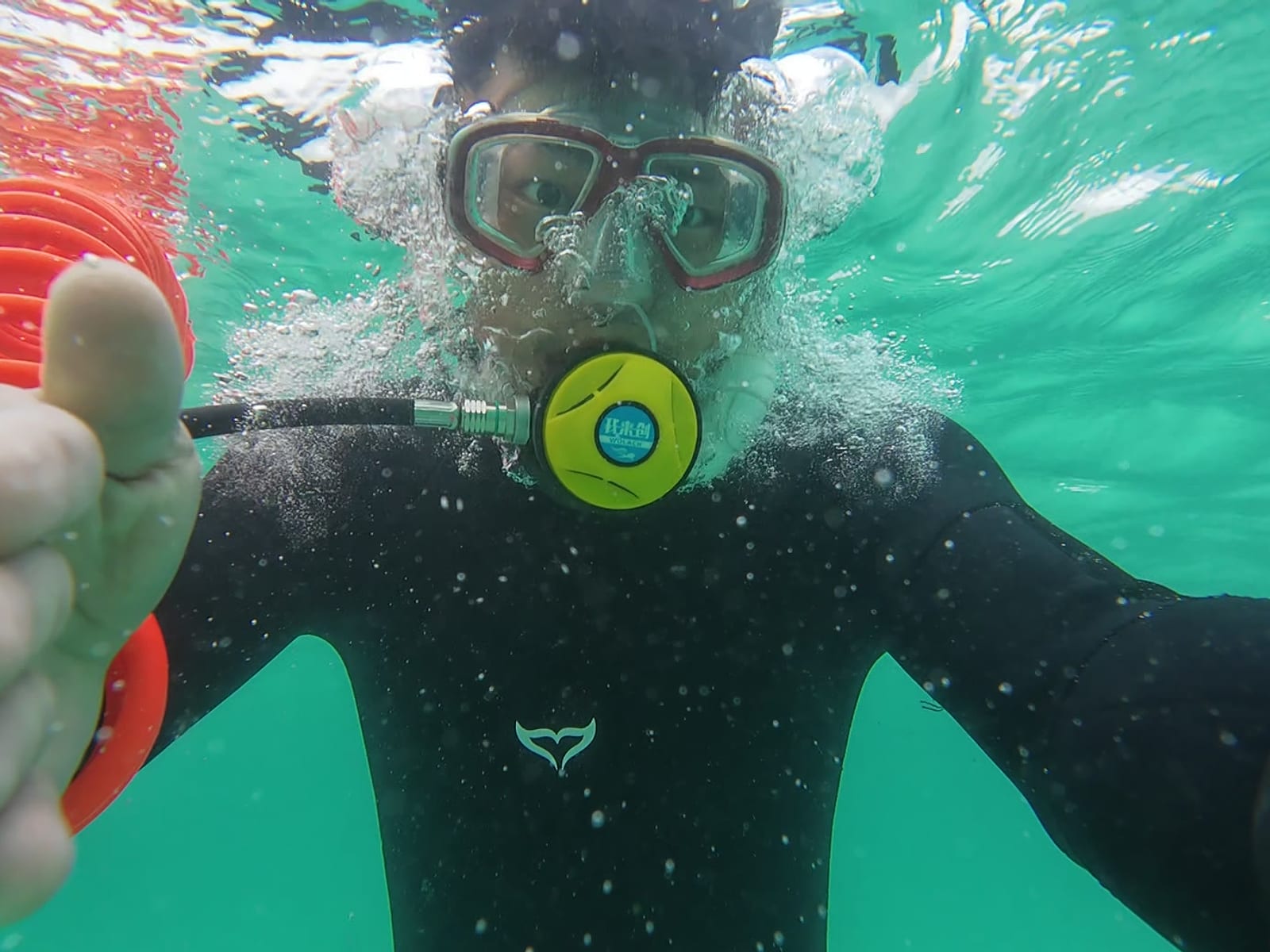
The surface layout decides everything
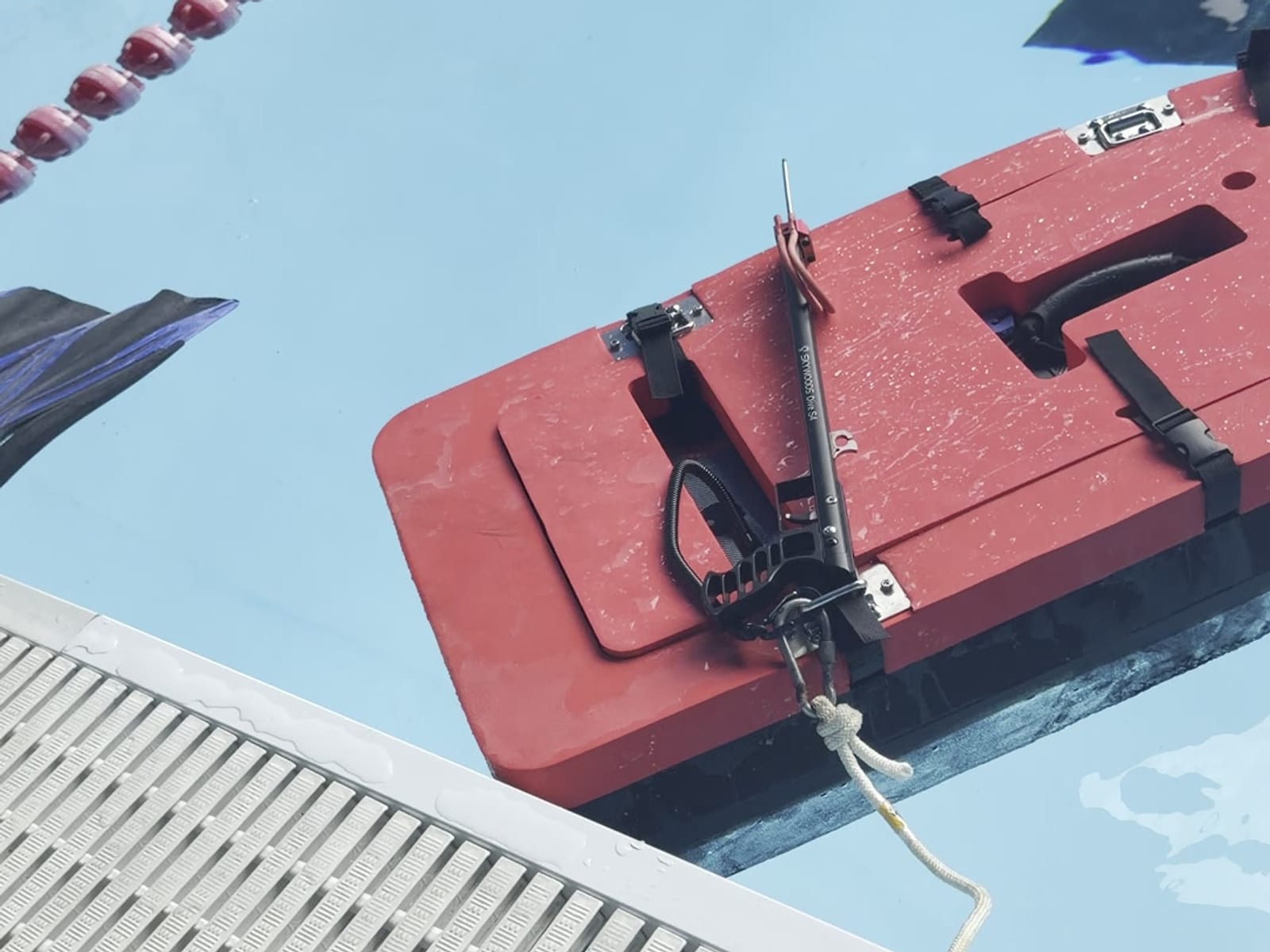
Most hose incidents are decided before anyone gets in. A hose coiled in a figure-eight on the deck looks orderly and will find its own knot within thirty seconds of the diver swimming away from it. A hose laid out straight, in the direction of travel, with the entry point at one end and slack deliberately placed where the turns will be, almost never tangles. Early in a dive, before you have learned the site, keep the hose behind you rather than beside you — it keeps the coil away from your own harness and makes a wrap immediately obvious to your buddy.
The four ways hoses cause trouble
- Wrapped: a turn taken around a mooring, a kelp stalk, a rock finger or your own harness.
- Kinked: a tight bend pressed against your weight belt or a harness strap, felt as a harder breath.
- Pinned: the surface unit drifting until the hose is caught on structure above you and you cannot rise.
- Out of sight: diving away from the float until you no longer know which direction the hose actually runs.
The habit that prevents three of the four
Look at the hose before every turn. That is the whole technique. It takes about a second, it requires no skill, and it catches the first three failures on the list while they are still trivial to undo — because a hose that is in your field of view is a hose you can see going wrong. The fourth failure, losing sight of the float, is prevented by a different habit: keep the float somewhere in your peripheral vision, and if you are working a bottom that does not allow that, come up the hose periodically instead of guessing. Diving a hose without looking at it is like driving without mirrors. It works right up until it does not.
When to stop and sort it out
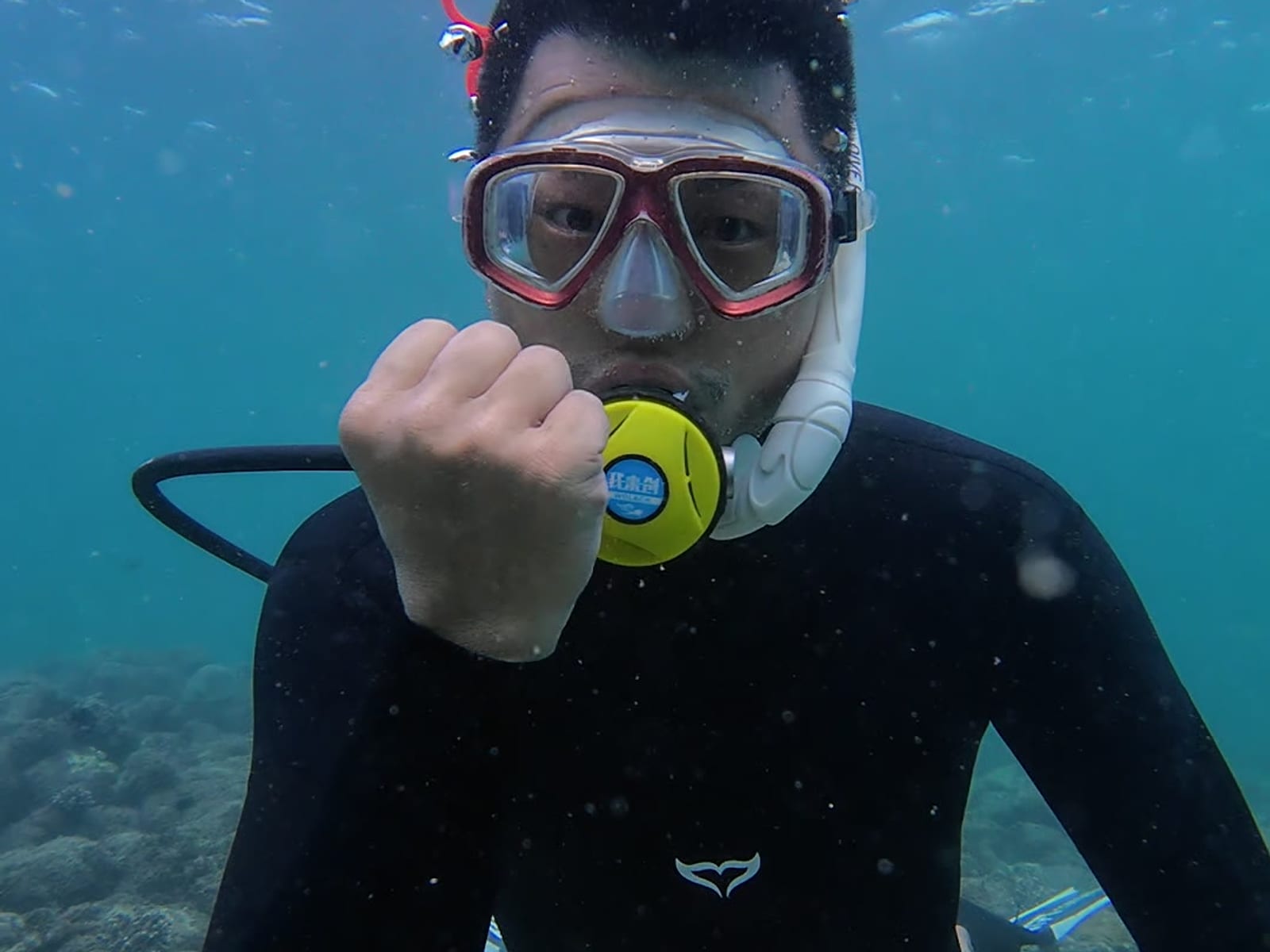
If the hose will not come free with a gentle reverse of your last movement, stop pulling. Hose is not rope — a determined pull against a snag loads the fitting at the surface unit and at your second stage, and the failure mode is the worst one available to you. Signal your buddy, follow the hose back towards the snag with your hands, and work it off the way it went on. It is slower, it is boring, and it is the difference between a two-minute inconvenience and a phone call to your supplier.
The short version
- The hose is a rope, not a cable. It sags, it pulls and it wraps.
- Lay it out straight on the deck, in the direction of travel. Never coiled.
- Check it before every turn. One second, and it catches most failures early.
- Keep the float in view, or come up the hose to re-orient.
- If it will not free with a gentle reverse, stop pulling and work it off by hand.
FAQ
Do I need a diving certification?
How deep can I go?
What happens if the battery runs low?
Keep reading
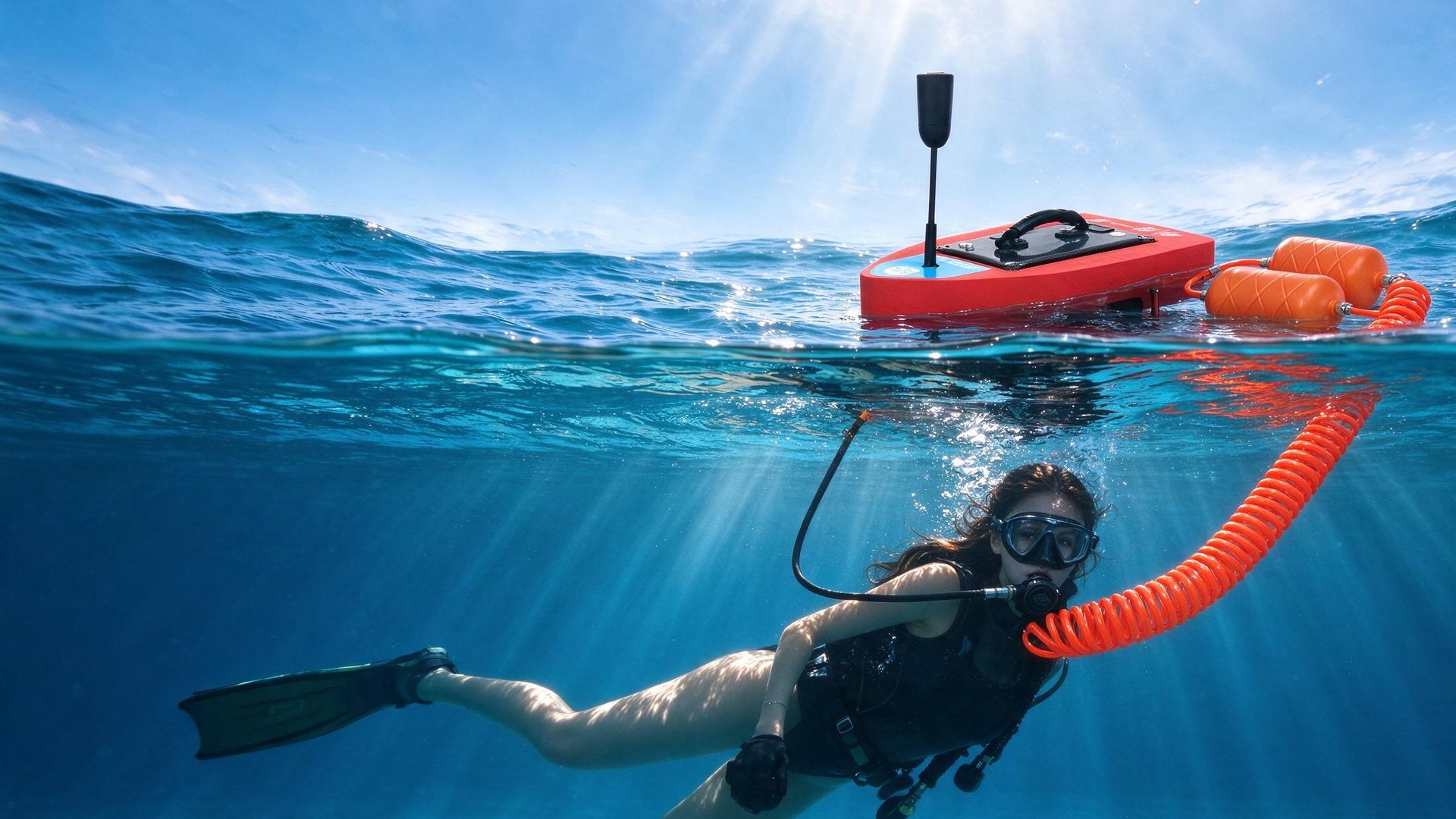
Scuba Tank vs. Tankless Hookah Diving: The Complete 2026 Comparison
Cost, bottom time, depth, safety and logistics — an honest, side-by-side look at when a surface-supply system beats a tank, and when it doesn’t.
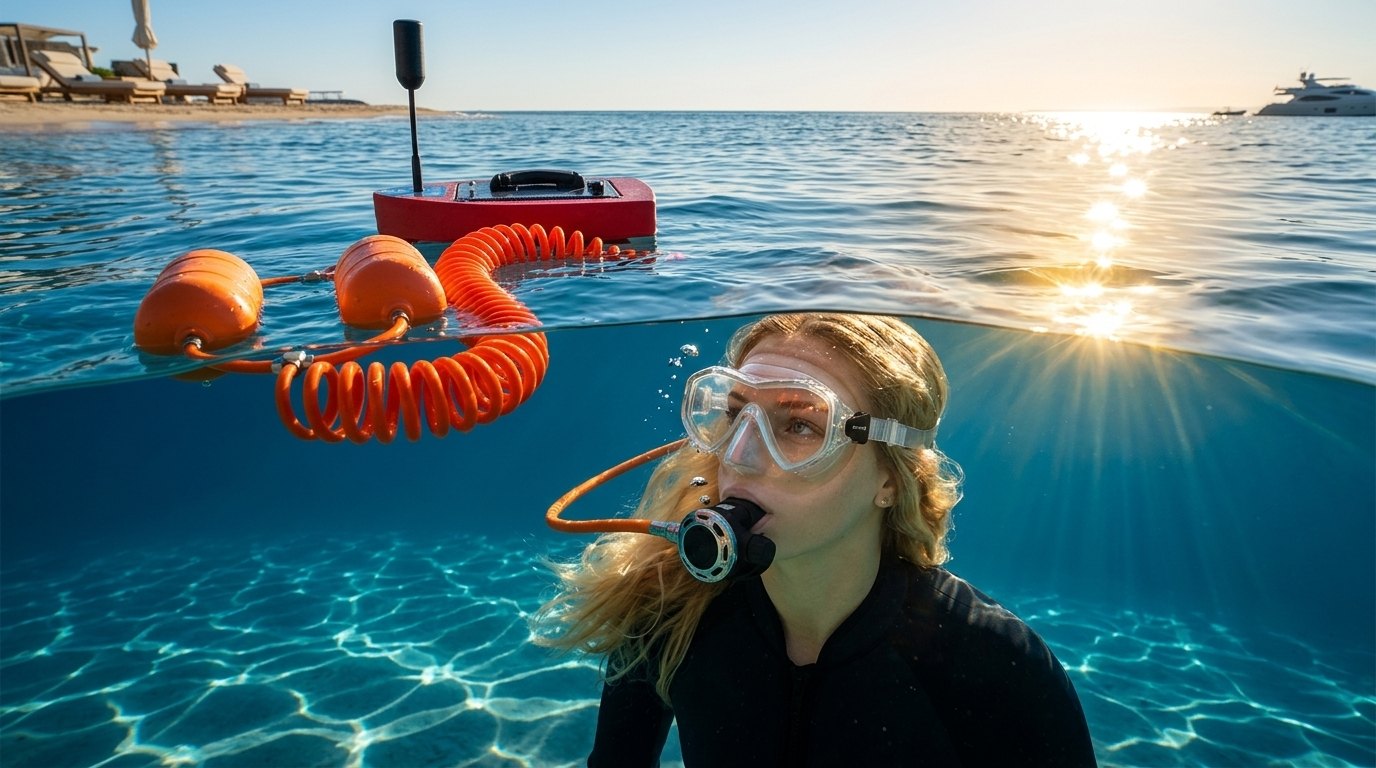
How Deep Can You Go With a Hookah Diving System?
Rated depth vs. tested depth, why hose length is not depth, and the no-decompression limits that still apply.
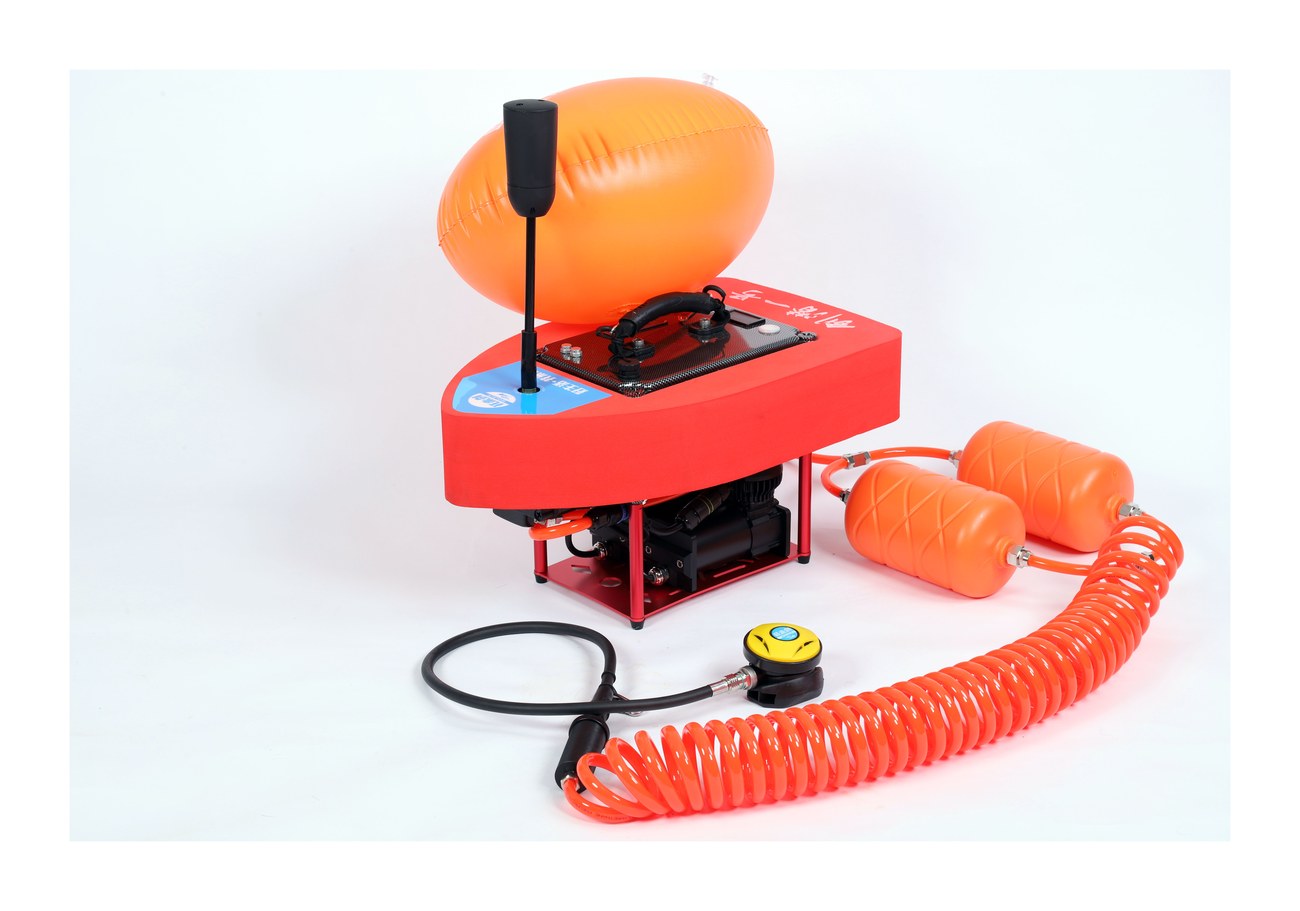
S6 vs S7 vs S9 vs S77: Which WOLACH Is Right for You?
Four models, one air path. Pick by how deep and how long you actually dive — the differences that matter are runtime, delivery and hose length, not features.