Losing Visibility: The Lost-Line Drill
Every hose diver has a hose to hand, and almost nobody treats it as a navigation instrument. What to do in the thirty seconds after the water goes brown.

Visibility does not usually degrade gradually. It goes, and it goes because someone finned into a silt layer or a thermocline swallowed the light, and within two fin strokes the diver is looking at brown. On scuba the standard response is to ascend, and it is usually right because the tank comes with you. On a hose it is worth thinking about differently. You have a physical line running from your mouth to the surface, and if the water is silty it is a better instrument than your eyes — provided you have trained to use it as one rather than treating it as an obstacle.
The thirty-second drill
- Stop moving immediately — finning is what keeps the silt suspended
- Hold the hose, do not pull on it, and establish which direction is towards the surface
- Check your depth reading, because your sense of it is unreliable without vision
- If you are ascending, do it hand over hand along the hose at a controlled rate
- If you are not, get shallow until you can see — most silt layers are thin
- Surface, re-orient, and decide whether the dive continues before descending again
Why ascending is not always first
Instinct says go up. It is often right, and in a silty bottom layer it is almost always the fastest way out, because most silt plumes are a few metres deep and the water above them is clear. But there are two situations where going straight up is the wrong first move. If you are under structure — a pontoon, an overhang, a wreck deck — ascending blind puts your head into something solid. And if your hose is loaded on something below you, ascending tightens it. So the first move is not up, it is still: stop, get a hand on the hose, understand the geometry for three seconds, and then decide.
The skills that make it routine
Two skills, both of which are trainable in a pool in twenty minutes. First, navigating by hose: eyes closed, hand on the hose, moving along it at a steady pace to a target. Second, ascending without vision: a controlled ascent with a depth reading as the only reference, hand on the hose, exhaling continuously. Divers who have practised both treat a silt-out as an inconvenience. Divers who have not tend to surface too fast, which is the one outcome that turns a visibility problem into an injury.
Prevention, which is mostly about fins
Most self-inflicted visibility loss comes from finning. A diver who keeps their fins clear of the bottom and moves in short, controlled strokes rarely stirs anything up; a diver making long powerful kicks near silt produces a cloud that follows them for the rest of the dive. Keep a metre of clearance under your fins, use slow short strokes when you are near the bottom, and do not use the bottom as a push-off. And when diving with a buddy, follow rather than swim alongside — two divers in tight formation in silty water are a visibility problem for each other.
The short version
- Stop moving first. Finning keeps the silt suspended and follows you.
- Get a hand on the hose, check your depth, then decide — up is not automatically right.
- Under structure or with a loaded hose, ascending blind is the wrong first move.
- Most silt layers are thin. Two metres of ascent often restores full visibility.
- Train two things in a pool: navigating by hose with eyes closed, and ascending without vision.
- Most of the time the cloud is your own fins. Keep a metre of clearance and use short strokes.
FAQ
Do I need a diving certification?
How deep can I go?
What happens if the battery runs low?
Keep reading

Scuba Tank vs. Tankless Hookah Diving: The Complete 2026 Comparison
Cost, bottom time, depth, safety and logistics — an honest, side-by-side look at when a surface-supply system beats a tank, and when it doesn’t.

How Deep Can You Go on a Hookah System?
Rated depth is not tested depth, and hose length is not depth at all. The three numbers people confuse, and the no-decompression limits that apply to a hose exactly as they do to a tank.
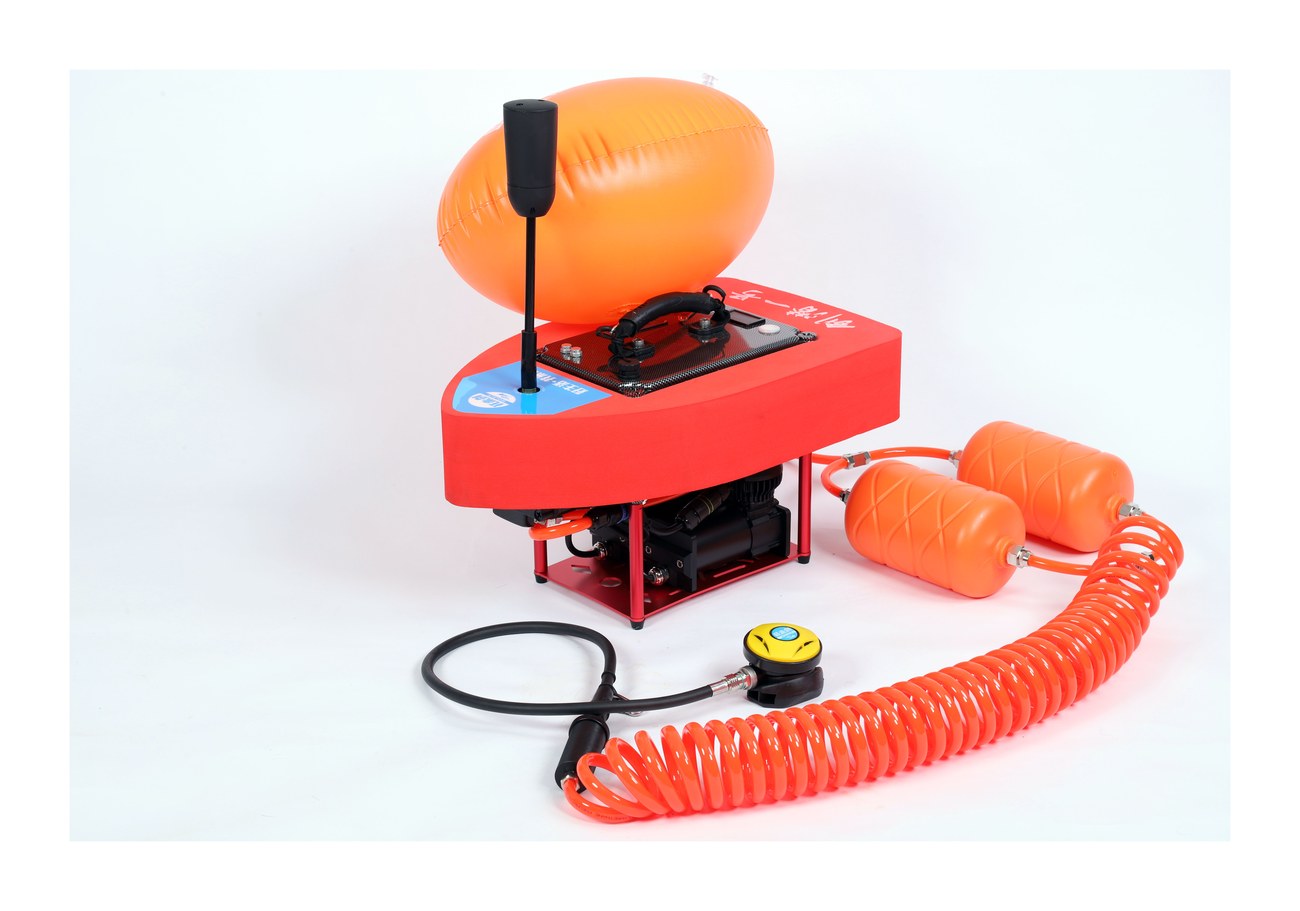
S6 vs S7 vs S9 vs S77: Which WOLACH Is Right for You?
Four machines, one air path, three numbers that decide it. How to pick by the diving you actually do rather than the depth rating you aspire to.