Nanyou Pool: A Full Day of Getting Buoyancy Right
No depth, no current, no excuse. What a day of deliberately boring pool work fixed, and the number that surprised everyone.
- Max depth · 3 m
- Bottom time · 96 min
- Water temp · 28 °C
- Visibility · 18 m
- System · WOLACH S7
- Dived · Aug 30, 2026
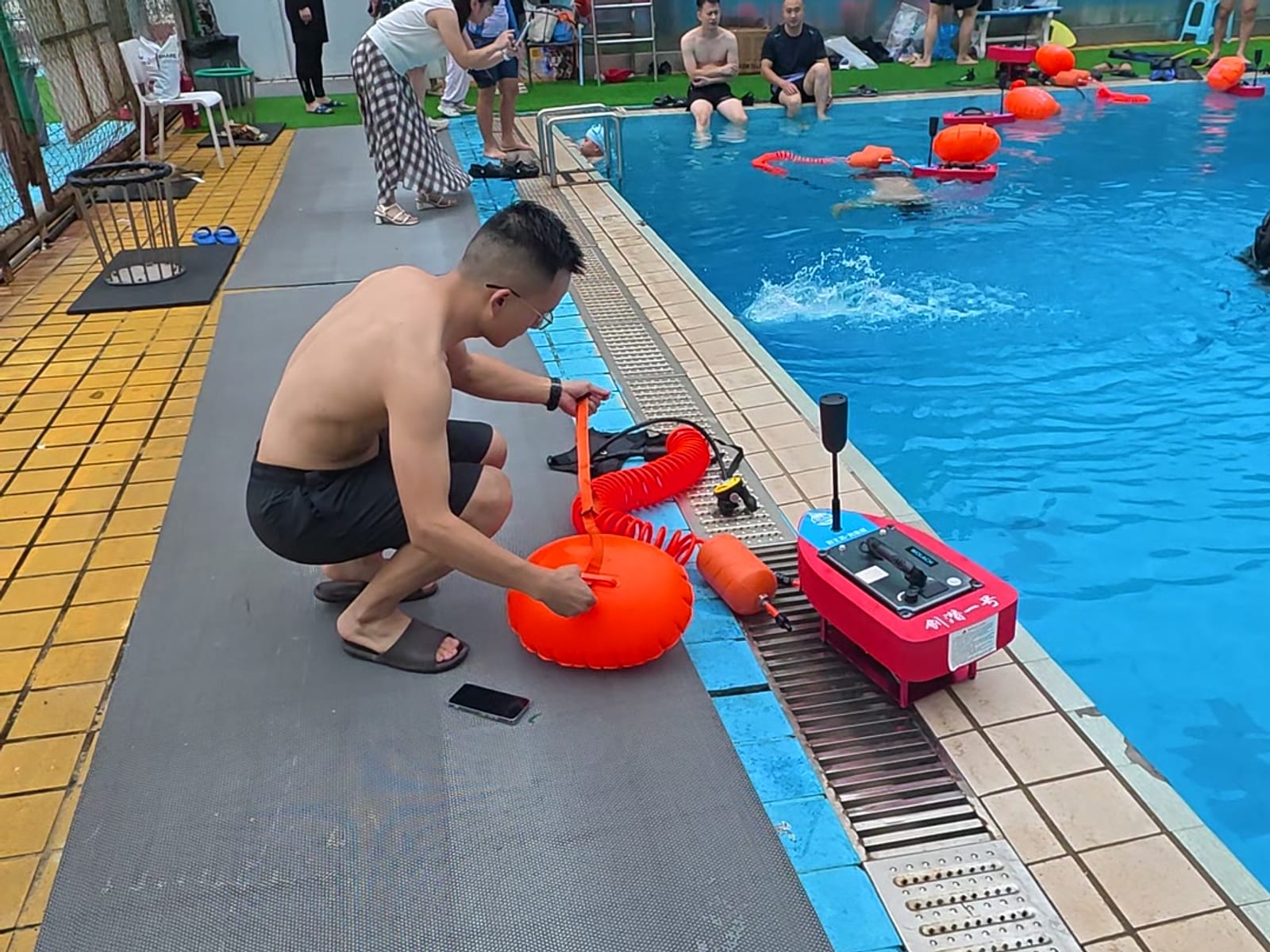
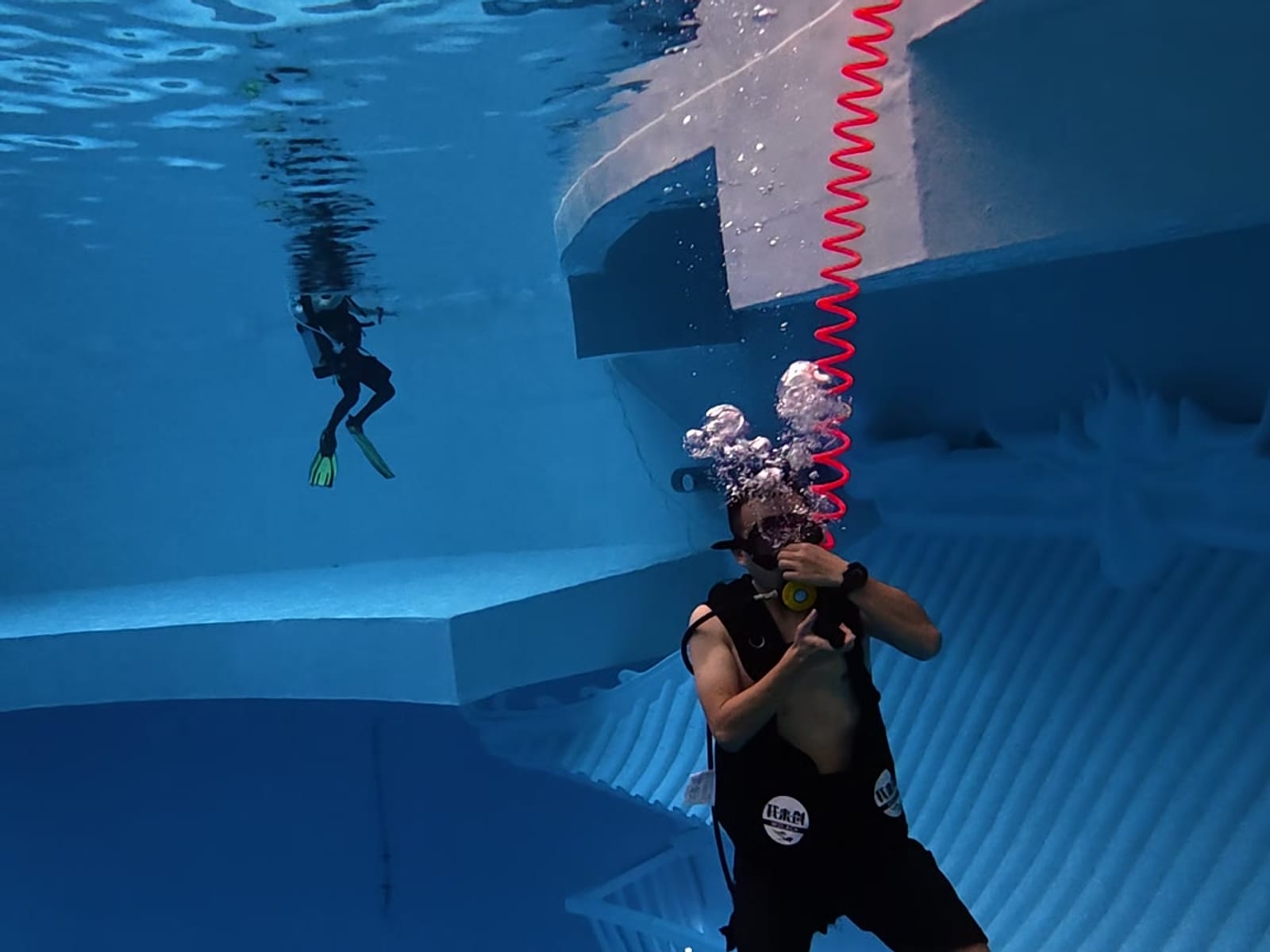
This was not a dive in any interesting sense. It was ninety-six minutes of hovering at one and a half metres in a lane pool, deliberately, for four people, because every one of us had been carrying the same problem for months without noticing: we were all overweighted and had all learned to compensate with constant small adjustments. The tell was in a video one of us took a fortnight earlier. Every diver in it was finning gently the whole time, without exception, on a dive where nothing required it.
The number nobody expects
Without a cylinder, most divers need two to four kilograms less than they carry on scuba in the same wetsuit. We started by taking off a kilogram at a time and floating face-down with no input, and the results were consistent: the heaviest-laden diver in the group removed three kilograms before hovering cleanly, and the lightest removed one and a half. The surprise was not the amount, it was how much of what we had been calling buoyancy skill had actually been weight management — a problem we had been solving with fins rather than with a belt.
Three drills, in order
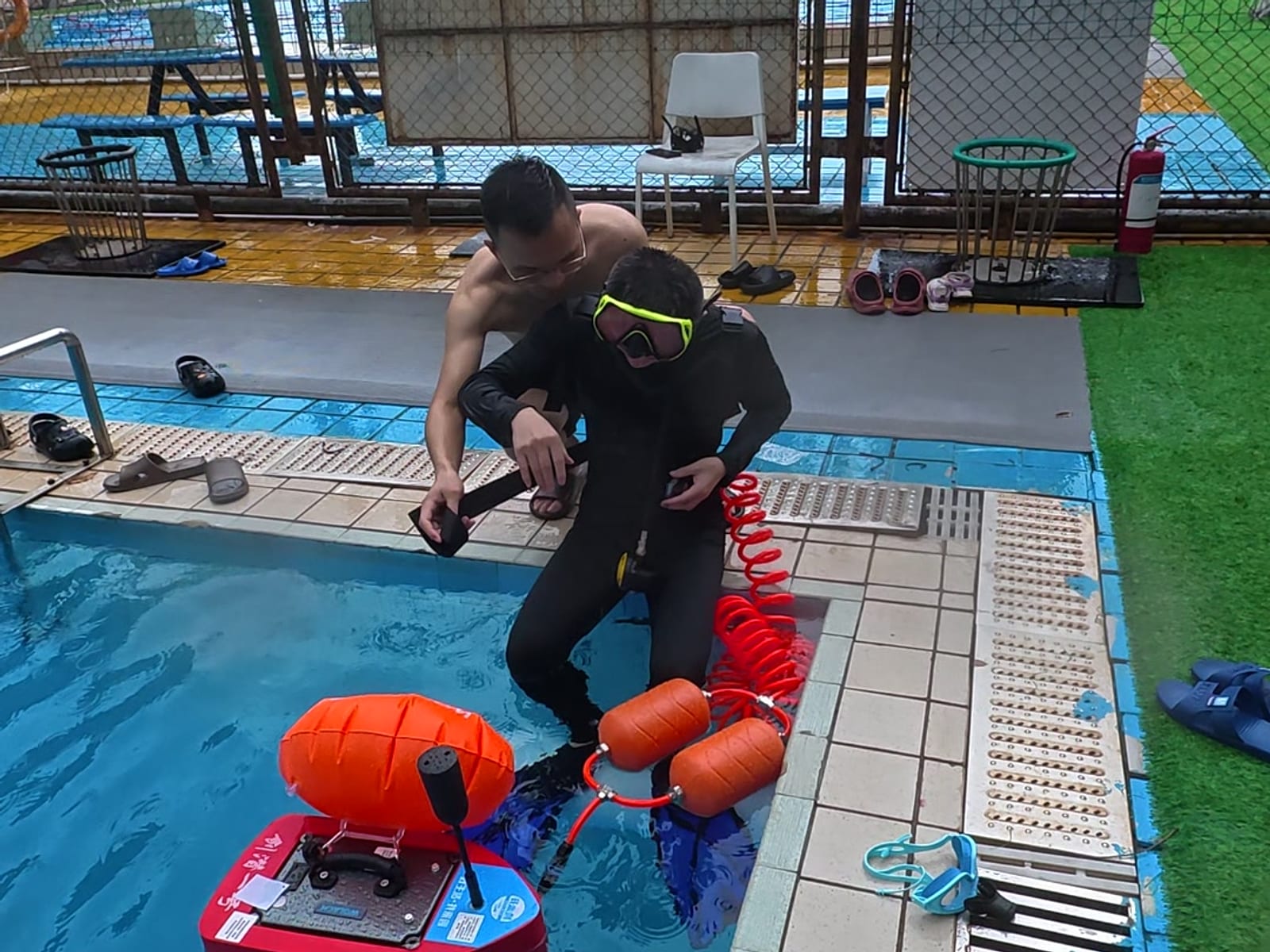
First, hover at one and a half metres with no input for sixty seconds, with a wall for reference and then without. Second, a slow ascent from the bottom to the surface without touching the wall or finning — which sounds impossible and is merely difficult once the weight is right. Third, a depth hold: descend to three metres, stop, hold for thirty seconds, then descend to the bottom in three stages. The third one produced the most improvement, because it forces a diver to add air in small increments rather than in the lumps people use when they are compensating for weight.
What it changed in the water
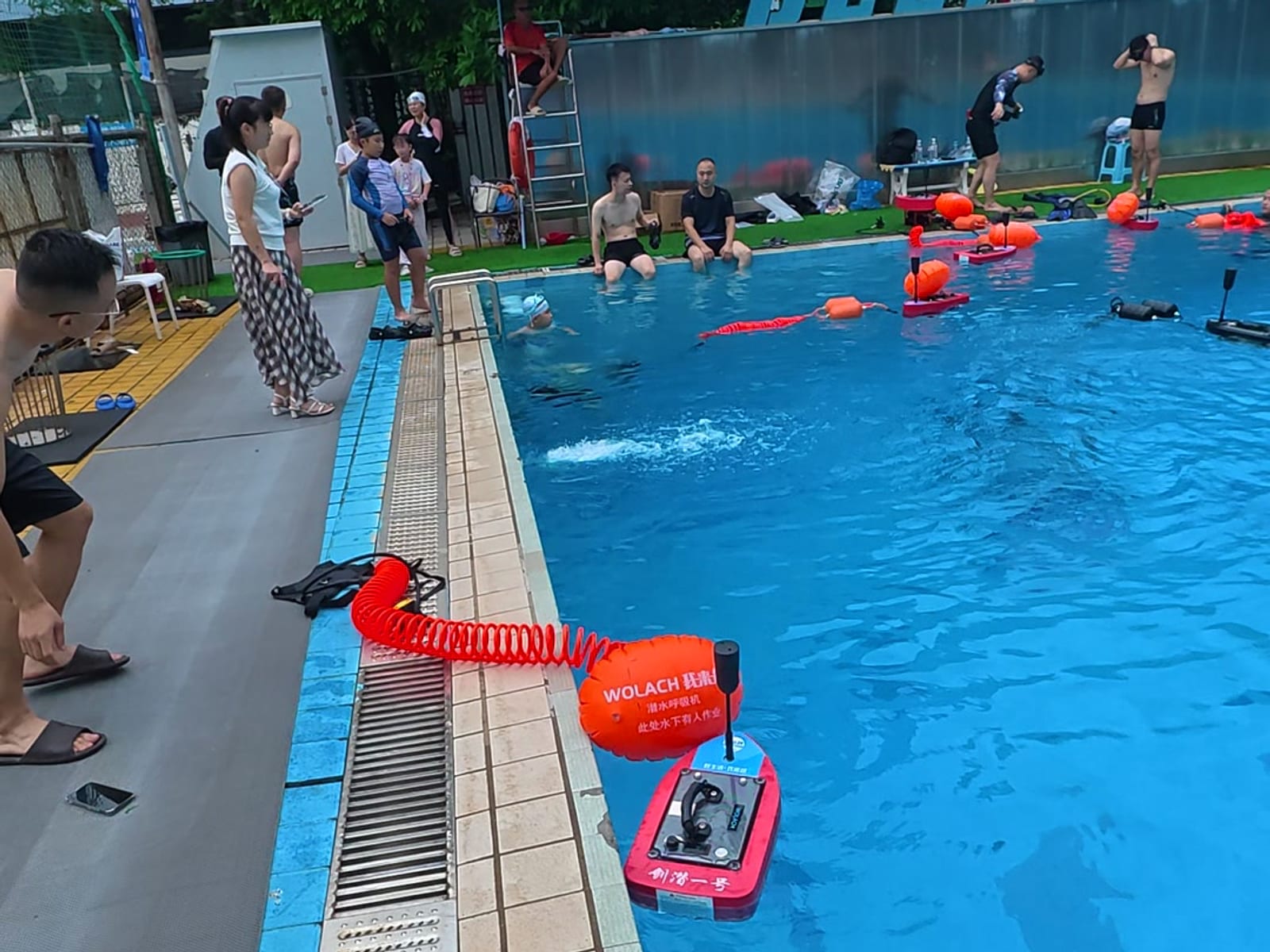
Two weeks later, the same four divers on the same site as the video, and the difference was visible in the footage: nobody finned unless they wanted to move. Air consumption dropped measurably, the S7 that had been delivering sixty-one litres a minute was delivering in the low fifties, and the dives ran longer for the same battery. That is the actual return on a day of boring pool work, and it is entirely invisible from the surface.
What we would do differently
- Do this once a year, in a pool, deliberately, with no depth to distract anyone
- Take one kilogram off at a time and float before the next one
- Do the depth-hold drill. It teaches small air additions better than anything else
- Record air consumption before and after. It is the only way to see that it worked
Keep reading
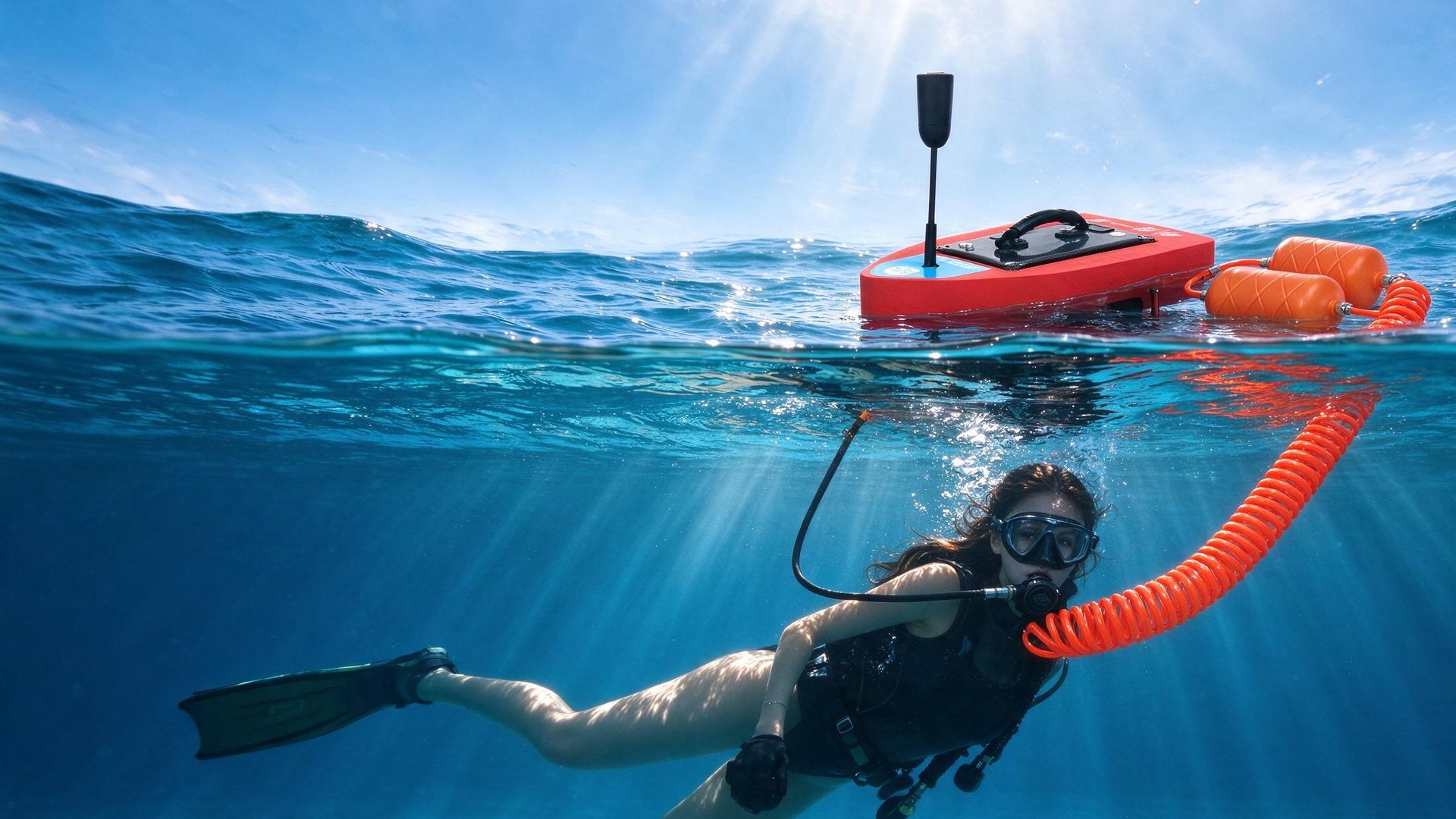
Scuba Tank vs. Tankless Hookah Diving: The Complete 2026 Comparison
Cost, bottom time, depth, safety and logistics — an honest, side-by-side look at when a surface-supply system beats a tank, and when it doesn’t.
How Deep Can You Go on a Hookah System?
Rated depth is not tested depth, and hose length is not depth at all. The three numbers people confuse, and the no-decompression limits that apply to a hose exactly as they do to a tank.
S6 vs S7 vs S9 vs S77: Which WOLACH Is Right for You?
Four machines, one air path, three numbers that decide it. How to pick by the diving you actually do rather than the depth rating you aspire to.