Pool and Resort Maintenance
Zero depth, unlimited time, and an audience. Why pools are where a surface-supply system changes the job completely rather than marginally.
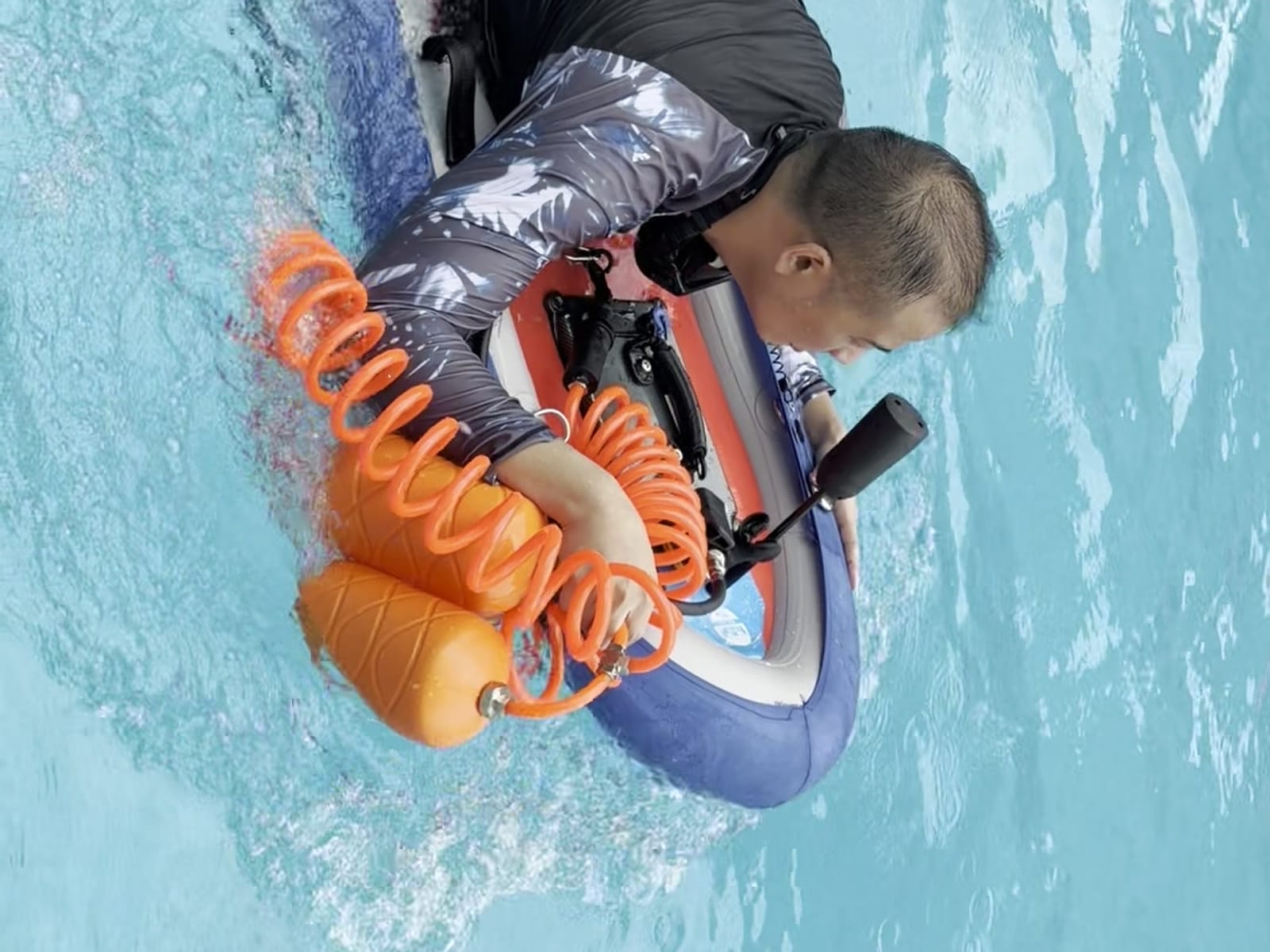
A swimming pool is the one environment where a surface-supply system is not a better tool but a different category of tool. Depth is measured in centimetres. There is no current, no swell, no boat traffic and no decompression. What a pool does have is a long list of tasks that sit at the bottom of it and cannot be done from the surface: main drain covers, sump baskets, underwater lights, tile at the waterline, lane rope anchors, ladder sockets, and the grout between all of them. On scuba each of those is an entry. On a hose they are all one afternoon.
The recurring jobs in a commercial pool
- Main drain covers: inspection, screw check, and the one that is always loose
- Sump and skimmer baskets that cannot be reached from the surface
- Underwater light housings: seals, gaskets and the lens that has gone cloudy
- Waterline tile and grout, which is the job nobody wants on scuba
- Lane rope anchors, ladder sockets and grab rails
- Fouling on steps, ladders and the pool floor in an outdoor pool in season
Padding and negative buoyancy
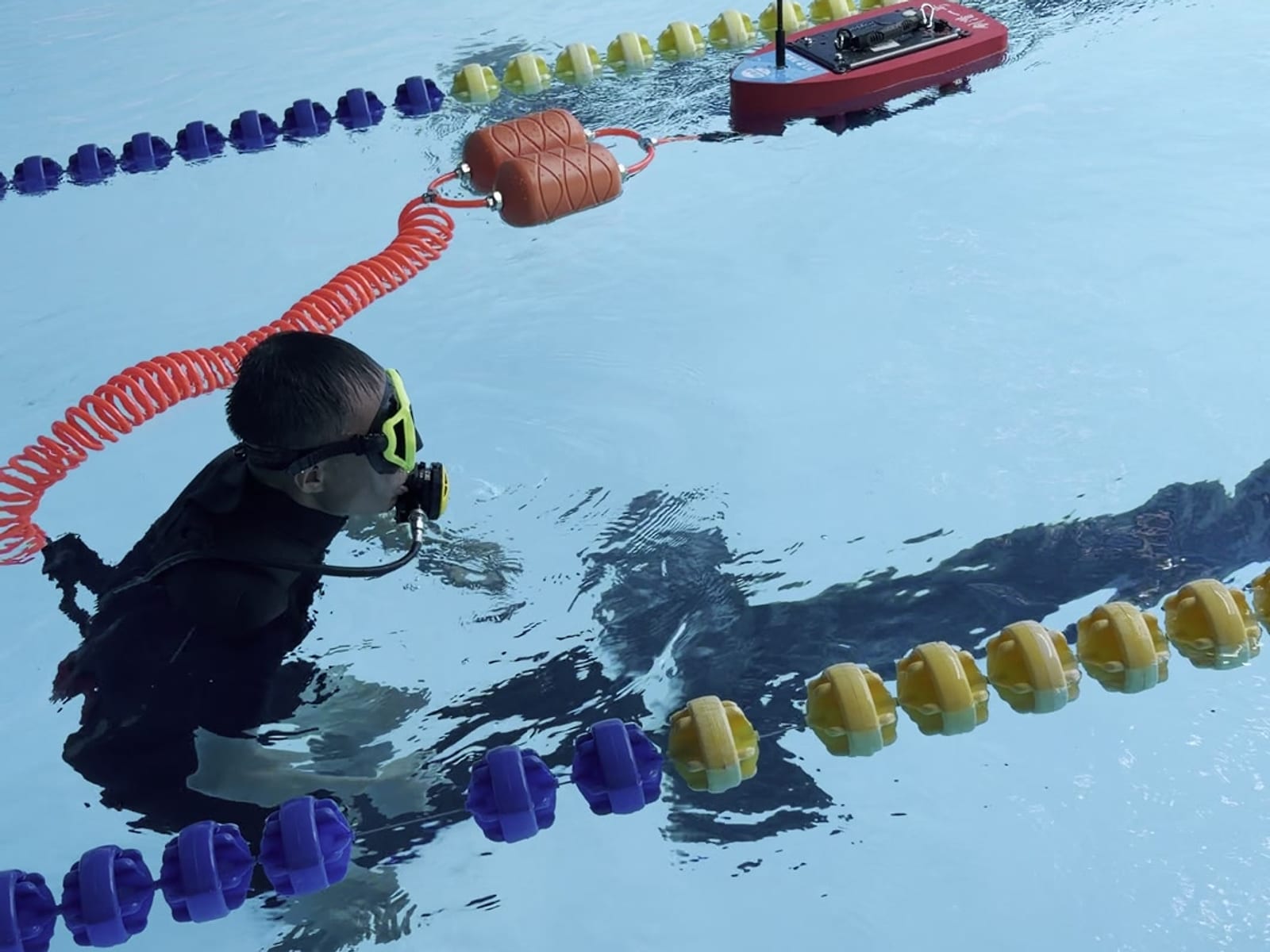
Pool work is done sitting or kneeling rather than swimming, and that changes how you set up. A diver who is neutral on the surface will float off the bottom while they are trying to work on a drain cover, so pool work is often best done slightly negative with a small amount of weight, working seated. Keep the hose short and let it lie on the deck rather than paying out across the water, and keep a weight belt you can drop. It is only two metres, which is exactly the depth at which people stop being careful.
The safety line that actually matters
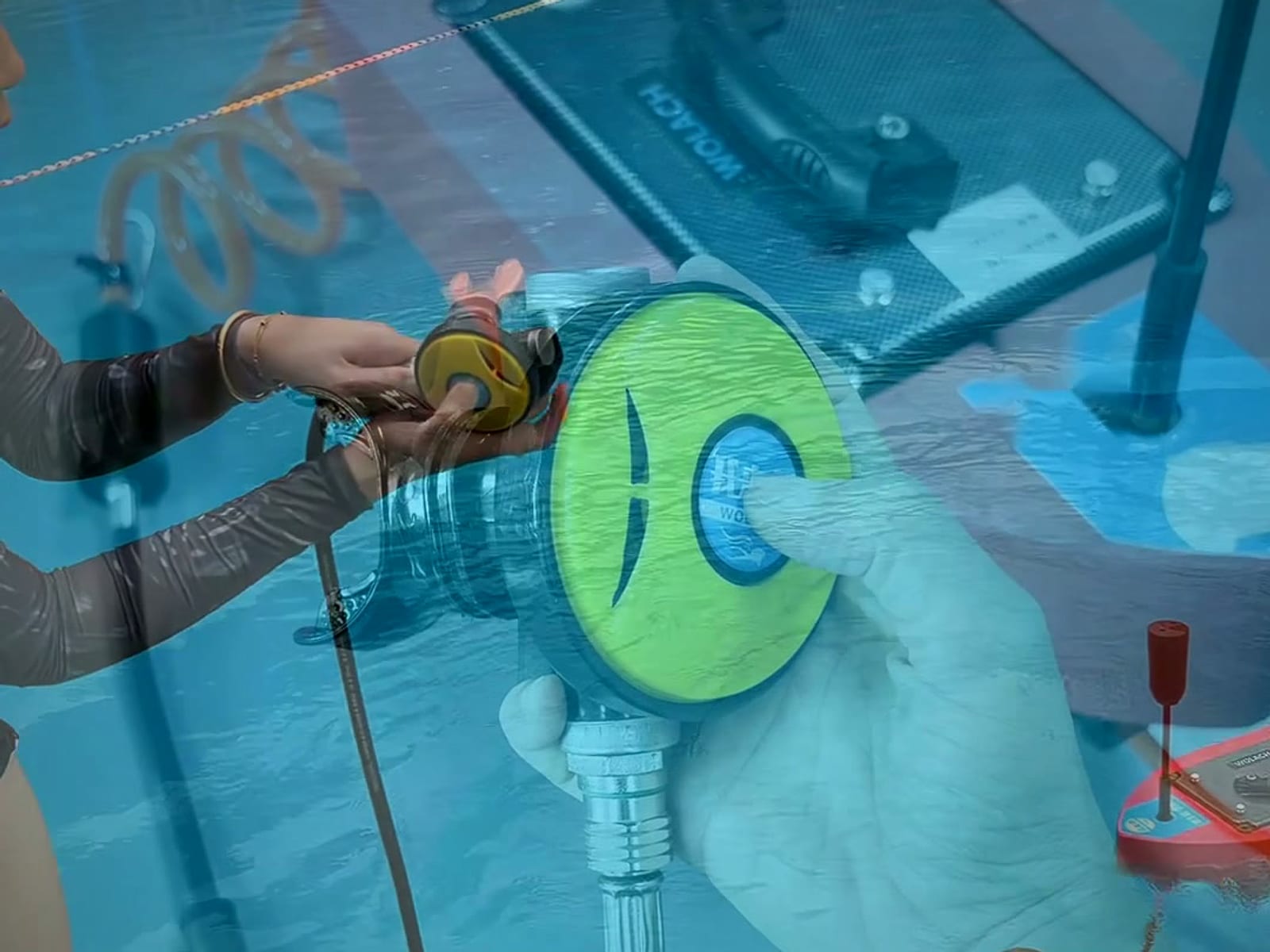
In a pool the hazard list is short and specific: electricity, chemicals, and suction. Underwater lights should be isolated at the breaker, not at the switch, before anyone gets in — and if a light is filled with water when you open it, that is a call to an electrician rather than a cleaning job. Chemical dosing should be paused for the duration of the work, because a dosing cycle starting while you are at the main drain is a genuinely unpleasant way to find out it existed. And a main drain with a working suction is not something to put a hand near without knowing where the isolation valve is.
Where the time saving actually lands
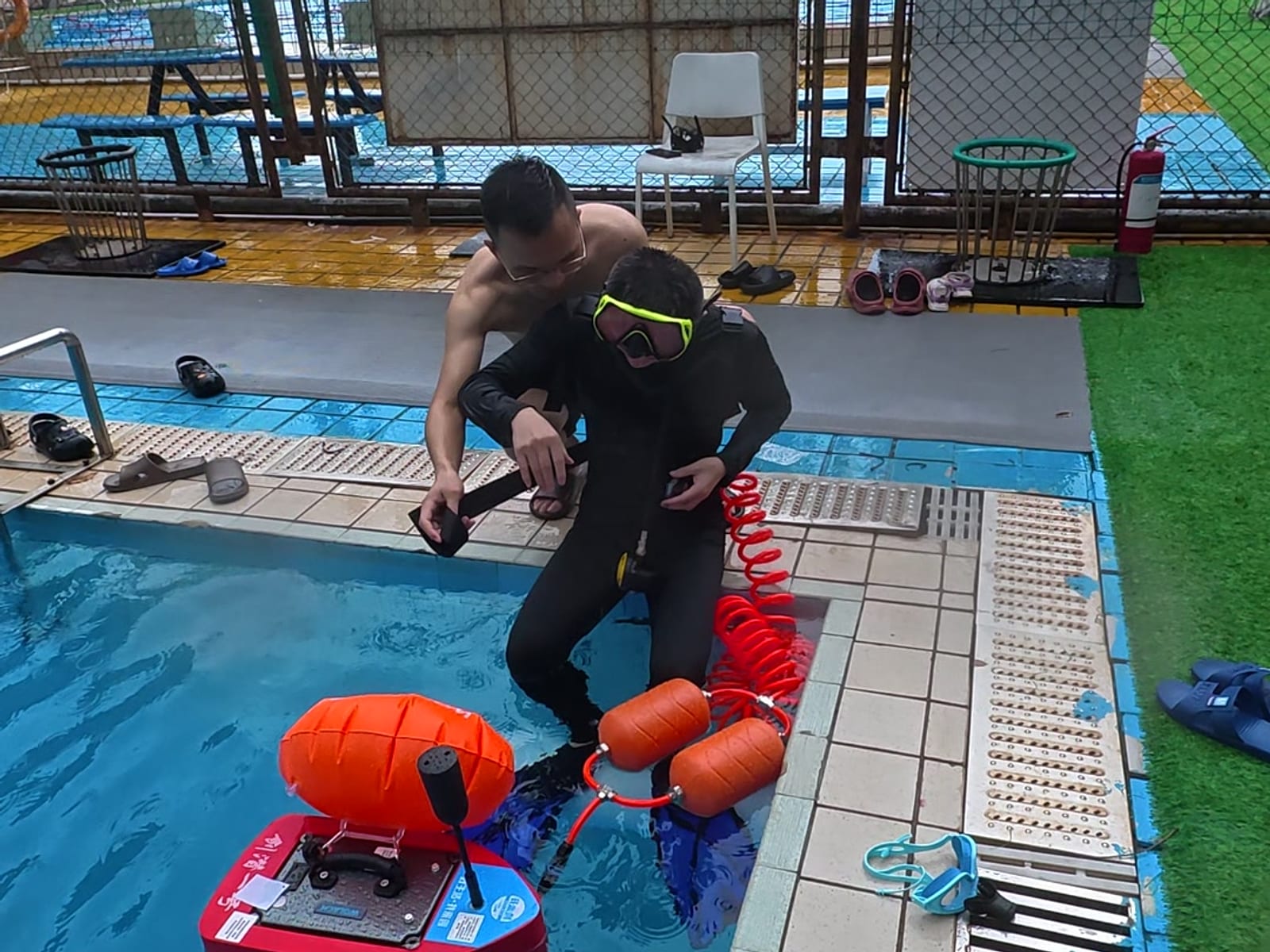
Not in the swimming. It is in the kitting up, the cylinder changes and the drying out. A pool technician doing six small jobs on scuba will spend more of the day on the poolside than in the water, and each entry restarts the setup. On a hose the machine goes on the deck, the hose goes in, and the technician works down the list in one trip. That changes the economics from "is this job worth doing" to "which of these jobs do we do this week", which is how a maintenance contract becomes profitable.
The short version
- A pool is not a shallower dive, it is a different job. Zero depth, unlimited time.
- Work seated and slightly negative; neutral-on-the-surface floats you off the job.
- Isolate underwater lights at the breaker, not the switch, before anyone enters.
- Pause chemical dosing for the whole session.
- Know where the main drain isolation valve is before you go near the drain.
- The saving is in kitting up and cylinder changes, not in the swimming.
FAQ
Do I need a diving certification?
How deep can I go?
What happens if the battery runs low?
Keep reading
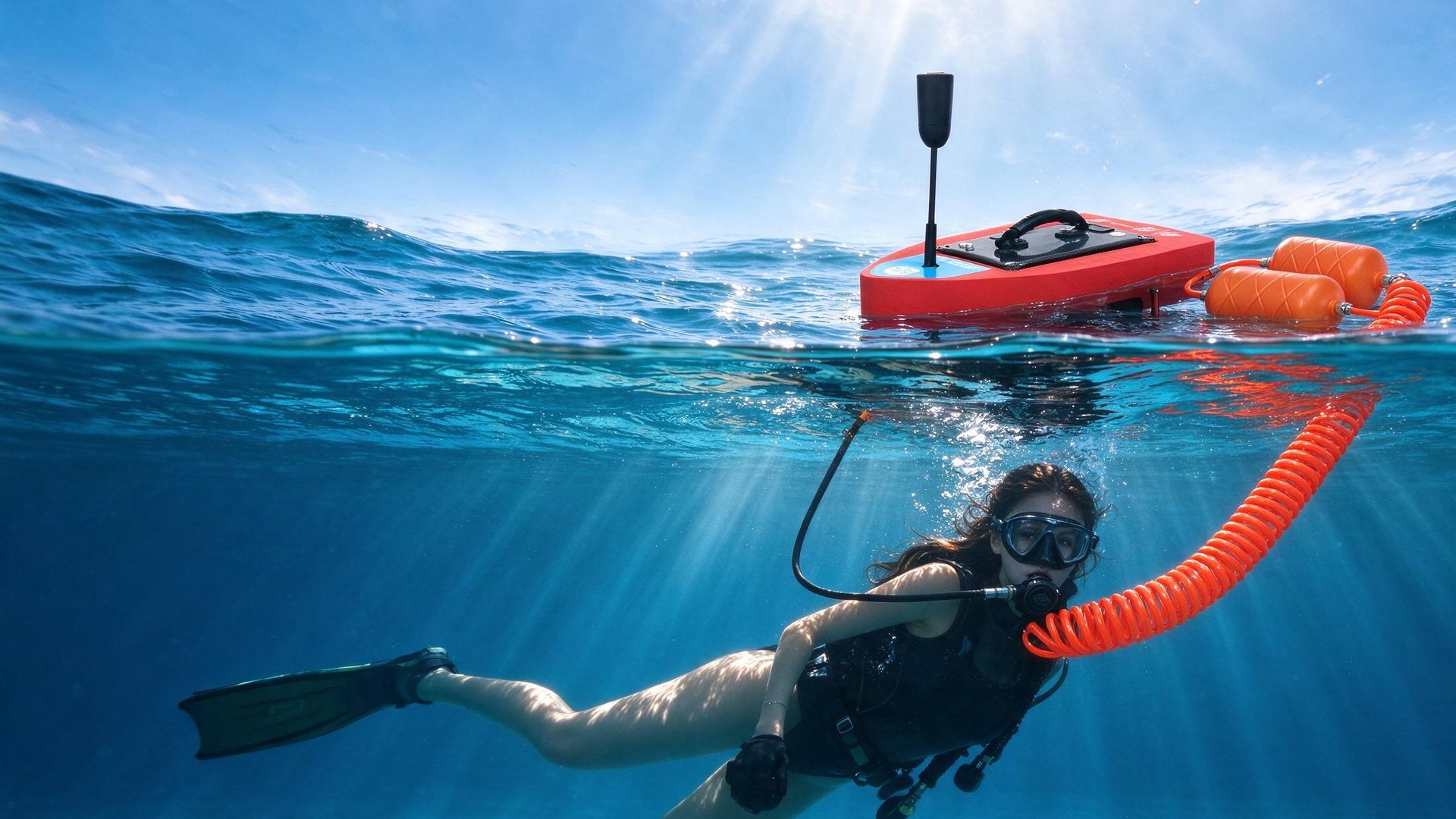
Scuba Tank vs. Tankless Hookah Diving: The Complete 2026 Comparison
Cost, bottom time, depth, safety and logistics — an honest, side-by-side look at when a surface-supply system beats a tank, and when it doesn’t.
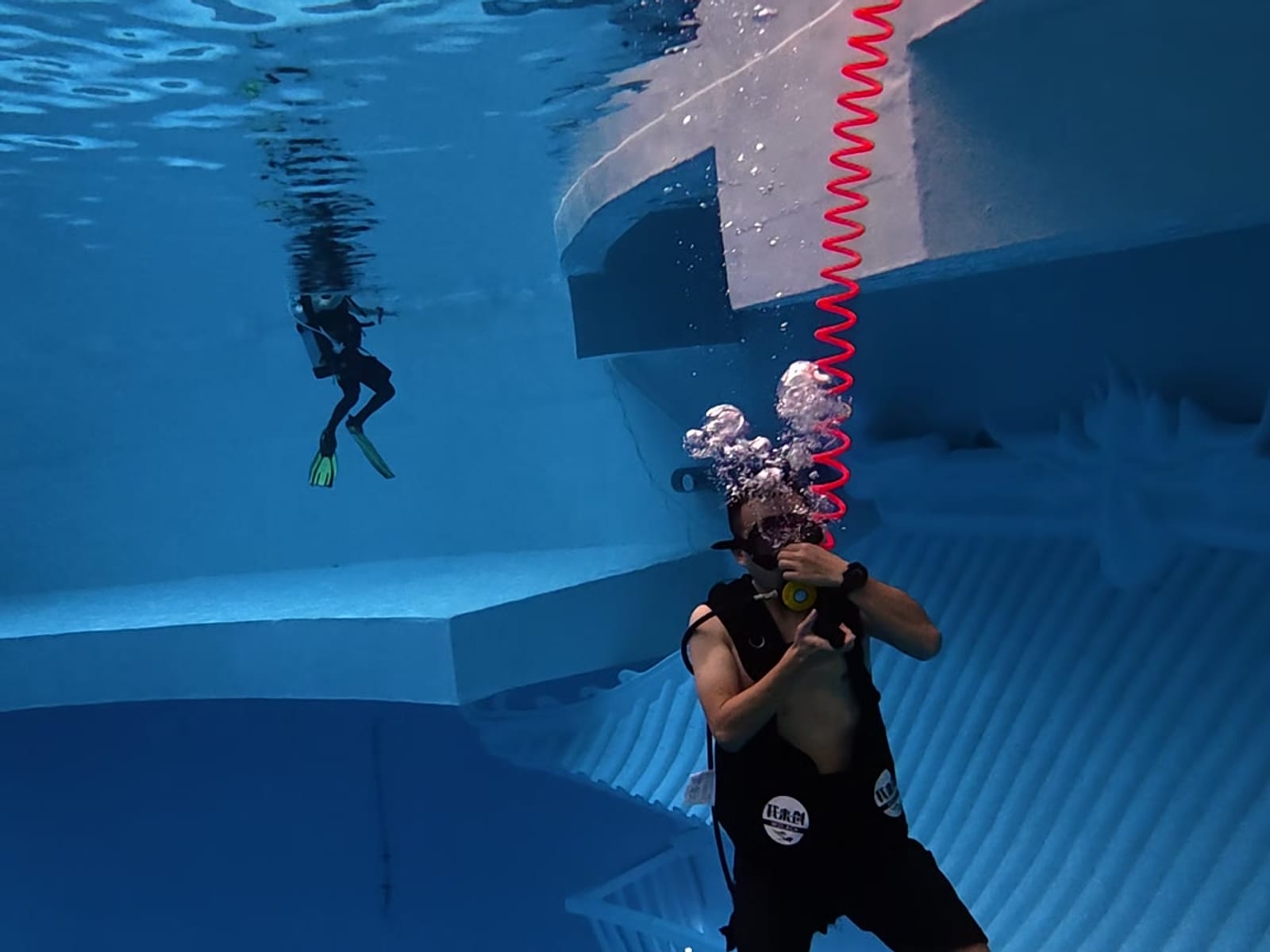
How Deep Can You Go on a Hookah System?
Rated depth is not tested depth, and hose length is not depth at all. The three numbers people confuse, and the no-decompression limits that apply to a hose exactly as they do to a tank.
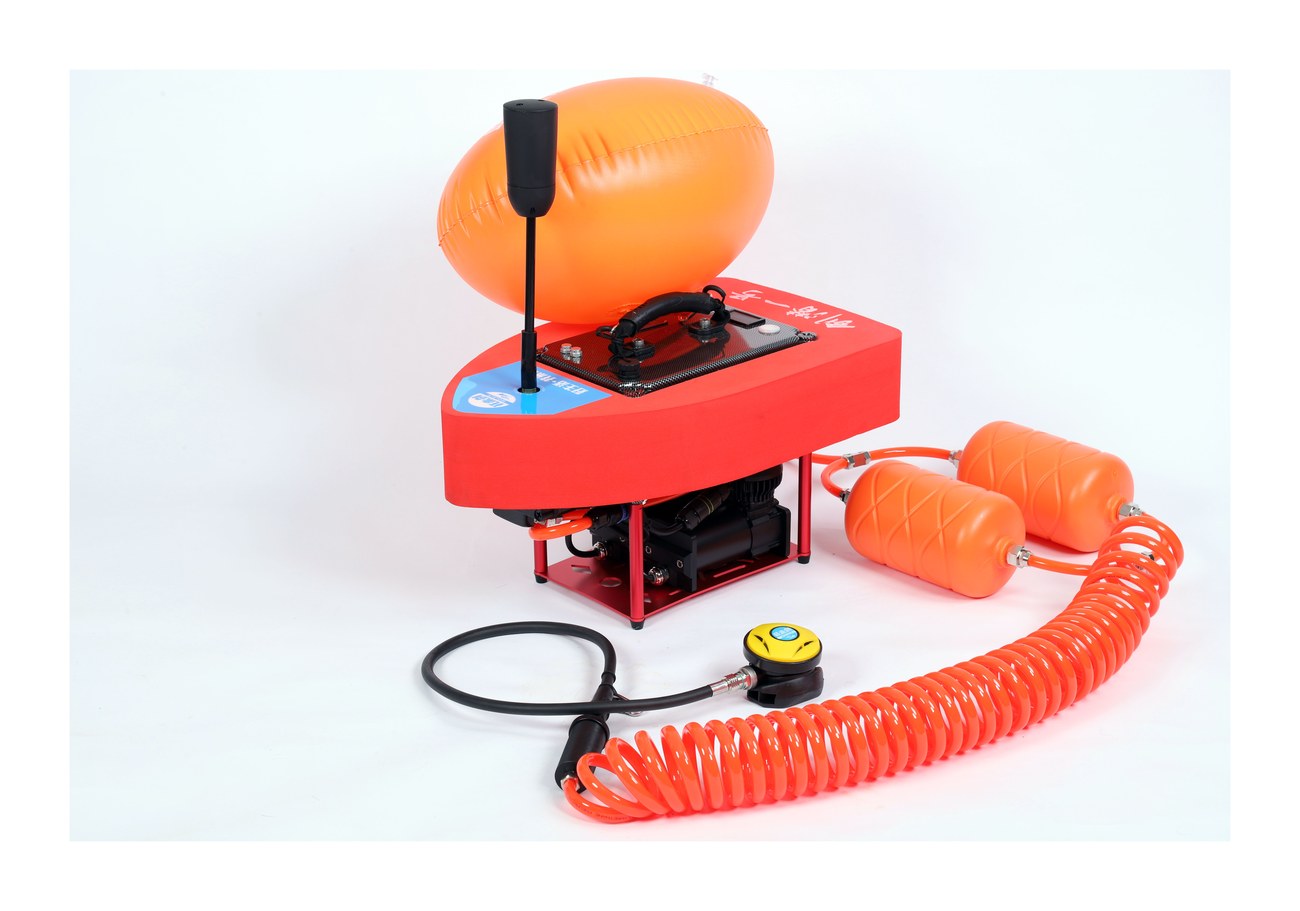
S6 vs S7 vs S9 vs S77: Which WOLACH Is Right for You?
Four machines, one air path, three numbers that decide it. How to pick by the diving you actually do rather than the depth rating you aspire to.