Propeller and Running Gear Checks
A five-minute job that requires the boat to be out of gear, the keys to be out of the ignition, and that fact demonstrated to you before you get in the water.

This is the article where the safety content comes first, because the job is trivial and the risk is absolute. Before anything else about propellers: they are powered until the owner has demonstrated otherwise, in front of you, with the engine off, the ignition key out and in your hand or in your sight, and the battery isolator open. Not "it is switched off". Not "you are fine, I am up here". Those assurances are how divers are killed, and they come from owners who genuinely mean them. The check is five minutes and the rule does not have an exception.
What you are actually checking
Six things, in order of how often they matter. Propeller blades, for dings, cracks at the root and missing chunks — a blade with a crack at the root is a blade that will throw itself, and it is worth flagging loudly. Anodes, which should be roughly half consumed: a new-looking anode in old water means the bonding is broken, and a completely gone anode means whatever it was protecting has been unprotected for a while. Shaft and shaft seal, for fishing line, which is the single most common cause of a dripless seal failing. Rudder and skeg, for impact damage. Struts and bearings, for play. And the hull around the running gear, which is where a strike shows up as a crack rather than a dent.
The isolation routine, in order
Engine off and cool, since a warm stern gland is unpleasant to work around. Ignition key removed and either in your hand or visibly in the owner’s pocket. Battery isolator open. And one more that people miss: on a sterndrive or an outboard, the drive should be trimmed fully down, because a raised leg is a leg that can be lowered onto you hydraulically. All four steps are demonstrated by the owner while you watch, not reported from the flybridge. If anybody is reluctant to go through it, that is the moment to leave the job.
Reporting what you find
- Propeller blades: dings, cracks at the root, missing material
- Anodes: roughly half consumed is correct; look-new in old water means the bonding has failed
- Shaft and seal: fishing line is the most common cause of a failing dripless seal
- Rudder, skeg and struts: impact damage and bearing play
- Hull around the running gear: a strike shows as a crack, not a dent
Why this job suits a hose
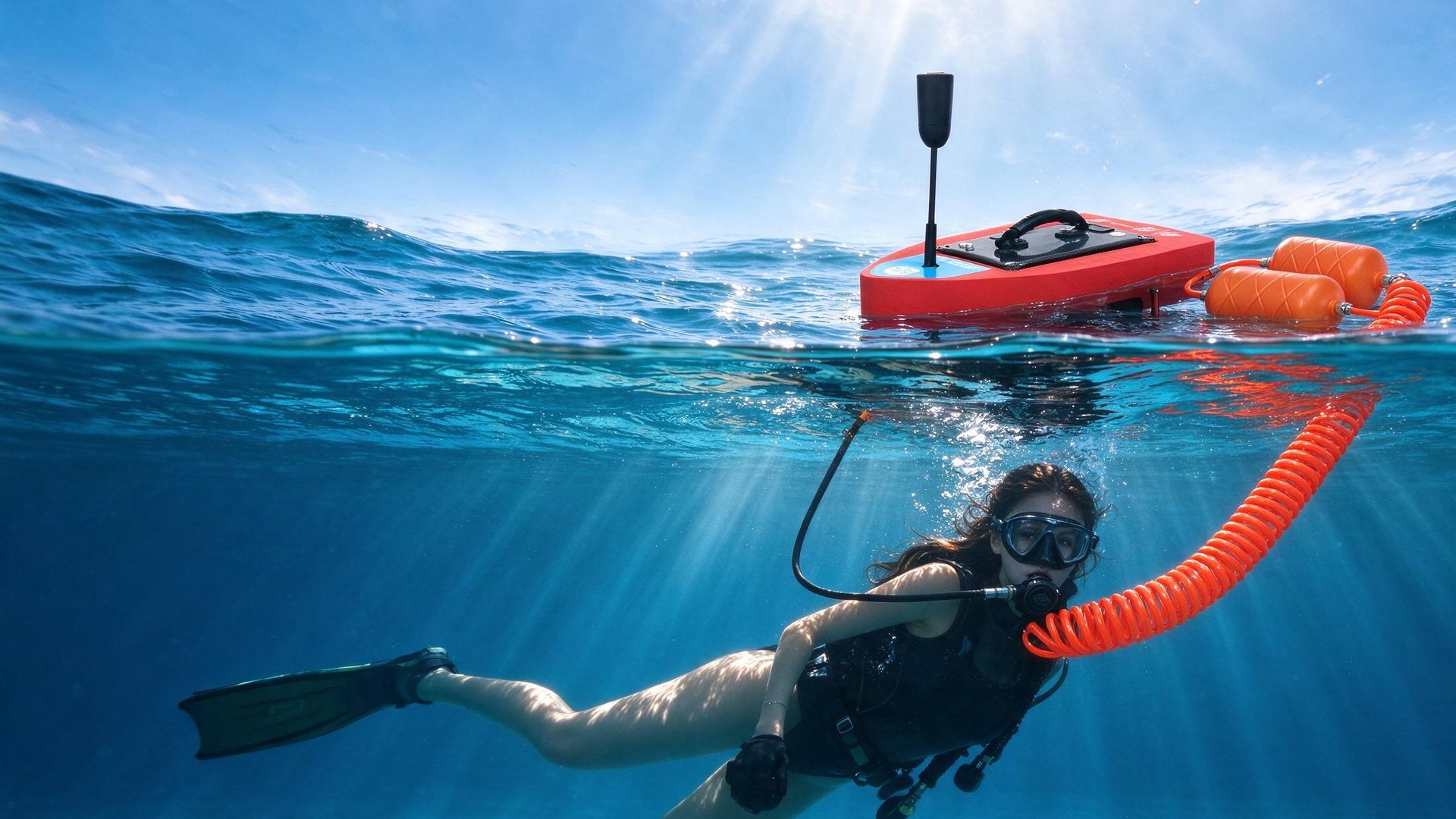
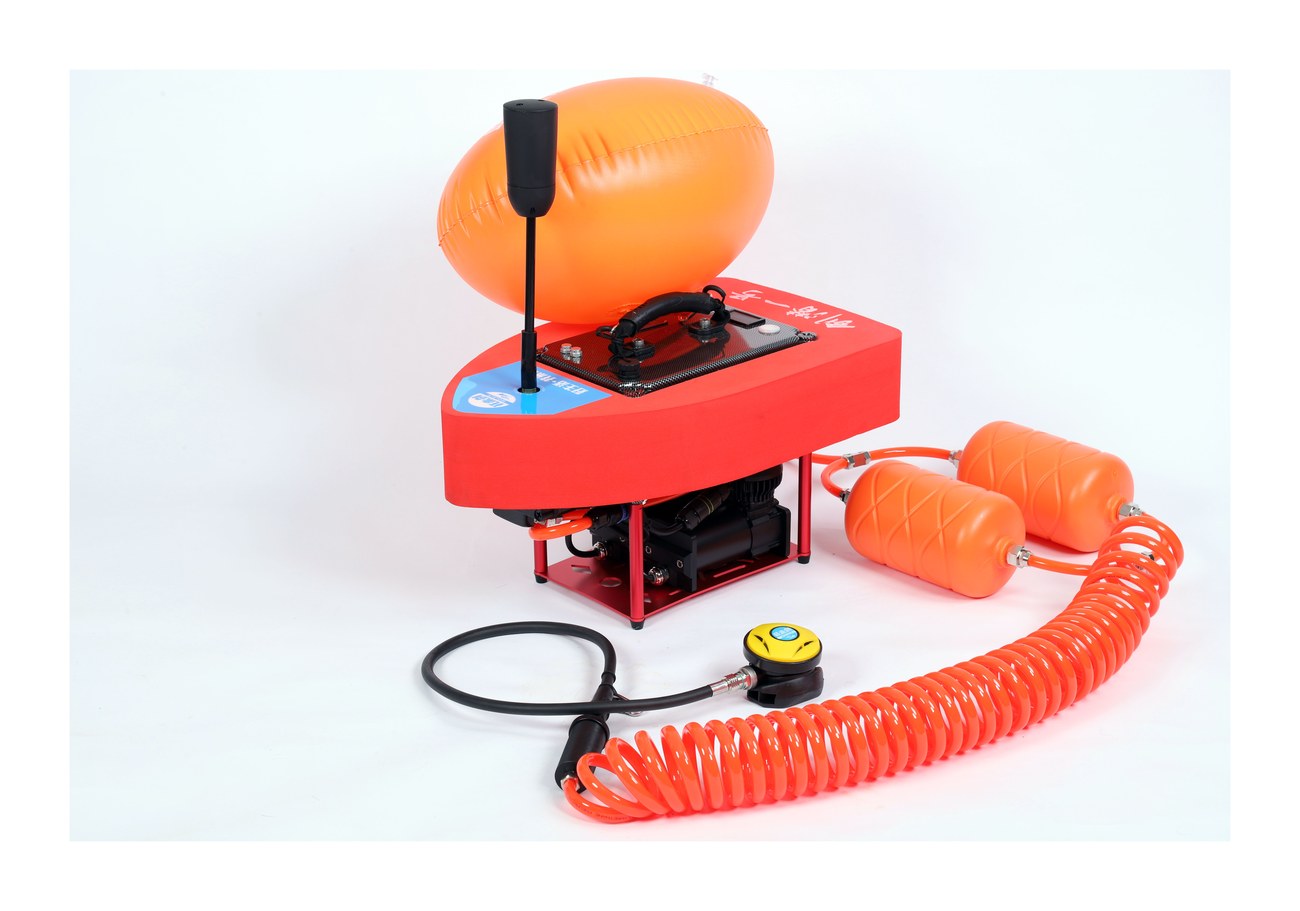
A propeller check is five to fifteen minutes in one and a half metres of water with the boat stationary. On scuba that is a cylinder, an entry and a kit wash for a quarter of an hour of work, which is why so few boats get checked as often as they should. On a hose it is a machine on the pontoon, a hose in the water, and a diver who is done before the kettle boils. The economic consequence is that checks become routine rather than reactive, and a cracked blade gets found on a Sunday morning rather than after it has come off in open water.
What owners usually want told
Four things, in plain language. Whether anything needs doing now, whether anything needs watching, whether the anodes are doing their job, and whether the damage they can see from the dock looks worse or better than they feared. Photographs settle all four in a way that a verbal report does not, so take them with a light and a scale reference — a coin or a tape is enough. A downloaded folder of eight photographs is worth more to a boat owner than any amount of expert summary, and it is the reason the same operator gets called back next season.
The short version
- Engine off, key out and visible, isolator open, drive trimmed down — demonstrated in front of you.
- Blade cracks at the root matter most. Flag them loudly.
- An anode that looks new in old water means the bonding has failed, not that it is fine.
- Fishing line on a shaft is the most common cause of a failing shaft seal.
- Five minutes of work: on a hose it becomes routine instead of reactive.
- Take eight photographs with a scale reference. That folder is why you get called back.
FAQ
Do I need a diving certification?
How deep can I go?
What happens if the battery runs low?
Keep reading
Scuba Tank vs. Tankless Hookah Diving: The Complete 2026 Comparison
Cost, bottom time, depth, safety and logistics — an honest, side-by-side look at when a surface-supply system beats a tank, and when it doesn’t.

How Deep Can You Go on a Hookah System?
Rated depth is not tested depth, and hose length is not depth at all. The three numbers people confuse, and the no-decompression limits that apply to a hose exactly as they do to a tank.
S6 vs S7 vs S9 vs S77: Which WOLACH Is Right for You?
Four machines, one air path, three numbers that decide it. How to pick by the diving you actually do rather than the depth rating you aspire to.