Search and Recovery in Shallow Water
Most search and recovery work happens in water shallower than six metres, which is precisely where a hose is at its best. Patterns, tools and the discipline that makes a search repeatable.
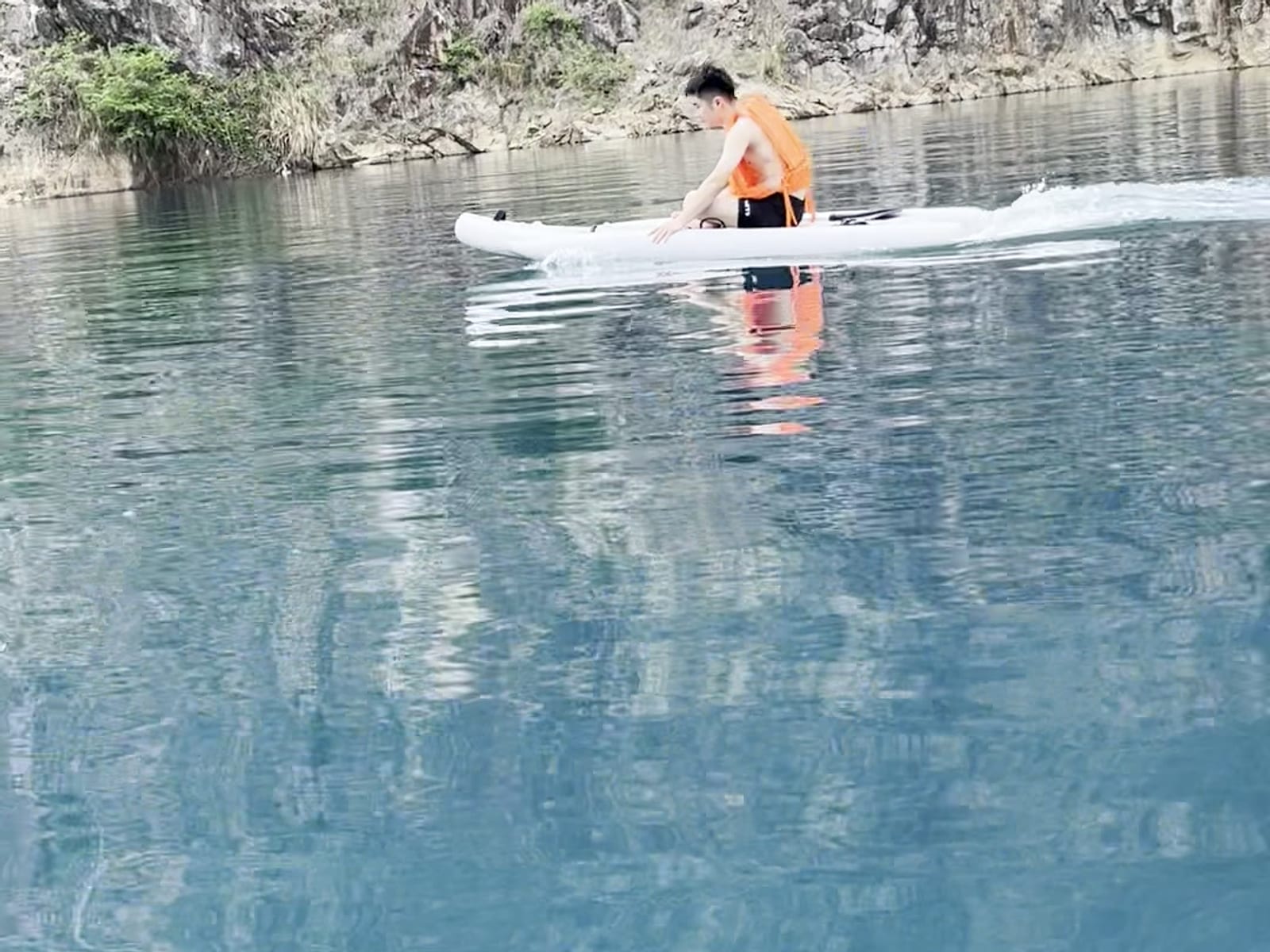
The word recovery suggests depth, and the reality is the opposite. Dropped phones, outboard parts, anchors, tools, wedding rings and the occasional outboard cover live in between one and six metres of water, usually within sight of where they were dropped and usually in the worst visibility on the site. That combination makes it the least glamorous and most useful application of a surface-supply system: a methodical, slow, low-visibility search with no depth to worry about and no interest at all in bottom time limits. A scuba tank gives you forty minutes of it. A hose gives you as long as the search takes.
The pattern is the whole job
Searching by swimming around looking is not searching and it does not work in poor visibility. Two patterns cover almost everything. A jackstay search: two anchors, a line between them, and the diver sweeping from one to the other at a fixed interval, moving the line forward and repeating. That is the only method that reliably covers ground in water where you can see a metre. A circular search around a datum — the point where the object was lost — works when the target is small, the bottom is clear, and you have a fixed reference. In both cases the discipline is the same: the pattern is decided on the surface and the diver does not improvise.
Tools that change the outcome
A lift bag is the difference between finding something and recovering it, and it is worthless without a way to attach it — which means a line and a clip on your harness, not in a bag. A metal detector is genuinely useful and useless in the wrong hands: it has to be swept at a constant height and slow speed, which is a training issue rather than a gear issue. And a mesh bag or pot on a line lets you send small finds to the surface without ending the search. The pattern of a recovered phone, incidentally, is always the same: it is where the owner says it is, plus the distance a falling object travels in the current.
What makes a search repeatable
- A datum that does not move: a mooring, a pile, a marker buoy you placed
- A pattern decided on the surface and followed without deviation
- A fixed sweep interval — arm span plus a fin length is standard
- A surface record of what has been covered, so you do not search it twice
- Same diver on the same side throughout; swapping sides halves the coverage
- A stopping condition: after N sweeps of the same ground, change the assumption, not the effort
Why the hose suits it
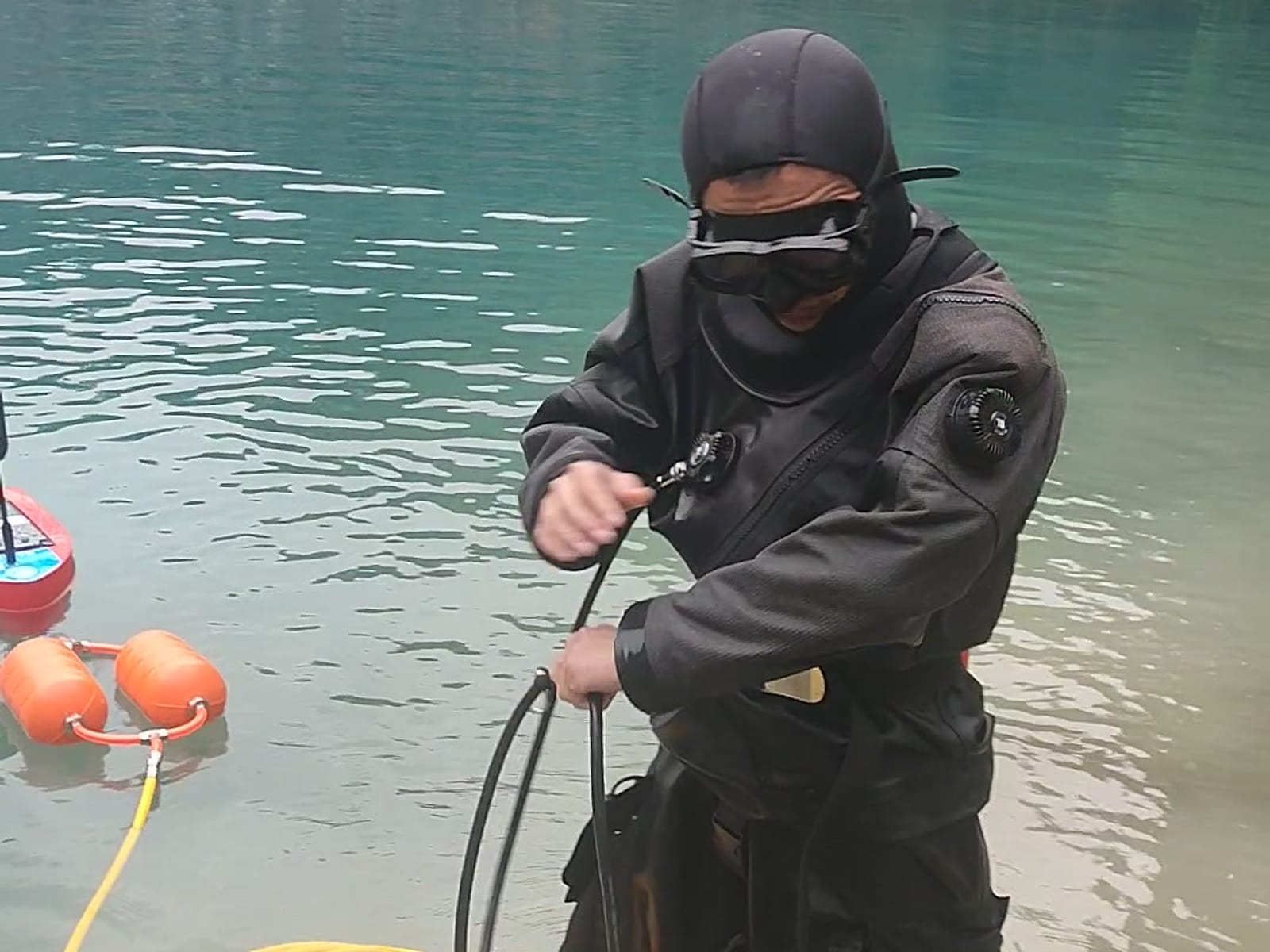
Two reasons, and both are about the shape of the task rather than the depth. A thorough search is slow, and a slow search runs out of gas on scuba — often the search ends because the tank did, not because the ground was covered. And the search is inherently repetitive: the same sweep, the same interval, again and again, which is a job badly suited to a diver who is also managing a cylinder and a gauge. On a hose the diver’s attention is entirely on the bottom, which is where it needs to be in a metre of visibility.
The legitimate boundary
There is a category of recovery that is not shallow and is not a hose job: anything involving bodies, evidence, vehicles in deep water, or overhead environments. Those need police or specialist teams, surface-supplied from a proper panel with communications and a standby diver. Being clear about where that line sits protects both your reputation and your insurance. A hose system is excellent at the shallow, low-stakes, high-frequency end of recovery, and the professional answer to the rest is a phone number rather than a technique.
The short version
- Search and recovery is mostly 1–6 m, and mostly in the worst visibility on the site.
- The pattern is the job. Jackstay for coverage, circular around a datum for a small target.
- A lift bag is only useful if the line and clip are already on your harness.
- Keep a surface record of ground covered. Re-searching is the most common waste of a day.
- A hose suits this because the work is slow and repetitive, and attention belongs on the bottom.
- Bodies, evidence, vehicles and overheads are not hose work. Know where that line is.
FAQ
Do I need a diving certification?
How deep can I go?
What happens if the battery runs low?
Keep reading
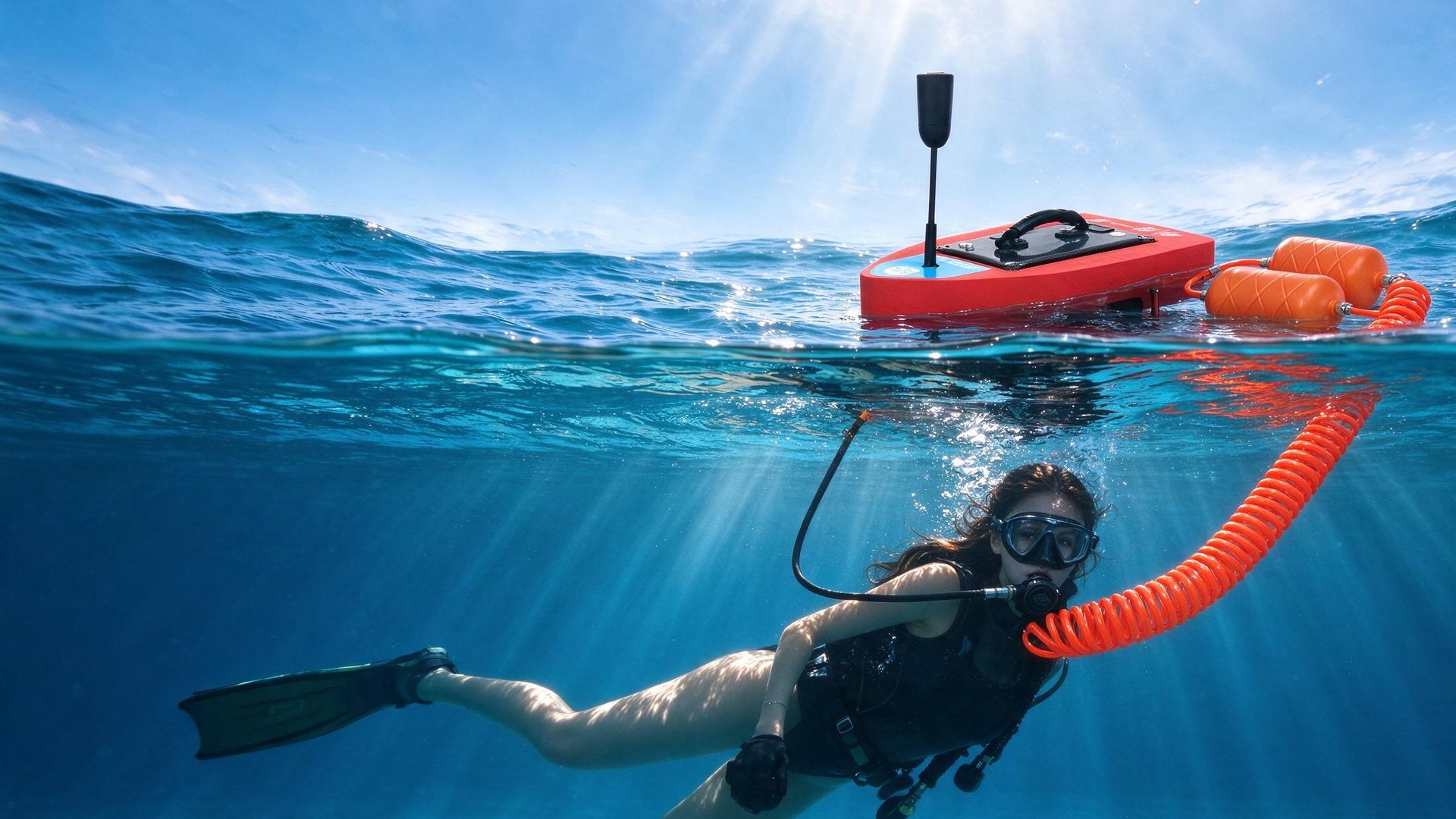
Scuba Tank vs. Tankless Hookah Diving: The Complete 2026 Comparison
Cost, bottom time, depth, safety and logistics — an honest, side-by-side look at when a surface-supply system beats a tank, and when it doesn’t.
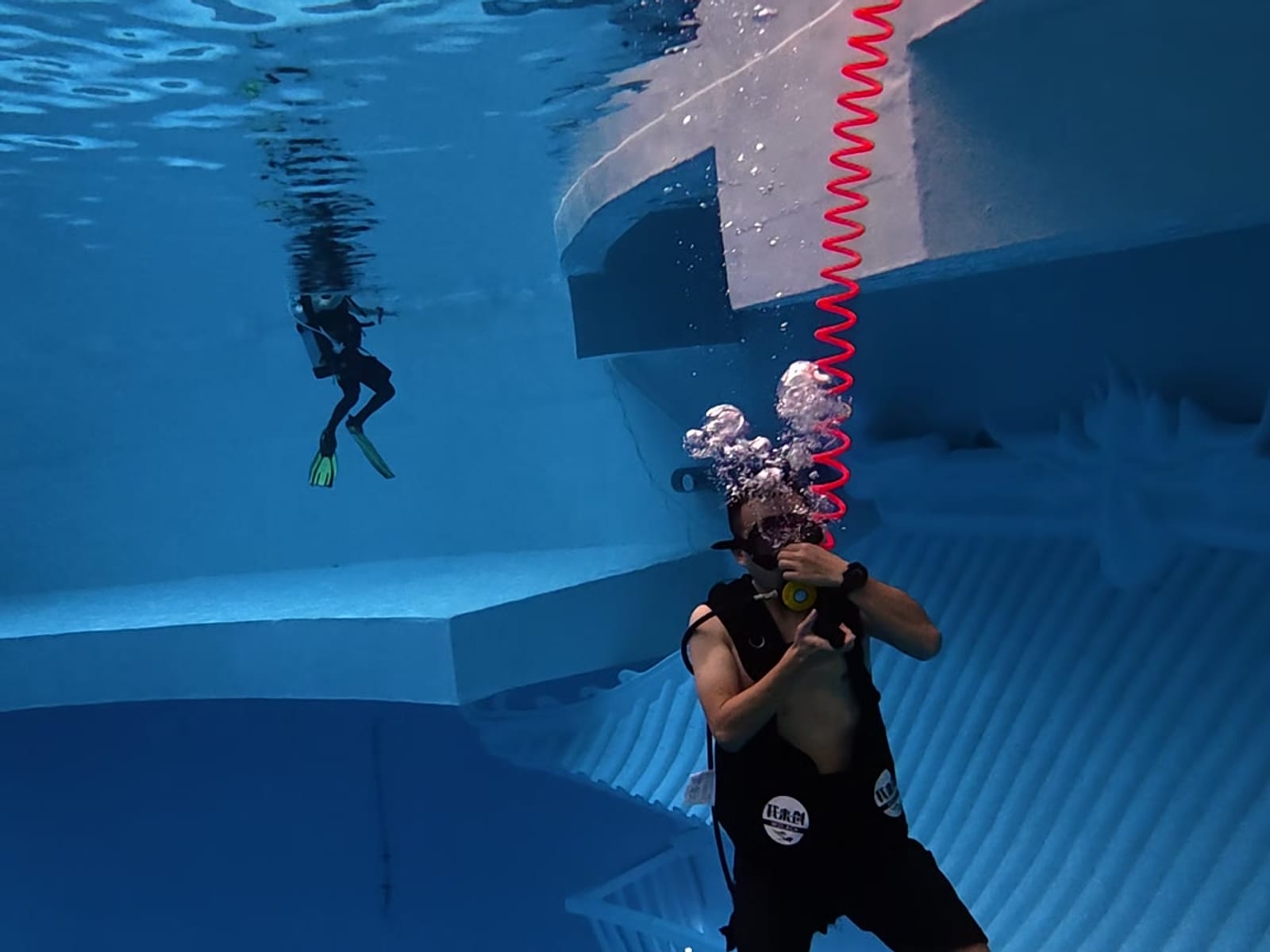
How Deep Can You Go on a Hookah System?
Rated depth is not tested depth, and hose length is not depth at all. The three numbers people confuse, and the no-decompression limits that apply to a hose exactly as they do to a tank.
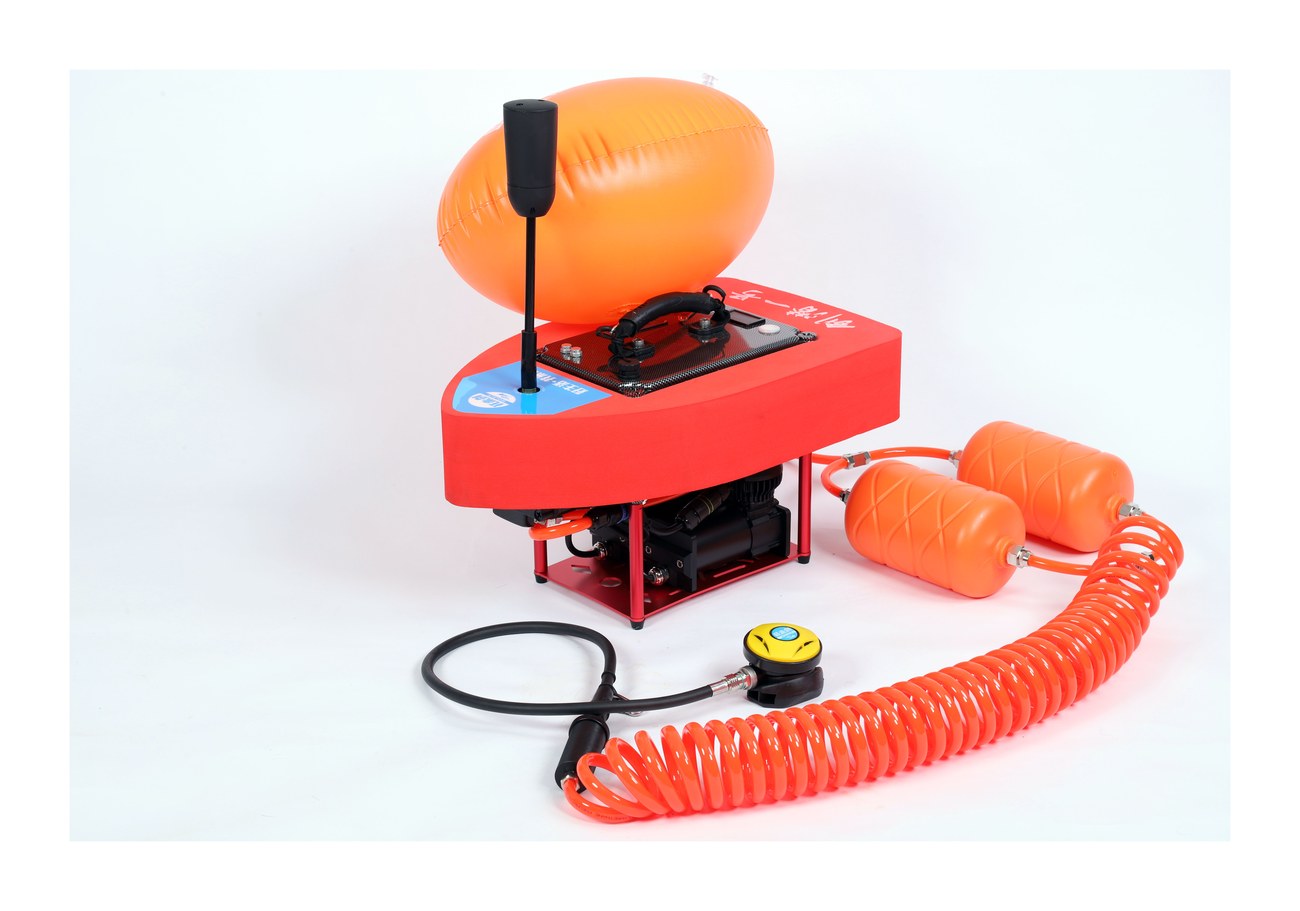
S6 vs S7 vs S9 vs S77: Which WOLACH Is Right for You?
Four machines, one air path, three numbers that decide it. How to pick by the diving you actually do rather than the depth rating you aspire to.