Swimming Hall: An Indoor Check on a Rainy Week
No weather, no swell, no excuse to skip the checks. What an afternoon in an indoor pool is actually for, and the three things it caught.
- Max depth · 2 m
- Bottom time · 78 min
- Water temp · 28 °C
- Visibility · 20 m
- System · WOLACH S6
- Dived · Apr 17, 2026
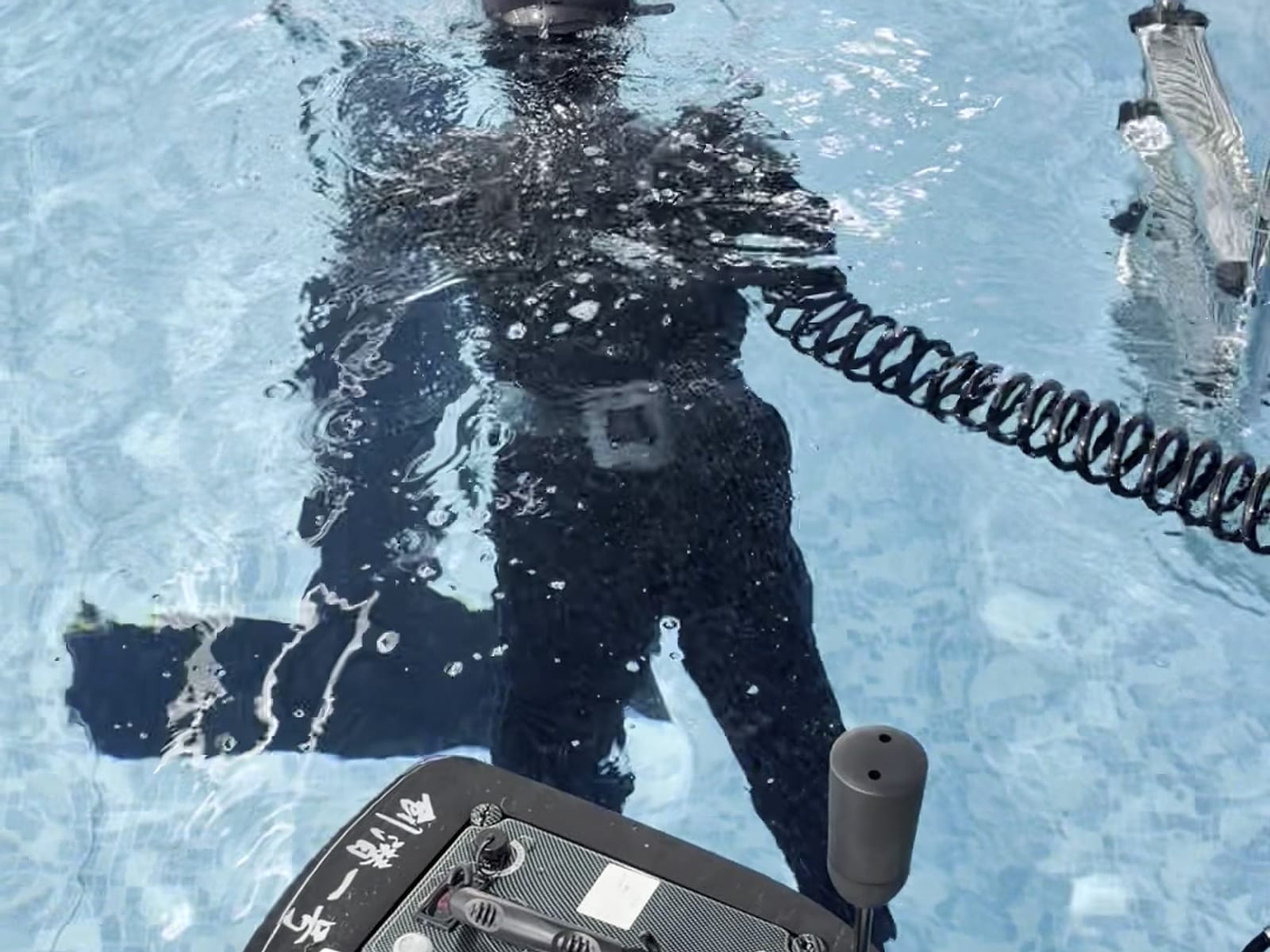
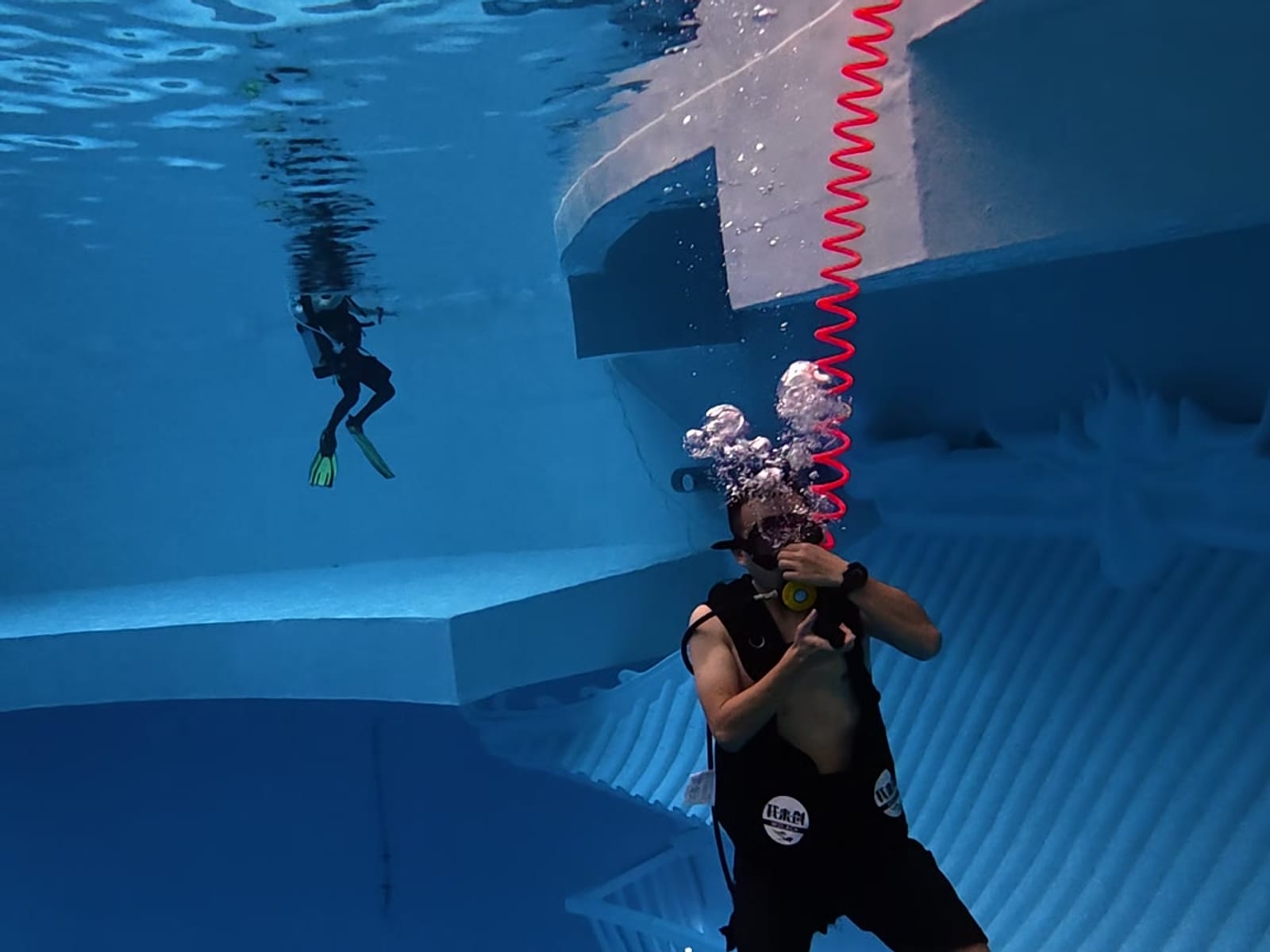
A week of rain, a cancelled shore trip, and four people with a machine and nothing to do with it. The session that came out of that is now a fixture: an indoor afternoon where the goal is not diving but checking, and where every fault is found in two metres of clear water with a poolside full of tools rather than at eight metres with a swell running. Three things turned up in seventy-eight minutes, and all three would have been discovered on a real dive day.
What it caught
A second stage that had started to free-flow intermittently, which turned out to be grit on the poppet seat and took four minutes to clean. A quick-connect that seated with less of a click than it should, which is the earliest sign of a worn seal and is exactly the failure that shows up as a hiss at depth. And an anode on the harness bracket that had gone from half consumed to nearly gone over the winter, which nobody had looked at because the bracket is mounted where you do not see it.
The checks worth doing indoors
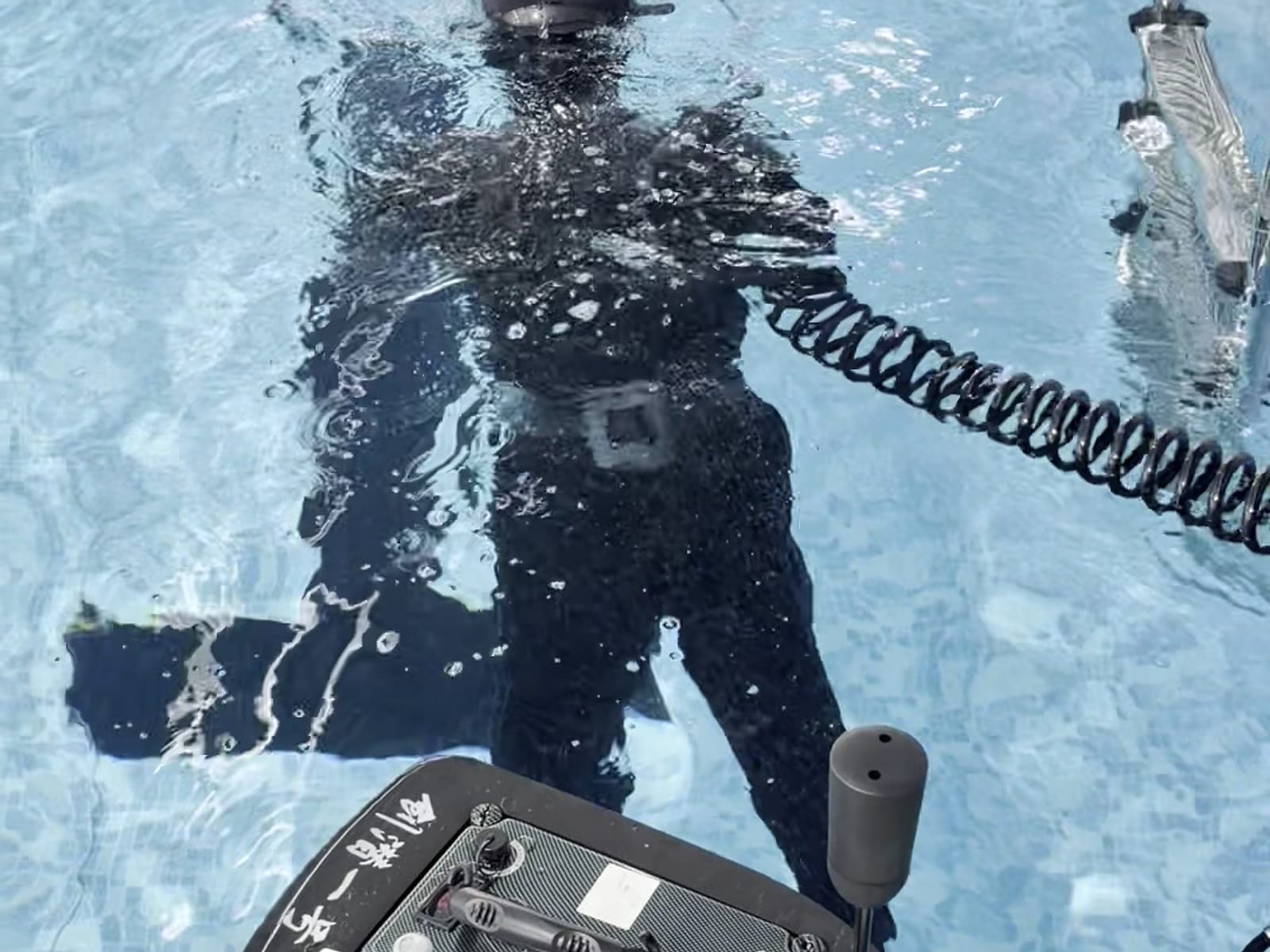
Three, in this order. Run the machine for ten minutes and breathe from the second stage at a fixed depth, listening for a change in delivery. Then disconnect and reconnect every coupling on the system looking for one that seats with less resistance than the others. And inspect the parts of the kit you never look at: harness hardware, bracket bolts, the underside of the float, the inside of the charger port cover. All three checks take twenty minutes and none of them is possible with a swell running.
The case for a boring afternoon
Every fault above is a forty-minute problem at a poolside and a lost dive day at the coast, and two of the three are the kind of thing that fails at the least convenient moment because it is already marginal. Diving equipment does not fail from use so much as from neglect of the small things, and the small things are invisible on a good dive. An indoor afternoon is not really maintenance — it is the only setting in which marginal equipment becomes obvious. Two metres, no weather, and a written list of what you found.
What we would do differently
- Put it in the calendar once a month in the off season, not once a year
- Time the delivery check and compare with the last one. The direction of change is what matters
- Look at harness hardware and bracket bolts. Nobody ever does
- Write down what you found. The list becomes next month’s check
Keep reading
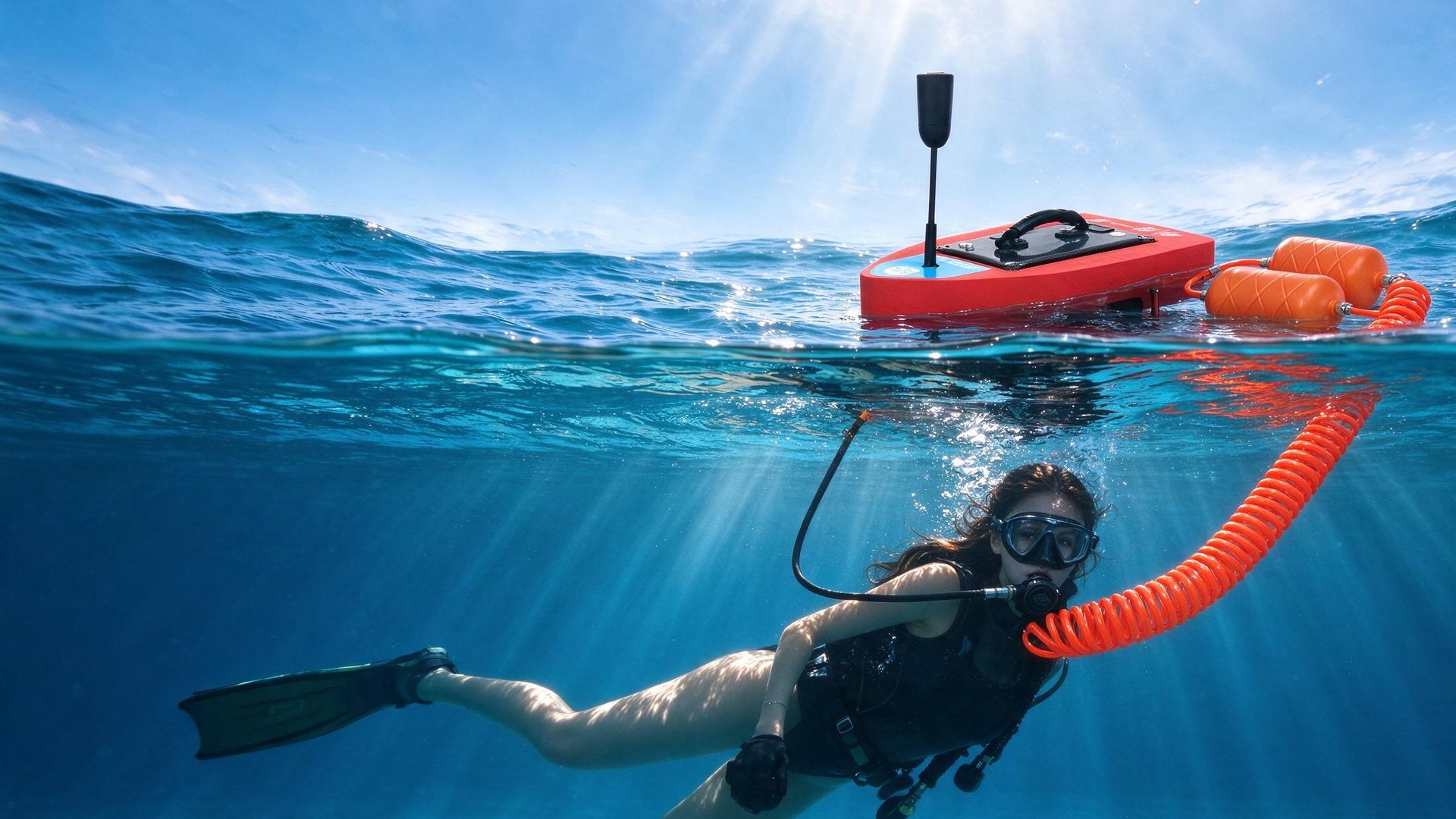
Scuba Tank vs. Tankless Hookah Diving: The Complete 2026 Comparison
Cost, bottom time, depth, safety and logistics — an honest, side-by-side look at when a surface-supply system beats a tank, and when it doesn’t.
How Deep Can You Go on a Hookah System?
Rated depth is not tested depth, and hose length is not depth at all. The three numbers people confuse, and the no-decompression limits that apply to a hose exactly as they do to a tank.
S6 vs S7 vs S9 vs S77: Which WOLACH Is Right for You?
Four machines, one air path, three numbers that decide it. How to pick by the diving you actually do rather than the depth rating you aspire to.