Your Surface Team Is Part of the Dive
A surface-supply dive has a second half that most divers forget about. What the people on the surface need to know, and the three signals that make the difference at eight metres.

Scuba is designed to be self-contained, and most training reflects that: your buddy is beside you, your gas is on your back, and everything that matters happens under the water. Surface supply breaks the assumption in a way that is easy to miss, because the diver spends the whole dive doing something that feels exactly like diving. But the machine, the battery and the exit are all above the surface, and the people standing there are not spectators. They are the half of the dive the diver cannot see.
What the surface team needs to know before you enter
- Where the route goes and roughly where you will be at any point in the dive
- The planned turn — a time, a depth, or an amount of work
- The abort signal, and who acts on it
- How to shut the unit down, and where the switch is
- What to do if the float drifts: hold it, follow it, or leave it
- That they are watching the hose and the float, not chatting
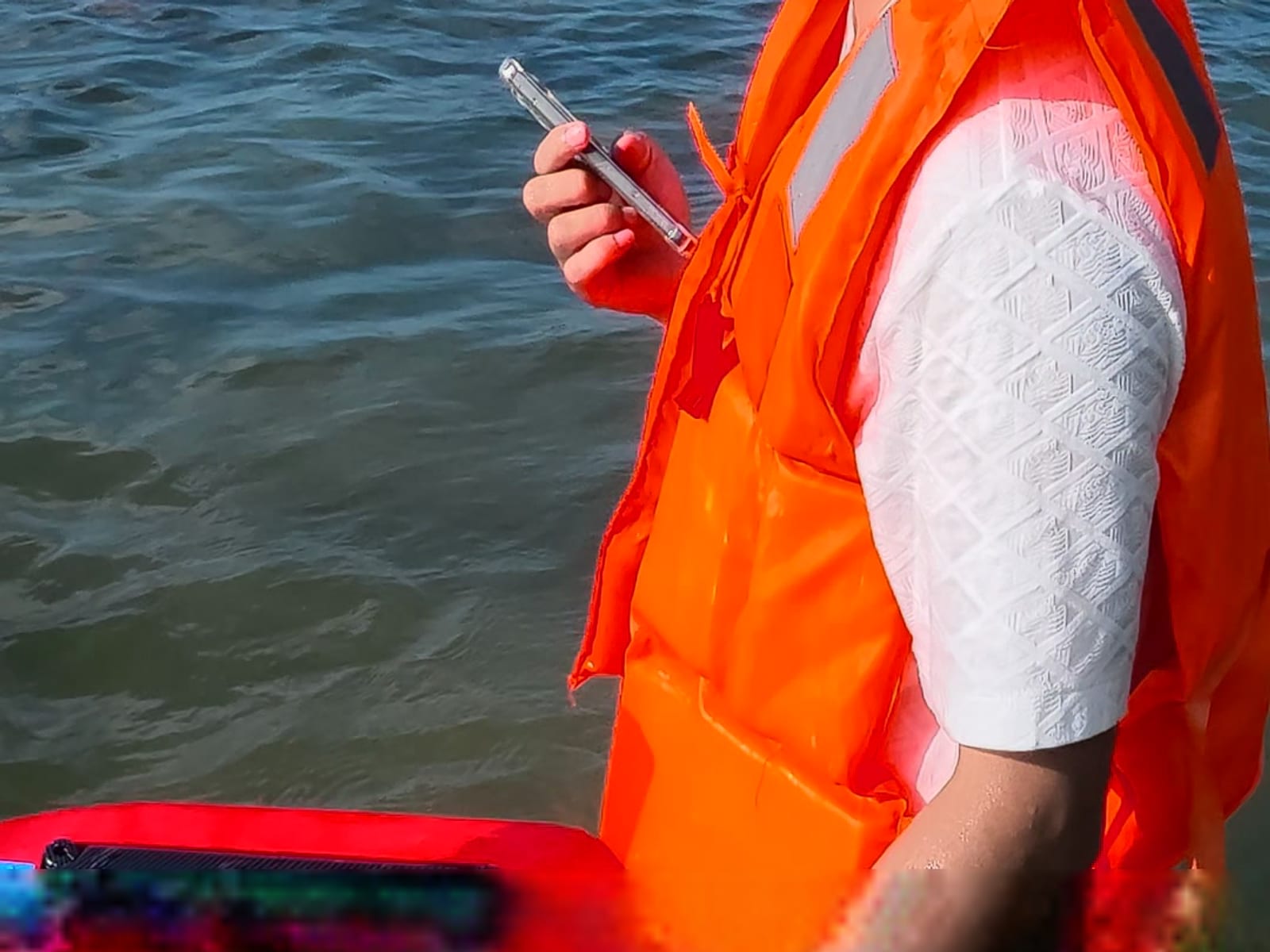
Three signals worth agreeing
You cannot talk at eight metres, and written plans do not survive contact with water. Three signals cover almost everything. One: OK, which means the same thing it means on scuba and should be used more often than feels necessary. Two: problem-and-coming-up, given as a decision rather than a question, so the surface team starts preparing rather than asking. Three: hose trouble — a distinct signal for the specific case where you are caught and need the float held still rather than followed. Divers who agree those three on the deck need very little else.

The float is not just a buoyancy aid
It is the surface team’s instrument for tracking you. Where the float sits, how it moves, and whether the hose is pulling on it all tell the people above the water what the diver below is doing. A float that has stopped moving means the diver is working in one place. A float drifting consistently in one direction means current. A float being pulled hard means the hose is loaded, which is the earliest warning that something is about to wrap. This only works if somebody is actually watching it, which is why the brief includes that sentence explicitly.
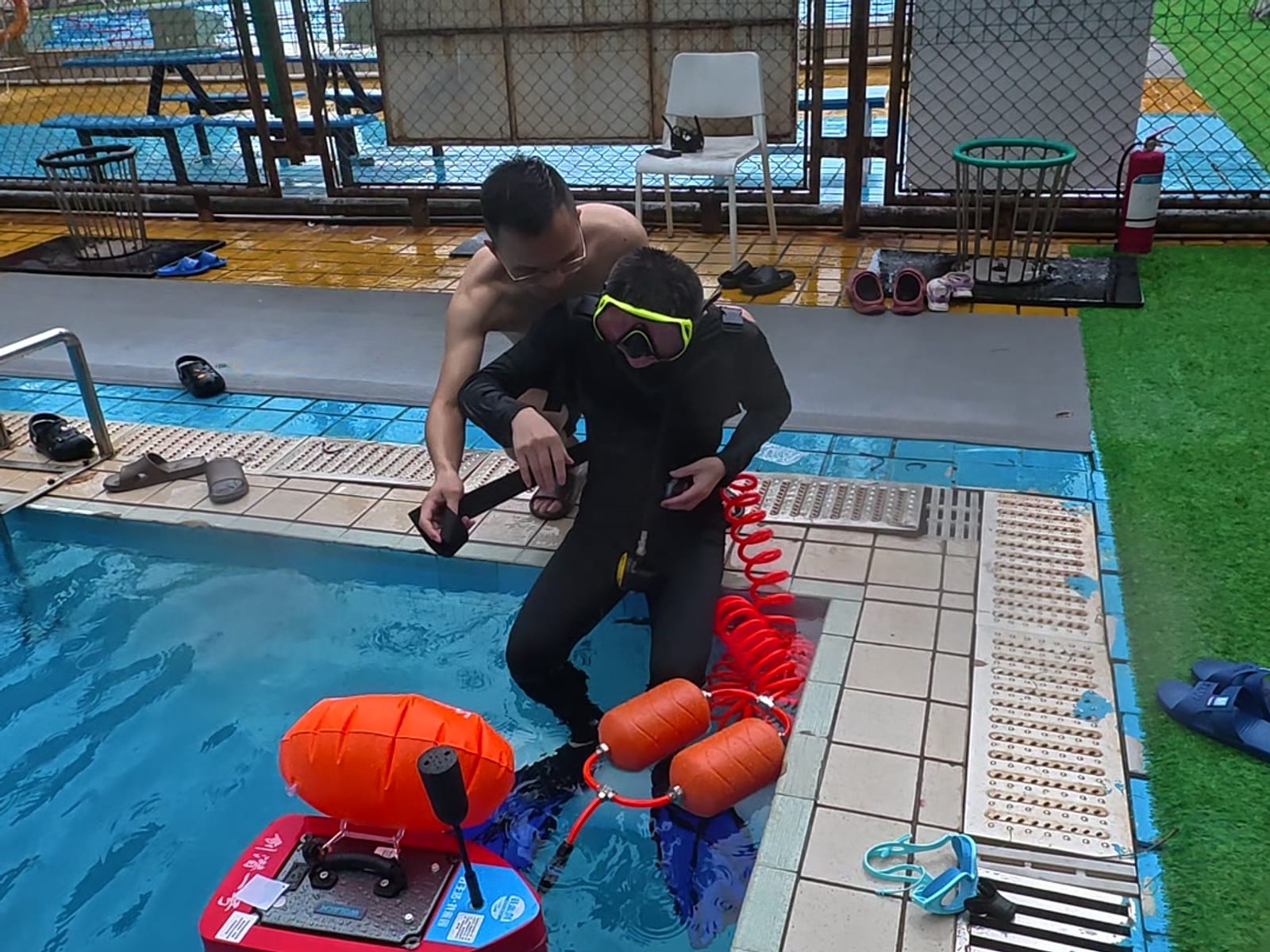
The failure nobody plans for
The most common surface-team failure is not incompetence, it is distraction. Somebody takes a phone call, or a second group arrives, or the person watching the float is also the person handling the boat. The result is that a diver surfaces to a float that has drifted, with nobody looking, and spends two minutes swimming to a boat that was not watching for them. It is not dramatic and it is the most frequent way a hose dive goes wrong. The fix costs nothing: name one person whose only job is the float. If nobody can be spared, then there is nobody to dive with.
The short version
- The machine, the battery and the exit are all on the surface. The people there are part of the dive.
- Brief the route, the planned turn, the abort signal and the shutdown.
- Agree three signals: OK, problem/coming up, and hose trouble.
- The float is the surface team’s tracking instrument. Watch how it moves.
- Name one person whose only job is the float. Distraction is the common failure.
- If nobody can be spared to watch, there is nobody to dive with.
FAQ
Do I need a diving certification?
How deep can I go?
What happens if the battery runs low?
Keep reading
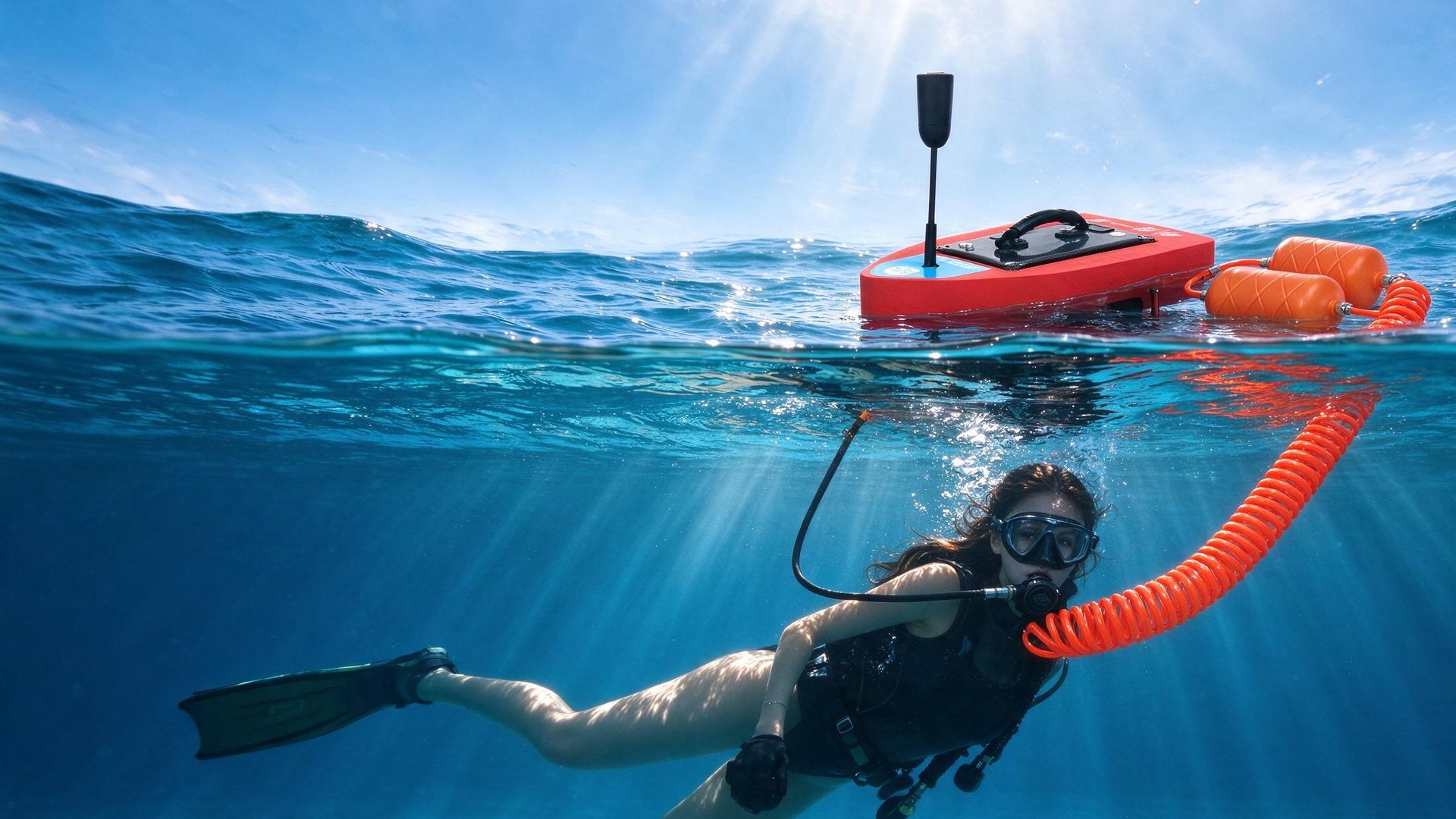
Scuba Tank vs. Tankless Hookah Diving: The Complete 2026 Comparison
Cost, bottom time, depth, safety and logistics — an honest, side-by-side look at when a surface-supply system beats a tank, and when it doesn’t.

How Deep Can You Go on a Hookah System?
Rated depth is not tested depth, and hose length is not depth at all. The three numbers people confuse, and the no-decompression limits that apply to a hose exactly as they do to a tank.
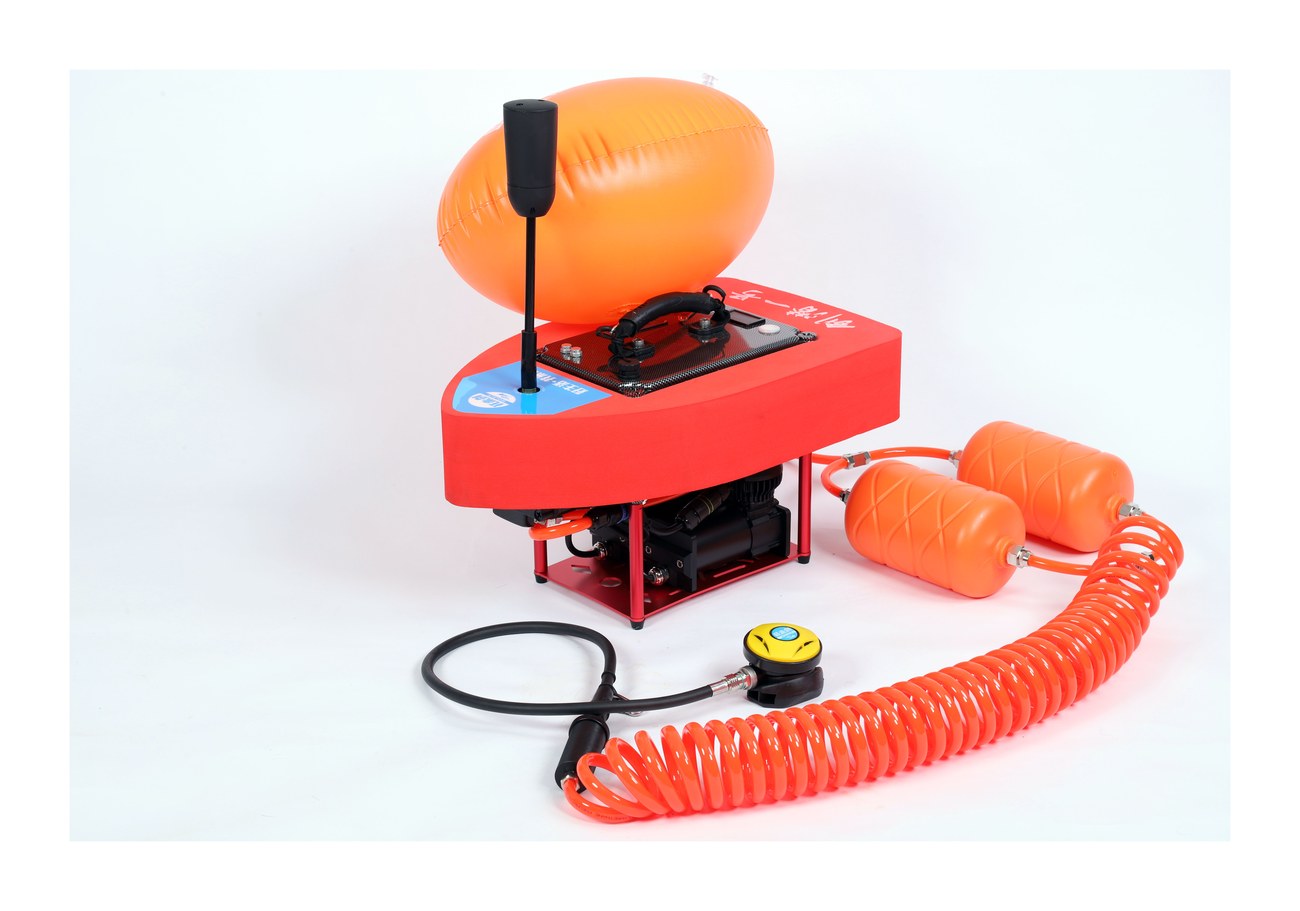
S6 vs S7 vs S9 vs S77: Which WOLACH Is Right for You?
Four machines, one air path, three numbers that decide it. How to pick by the diving you actually do rather than the depth rating you aspire to.