Tonghu Quarry: The First Cold Dive of the Year
A quarry lake in early spring, a walk-in over wet rock, and a layer at six metres that changes everything. What the S9 did on a day when nobody wanted to be first in.
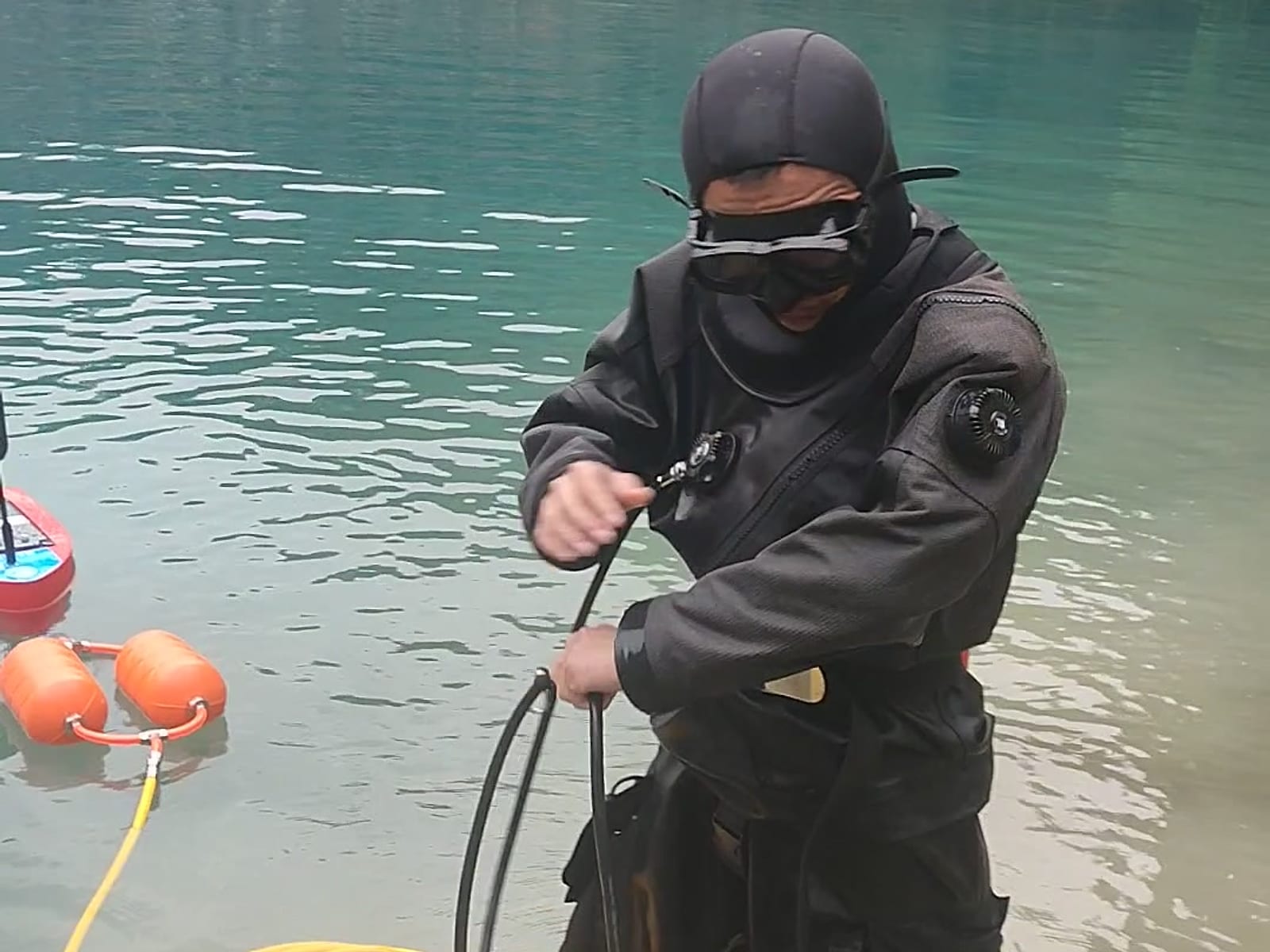
- Max depth · 16 m
- Bottom time · 52 min
- Water temp · 14 °C
- Visibility · 4 m
- System · WOLACH S9
- Dived · Mar 24, 2026
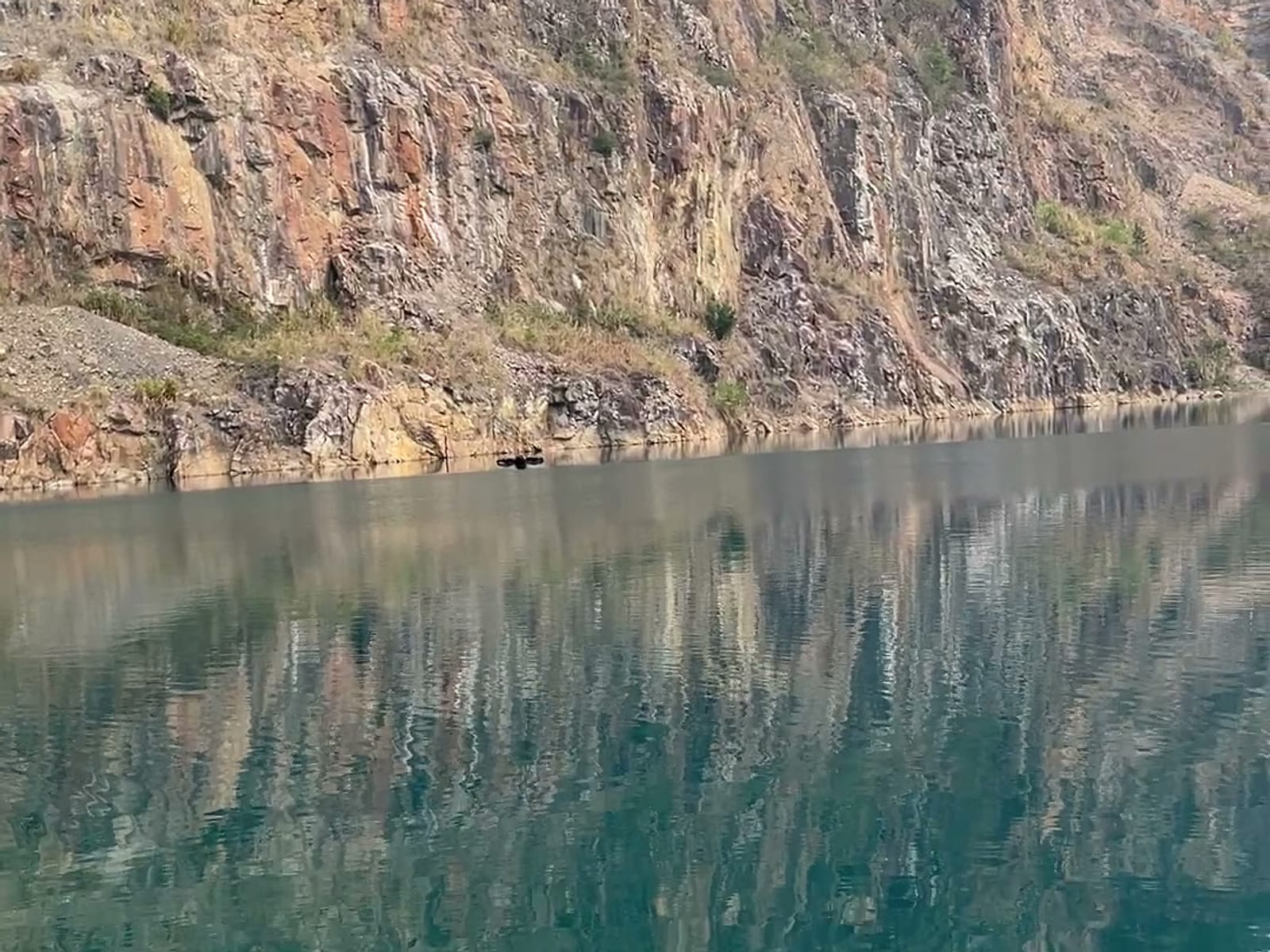
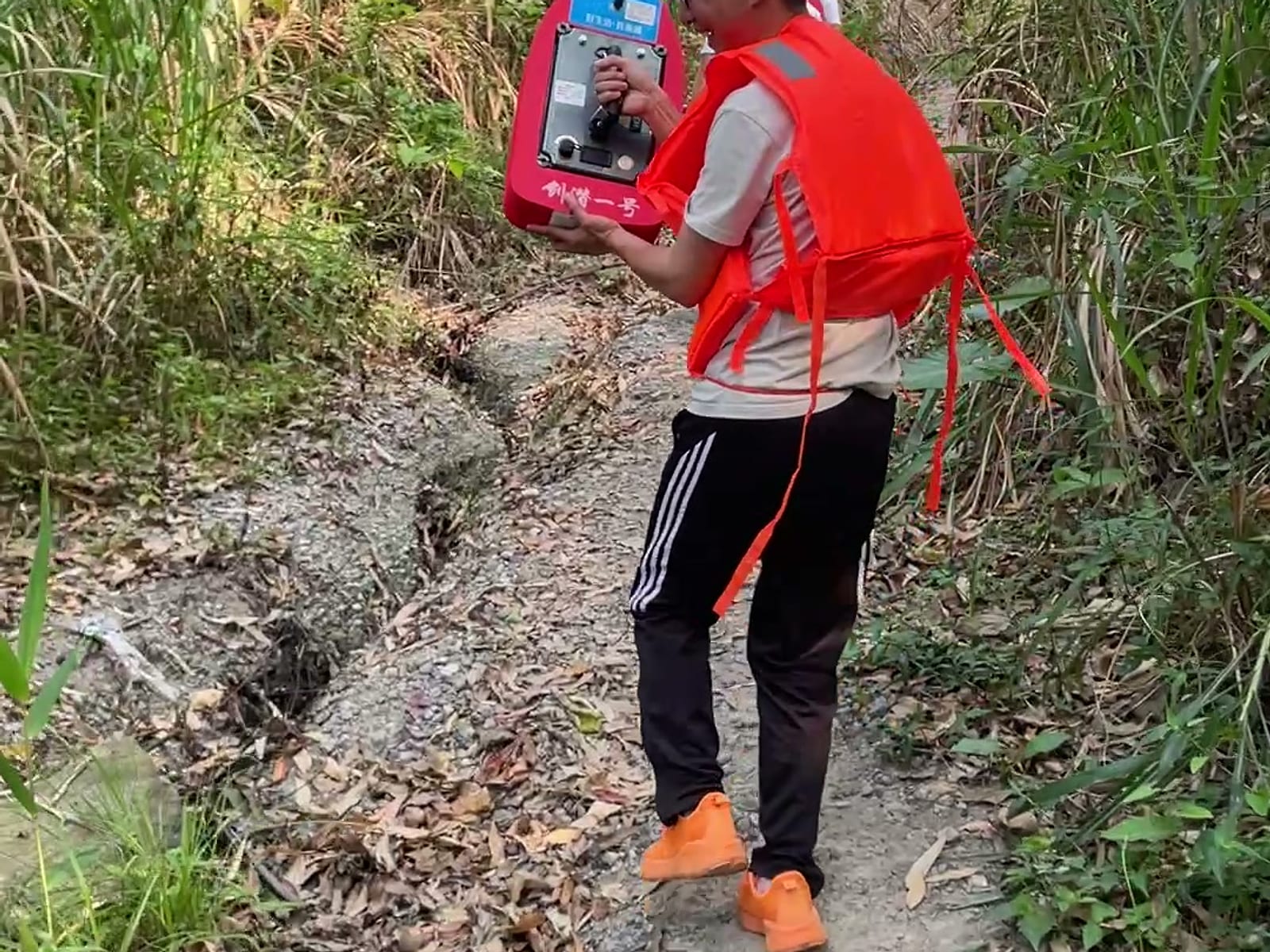
The quarry does not look like much from the top of the track. Grey water, a rock face, a few abandoned concrete blocks at the edge, and a wind that comes off the ridge. What makes it interesting is that the walk down is twenty minutes over wet rock, which means everything goes down on someone’s back — machine, battery, hose, two cylinders’ worth of gear and the tool bag. Three of us, one machine, and a decision made at the car: the S9 comes because the entry is long and the shallower models would have meant two trips.
The unit goes in before we do
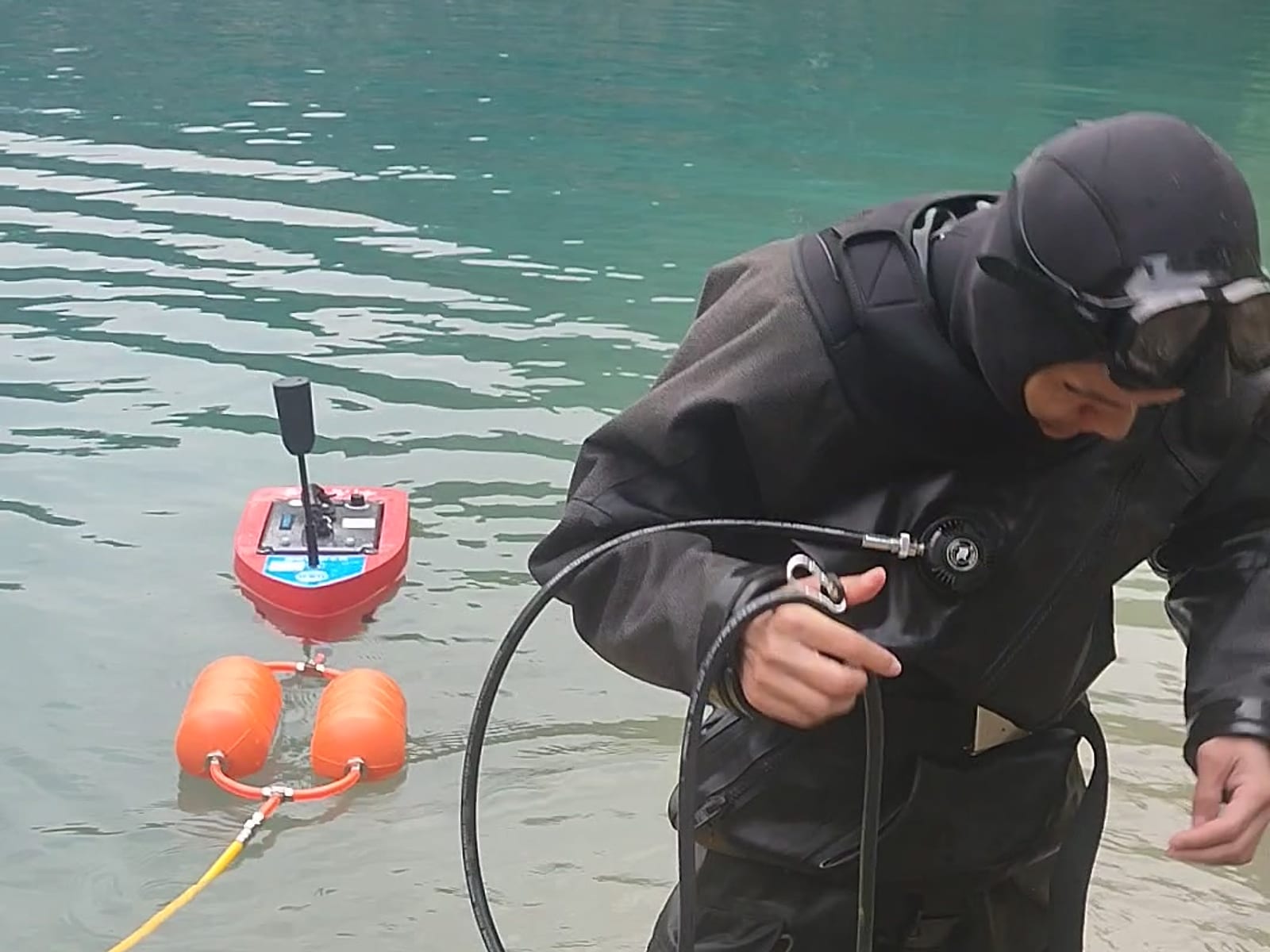
Standard practice for a walk-in site: the machine is set up and run on a flat block at the water’s edge before anyone kits up, because a machine that will not start is a ten-minute fix on land and a much longer conversation at the bottom of a track. The battery read three bars, the drain box was dry, the hose was laid out along the shore in a loose line rather than coiled. Then the entry, which is a step off a wet slab into two metres, and a swim out to where the bottom drops.
The layer at six metres
The visibility was four metres in the warm top layer and about a metre and a half below it. Six metres down, everything went the colour of weak tea, and the temperature dropped from fourteen to nine in the space of a fin stroke. It is always worth watching the other divers at that boundary: everyone stops, checks their depth reading, and looks up to confirm the hose is still going where they think it is. Ours was fine. The float was thirty metres out over open water.
Cold water, and the weighting we got wrong
We had set up for sea water and paid for it. Fresh water is lighter, and the two kilograms of extra weight we should have added stayed in the car — which meant the first five minutes were a slow uncontrolled descent rather than a hover. Worth recording because it is the single most repeated mistake in this log: fresh water costs you roughly two kilograms, and every diver who has done it once writes it down and does it again six months later. Once corrected with two weights borrowed from a buddy, the S9 was neutral and stayed that way through fifty minutes.
What we actually did
Fifty-two minutes, sixteen metres maximum, and a slow sweep along the rock face looking at the old machinery that gives the site its reputation — a submerged pump housing, some steel work, and a surprising amount of freshwater fish that followed the hose for the whole dive. The hose behaved exactly as it should: trailing behind, never loading, and visible as a line back up into the light at the boundary. The only management was a wrap around a submerged branch that came free on a slow reverse, which one of the group did not notice until it was already clear.
The walk out
Forty minutes up a wet track is the real cost of this site, and it is what makes a single hose machine worth the money: one entry instead of two, one set of batteries in the bag instead of three cylinders. The machine came out of the water still reading two bars and went back up the hill on a shoulder strap. Total count for the day: three divers, fifty-two minutes each, sixty-one litres of air a minute on the S9 and no incidents beyond the weighting error that everybody now knows about.
What we would do differently
- Add two kilograms for fresh water, checked at one metre before descending
- Carry the machine down before kitting up, not after — the track is a climb either way
- Put the float further out; at four metres it drifted towards the near shore on the wind
- Take the fish seriously as a reason to be here. It is the best part of the site.
Keep reading
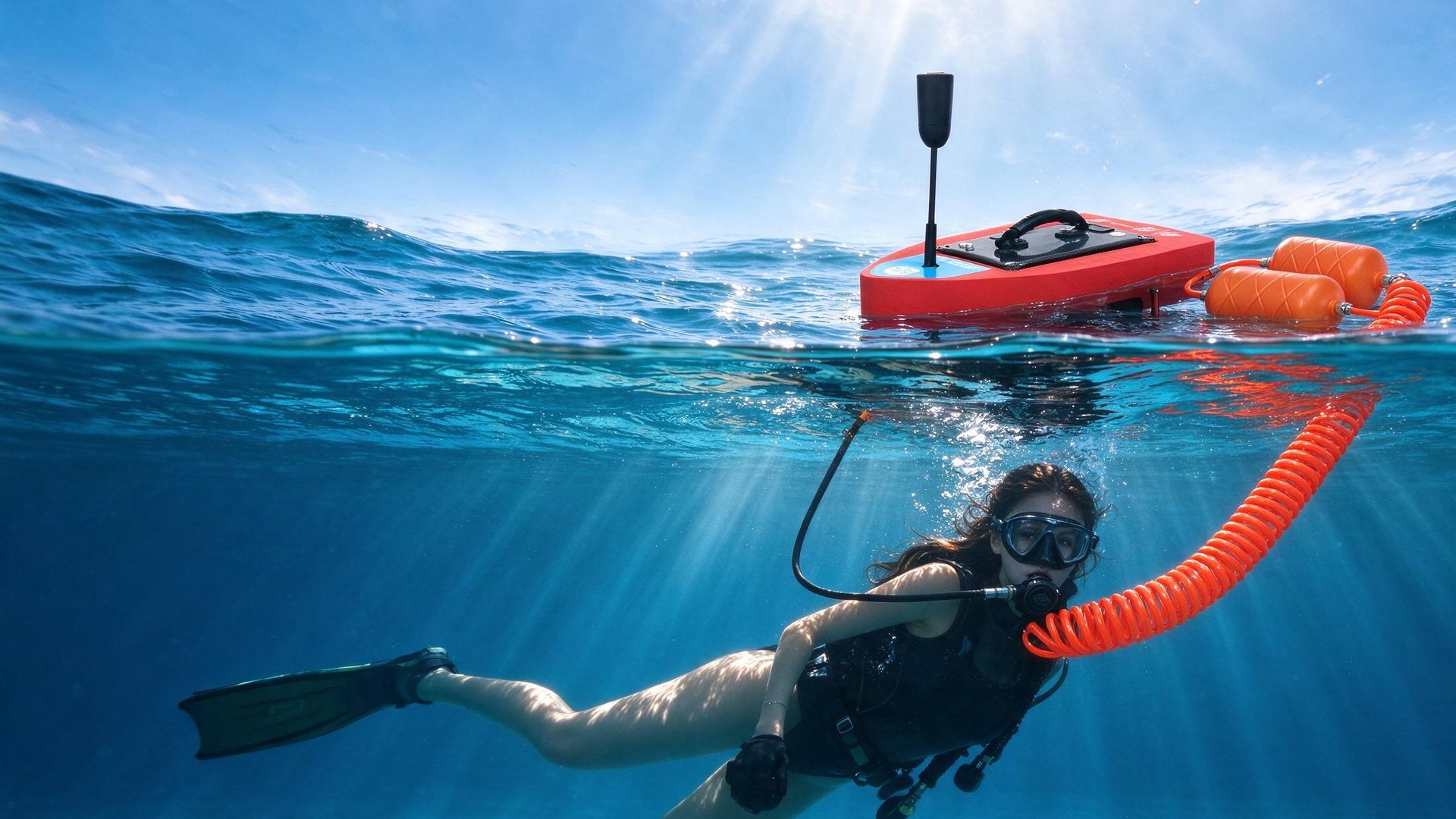
Scuba Tank vs. Tankless Hookah Diving: The Complete 2026 Comparison
Cost, bottom time, depth, safety and logistics — an honest, side-by-side look at when a surface-supply system beats a tank, and when it doesn’t.
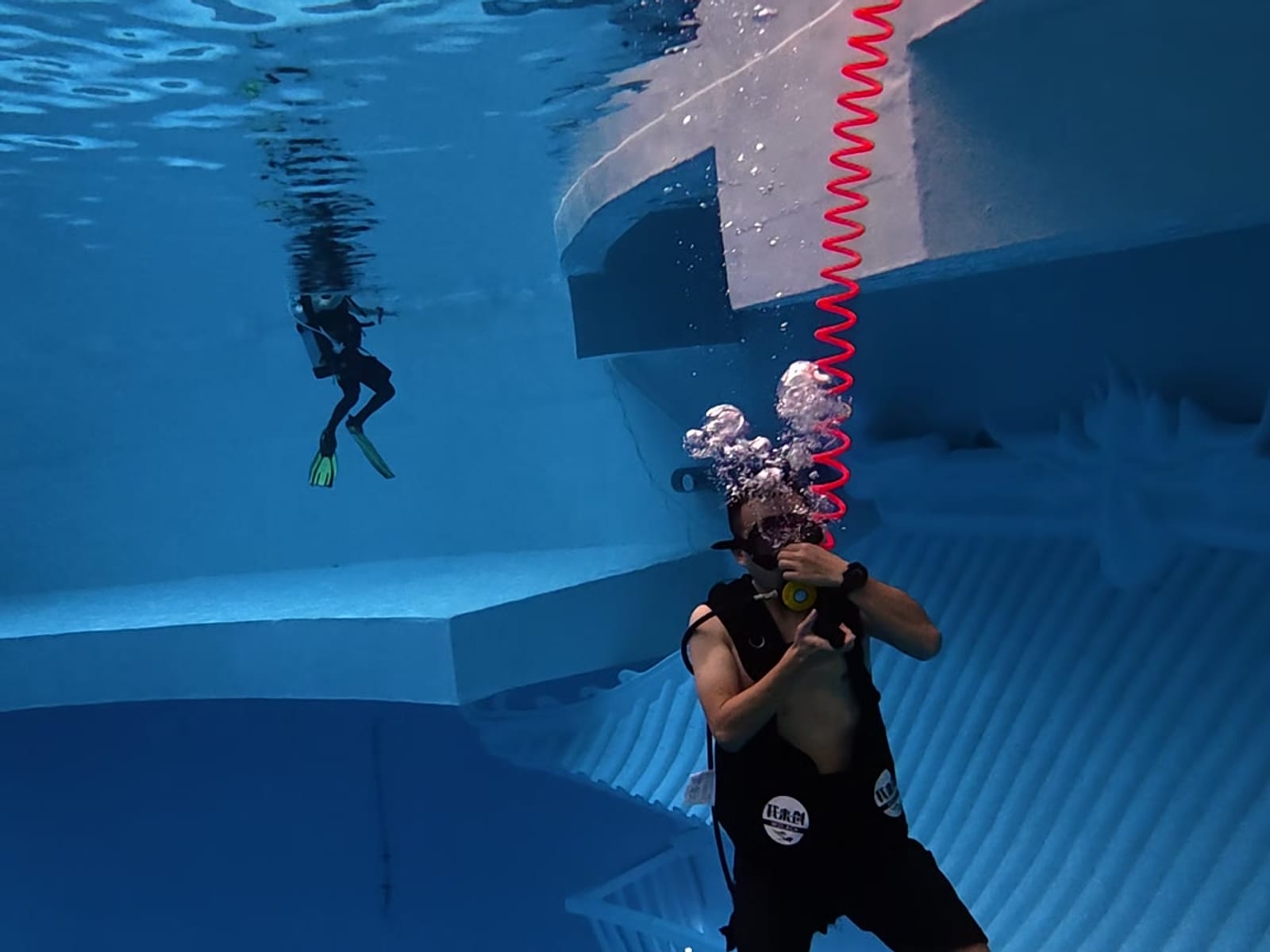
How Deep Can You Go on a Hookah System?
Rated depth is not tested depth, and hose length is not depth at all. The three numbers people confuse, and the no-decompression limits that apply to a hose exactly as they do to a tank.
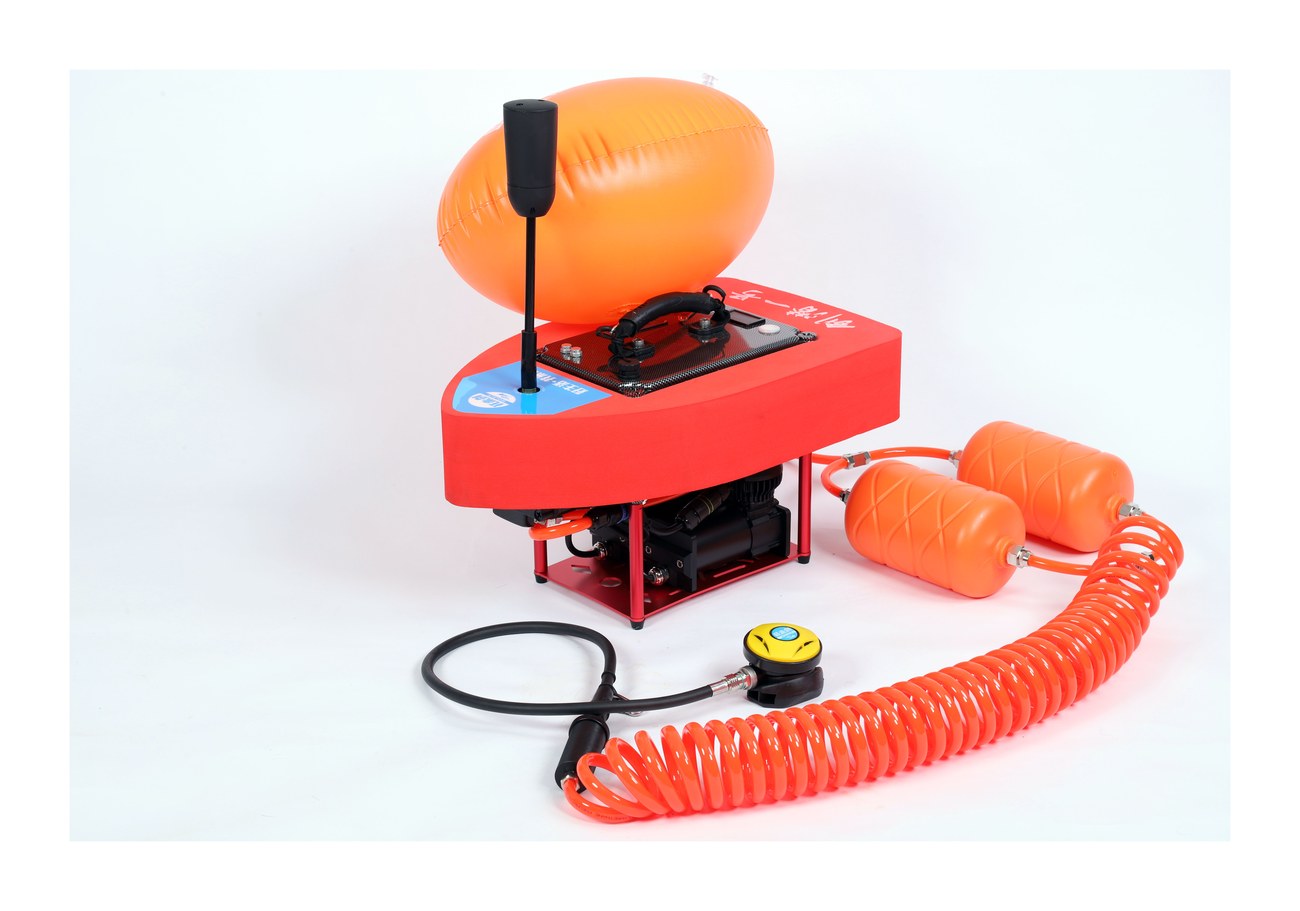
S6 vs S7 vs S9 vs S77: Which WOLACH Is Right for You?
Four machines, one air path, three numbers that decide it. How to pick by the diving you actually do rather than the depth rating you aspire to.