Underwater Photography on a Hose
No bubbles in the frame, no tank to bang on the reef, and as long as you like at one subject. Why photographers are the quietest fans of surface supply.
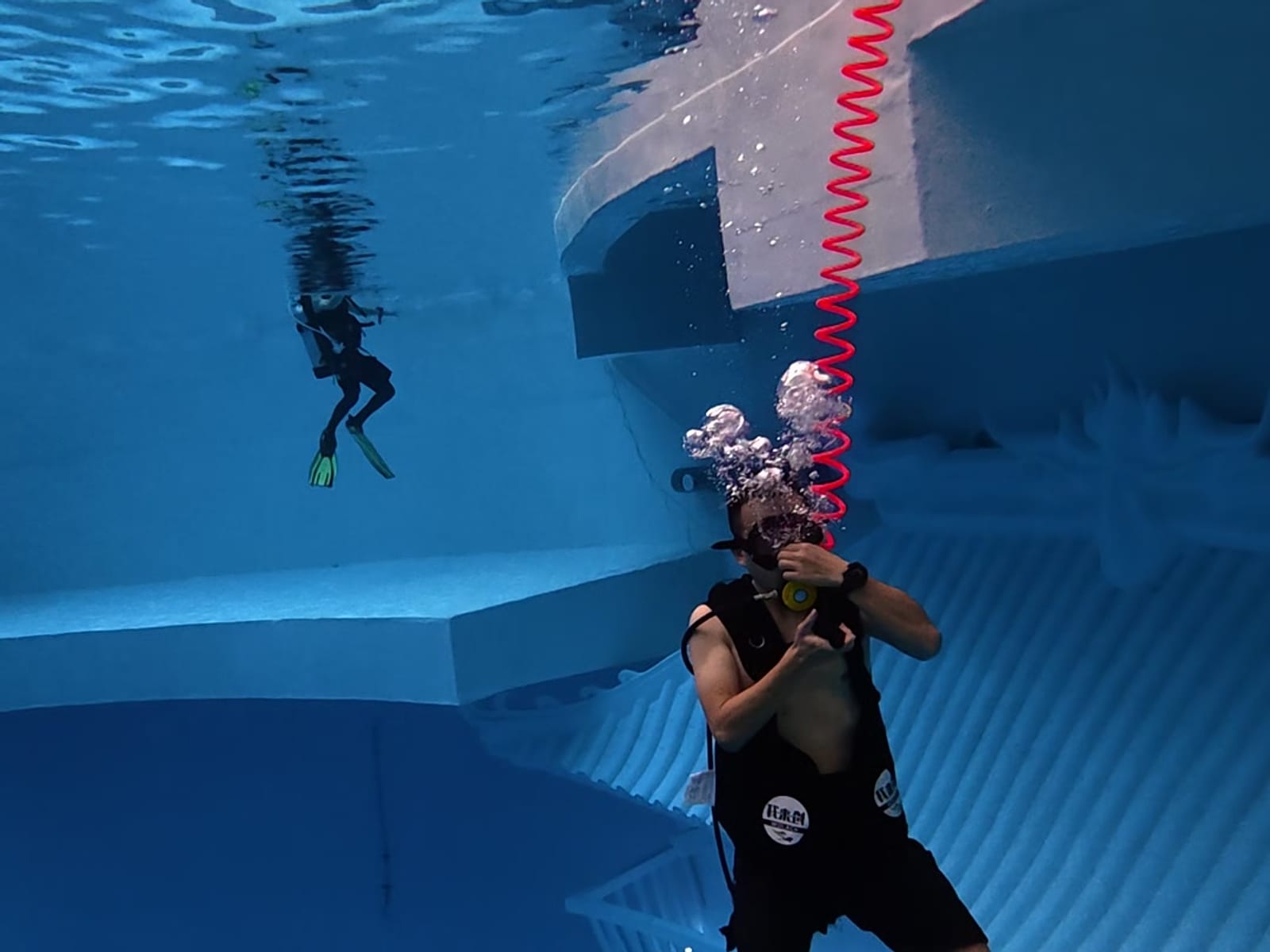
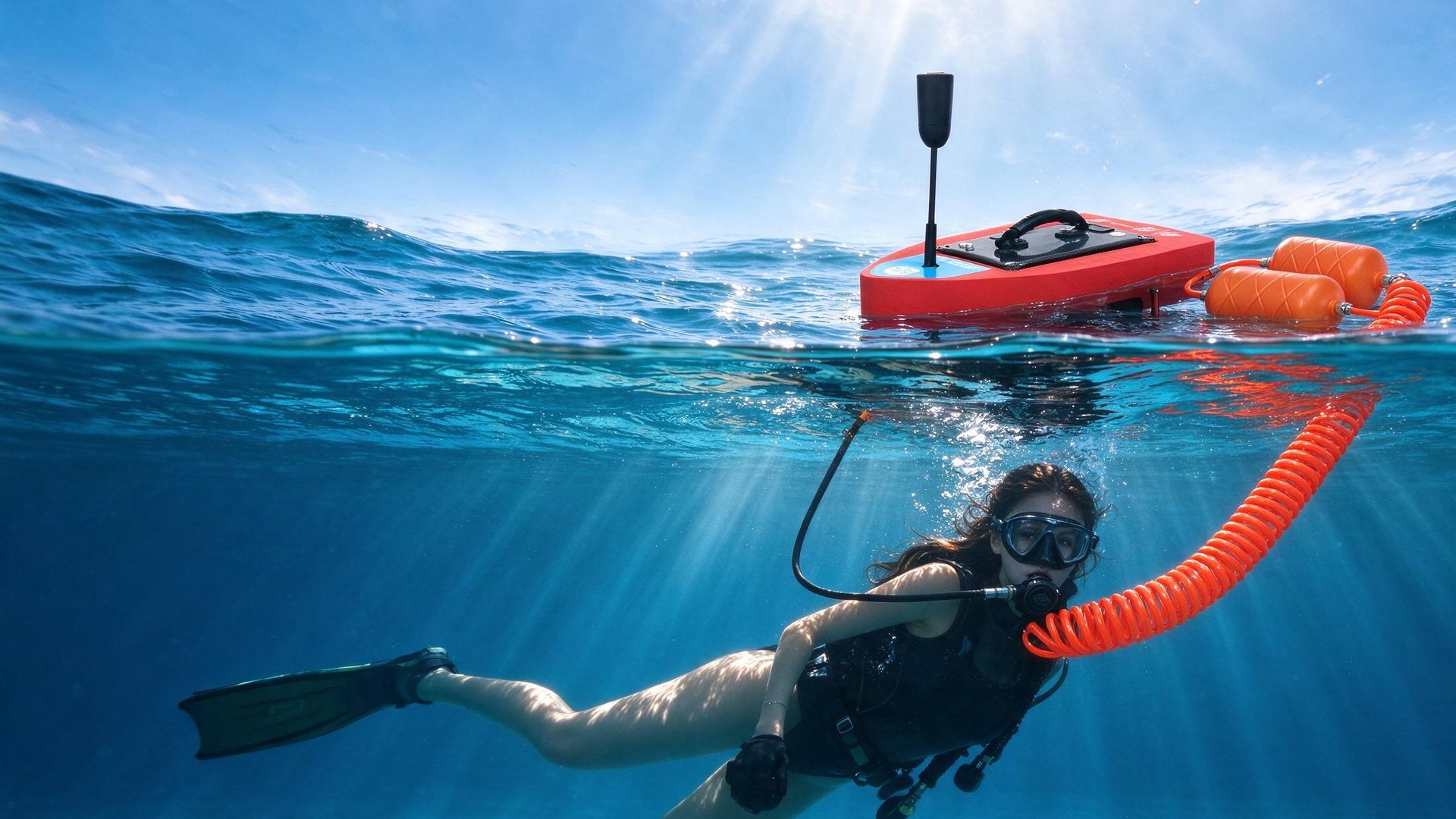
The first thing a photographer notices on a hose is not what is added but what is taken away. No regulator bubbling six inches from the microphone. No cylinder clanking against the reef when they roll to frame a subject. No gauge to watch, no turn pressure forcing them off a subject that is finally behaving. Underwater photography is mostly patience, and patience is the one thing a scuba tank does not supply. That is why photographers who try a surface-supply system tend to be its most committed converts — more so than the divers who only care about depth.
The practical advantage is time
A good macro shot is often the fourth or fifth visit to the same subject, because the first two the animal moves, the third the light changes, and the fourth it decides you are furniture. On scuba that sequence is interrupted by gas: each visit ends on a pressure reading rather than on the photograph. On a hose the diver stays until the shot is there, and the same applies to wide-angle work that needs a particular light angle — waiting twenty minutes for a sunbeam on a reef at eight metres is entirely reasonable on a hose and a cylinder management problem on a tank.
Managing a hose while shooting
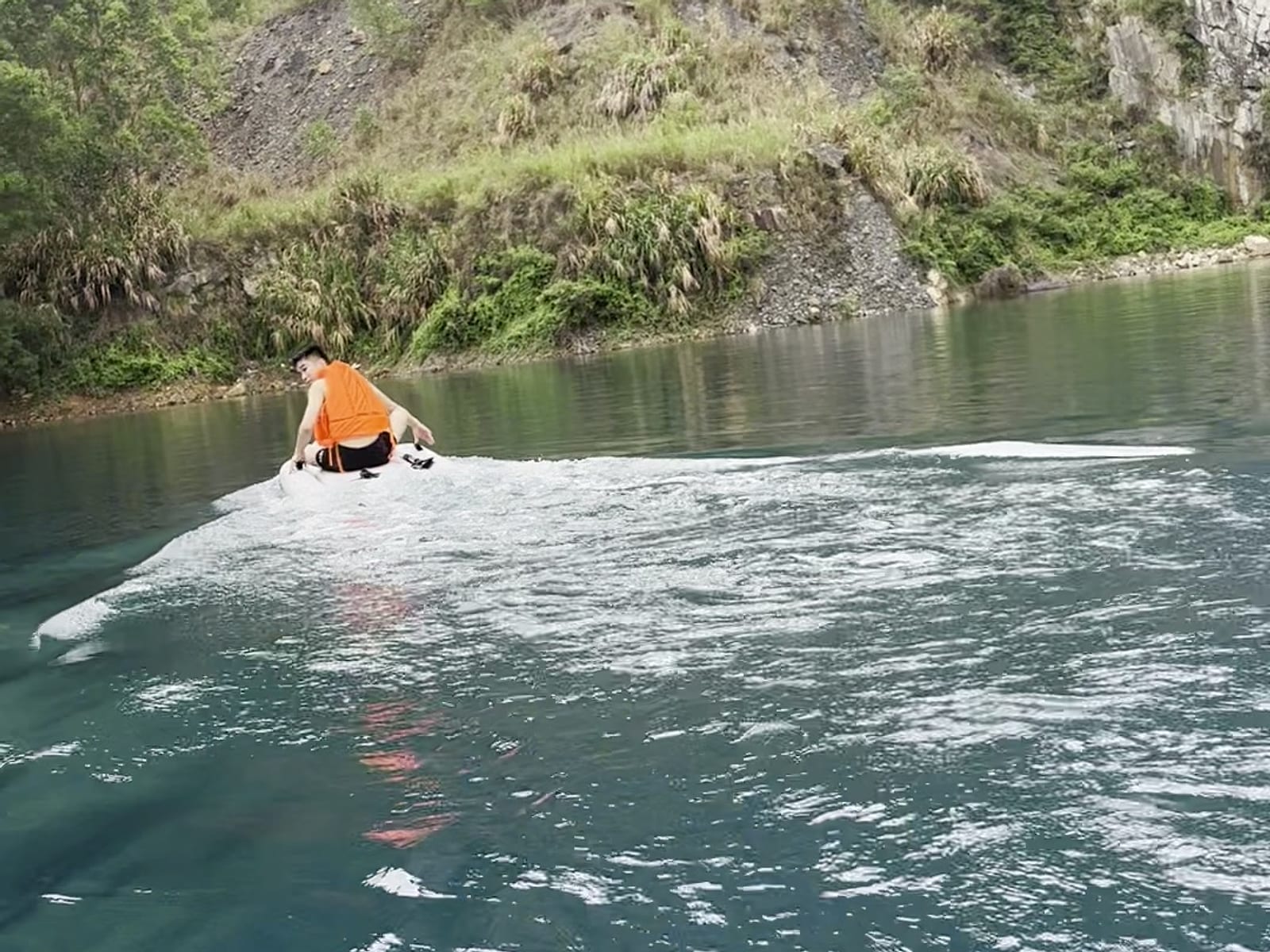
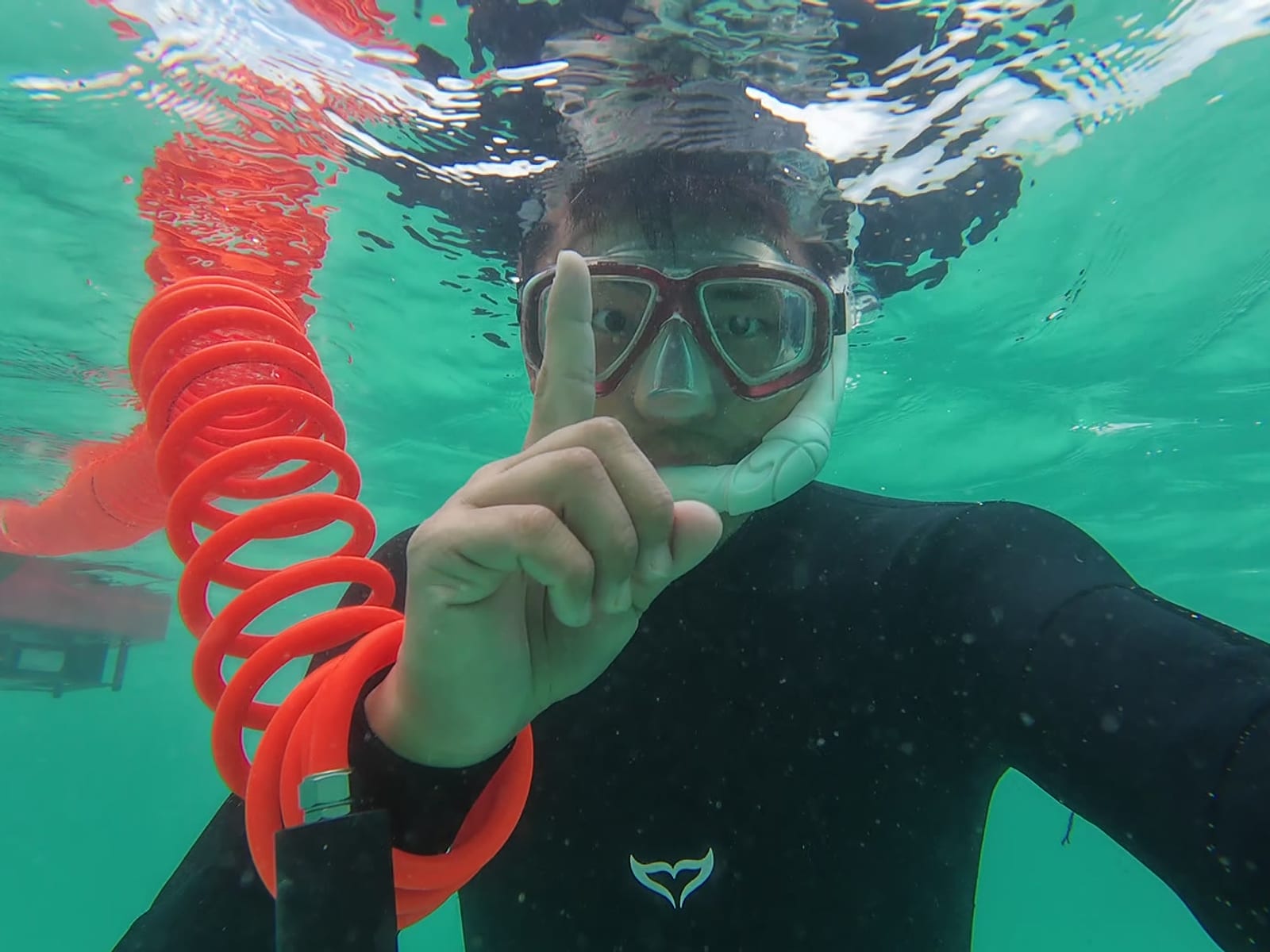
The hose is the one thing that changes your technique. A photographer working on a subject tends to hold position with small adjustments, which is exactly the behaviour that wraps hoses: you stop noticing the line behind you because you are looking forward. Three habits fix it. Keep the hose behind you rather than beside you, so a wrap is immediately obvious. Set the float up-current of the subject if there is any flow, so the hose trails away from your working space. And check the hose every time you change position, not every time you notice the pull.
Kit notes for hose shooting
- A short hose section in the system makes close work easier than a long one
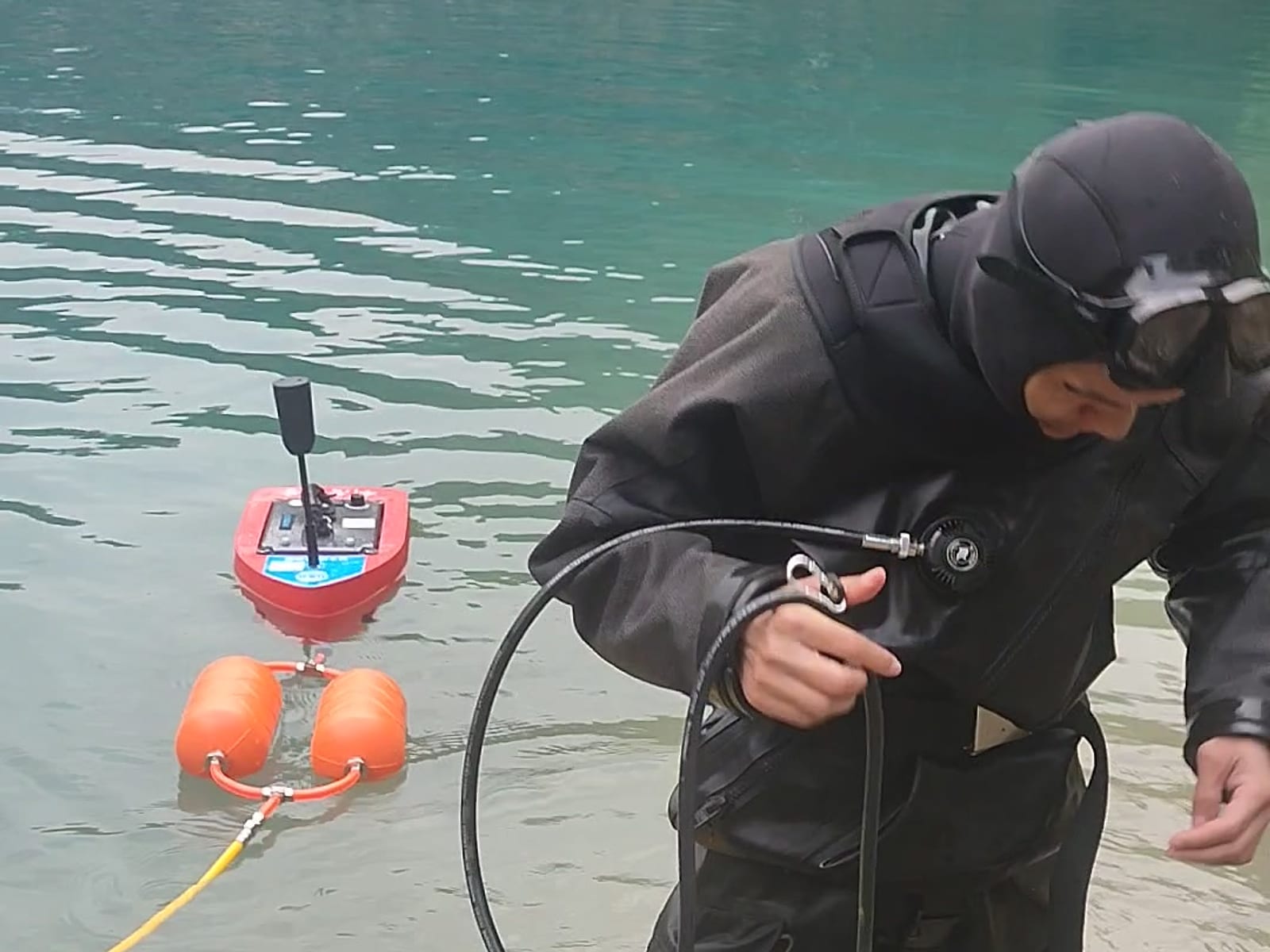
- The float is your shade and your reference point — do not let it drift behind you
- Buoyancy without a cylinder means you can go lower and slower than on scuba
- No bubbles means better results with ambient light and with shy subjects
- A mesh bag for lens caps, because they will be dropped, repeatedly
- Spare-air bottle mounted low and to the side, so it does not foul a roll to portrait
Where the hose is the wrong tool
Two honest limits. Depth, first: a hose is not a photographic tool if your subject is at thirty metres. The ratings top out at 29 metres on the deepest model, but the comfortable working range for photography — where a subject can be approached slowly and the light is worth having — is much shallower, and most good photographs are taken above fifteen. And range, second: a camera plus a hose plus a long swim in current is a genuinely tiring combination. If your photography involves travelling long distances underwater, a tank remains the right answer, and no amount of bottom time compensates for not being able to reach the subject.
The short version
- The gain is time and quiet: no regulator noise, no cylinder to bang on the reef.
- A good shot is often the fourth visit to a subject. A hose lets you make the fourth visit in one dive.
- Keep the hose behind you, not beside you, or you will wrap it while looking forward.
- Float up-current of the subject so the hose trails away from your working space.
- No cylinder means neutral buoyancy is easier — useful for going low and slow.
- Depth and range are the honest limits. Most good photography sits above 15 metres.
FAQ
Do I need a diving certification?
How deep can I go?
What happens if the battery runs low?
Keep reading
Scuba Tank vs. Tankless Hookah Diving: The Complete 2026 Comparison
Cost, bottom time, depth, safety and logistics — an honest, side-by-side look at when a surface-supply system beats a tank, and when it doesn’t.
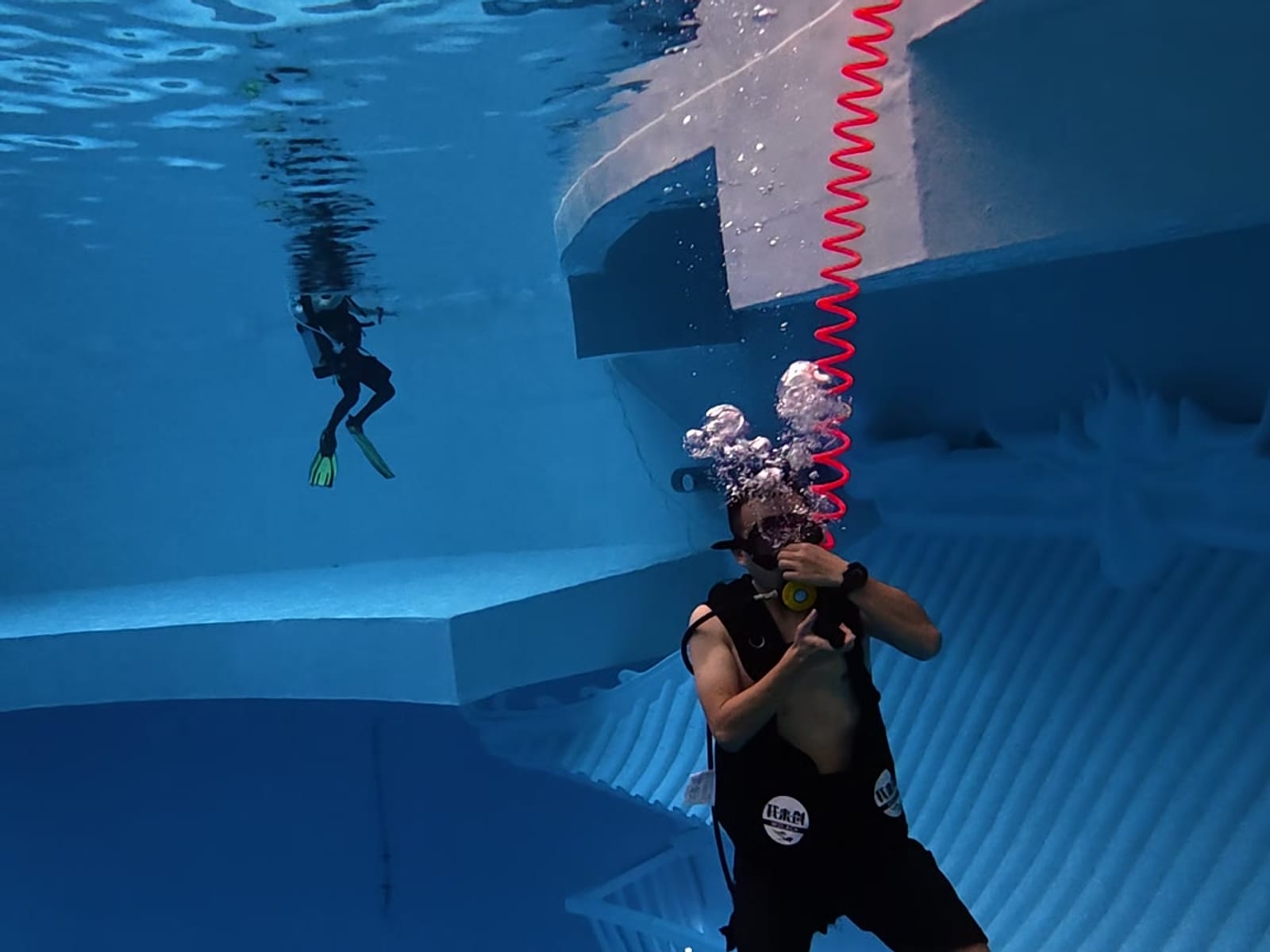
How Deep Can You Go on a Hookah System?
Rated depth is not tested depth, and hose length is not depth at all. The three numbers people confuse, and the no-decompression limits that apply to a hose exactly as they do to a tank.
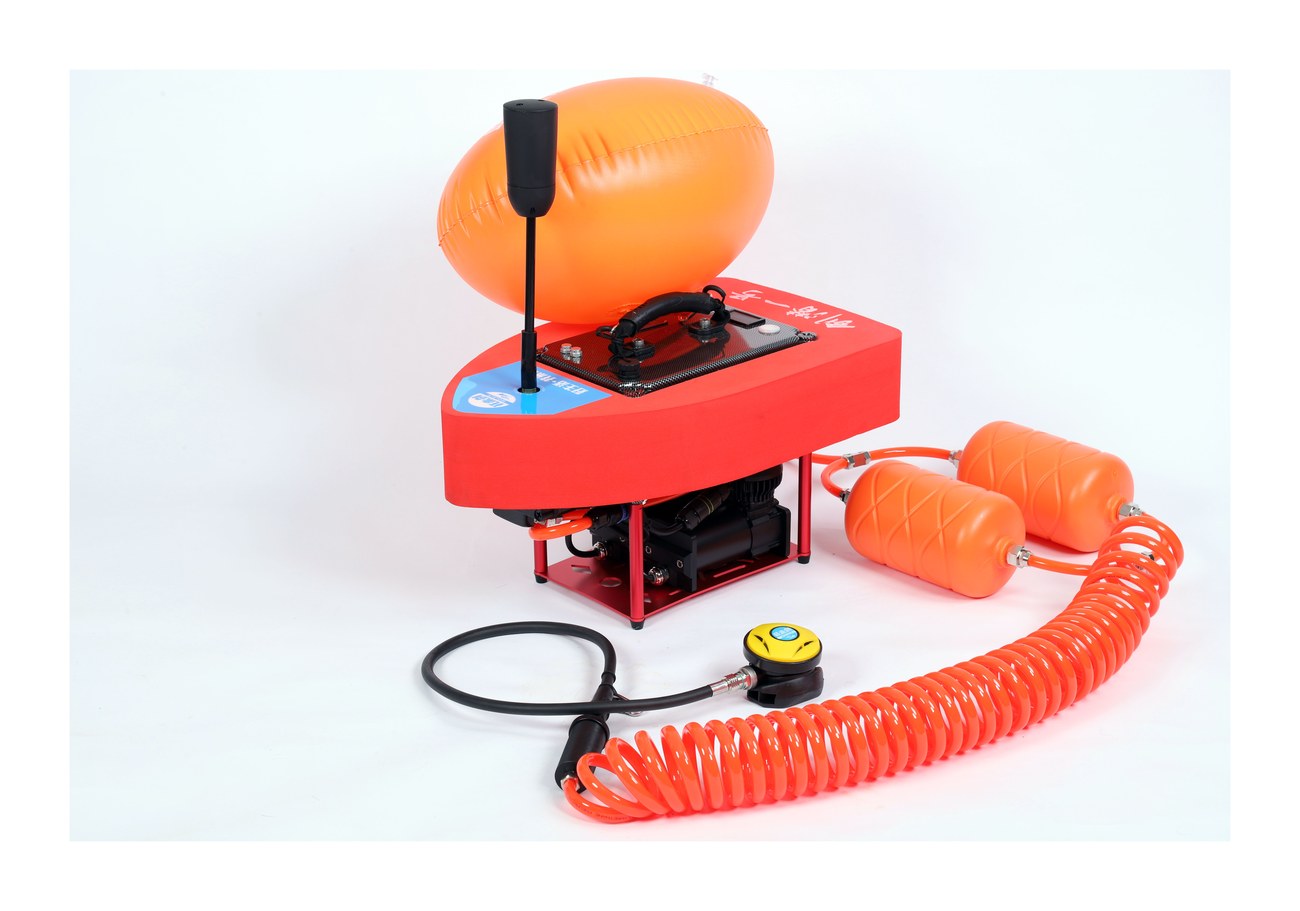
S6 vs S7 vs S9 vs S77: Which WOLACH Is Right for You?
Four machines, one air path, three numbers that decide it. How to pick by the diving you actually do rather than the depth rating you aspire to.