Catching Fish on a Hose System: Spear, Trap and Hand
Fish are the only quarry in this section that can leave, and that changes everything about which methods work legally. Spearing, trap and net work, and the narrow cases where hand-catching is worth the time.
Fish are the only quarry in this section that can leave. Shellfish, urchins, crab and sea cucumber are either fixed to the bottom or slow enough that a diver prepared to work methodically will reach them. Fish swim, and that one fact decides which methods work, which ones the law tolerates, and what a hose system is genuinely useful for.
It also decides the shape of this article. Spearfishing with any breathing apparatus is banned in most jurisdictions, and we covered the wording of those rules in detail in the article on spearfishing legality. So the practical question is not whether you can shoot fish on a hose. It is what the hose lets you do that is both legal and effective, and there are three answers: run a trap line properly, run a net or longline properly, and take fish by hand in the narrow set of situations where that works. None of those look like hunting.
What the hose actually buys you with fish
Not silence. This is worth stating plainly because it is the most common misconception about surface supply: the regulator at your mouth makes the same noise whether the air comes from a tank on your back or a hose from a float. A fish reads pressure changes through its lateral line as much as it reads sound, so the breathing and the bubbles are still there.
What the hose changes is time and position. A diver working a trap line on scuba is managing gas, an ascent and a no-decompression limit, so the session has to be paced around the cylinder. A diver on a hose with a surface team can stay over one pot, or one section of net, for as long as the work takes. That is the whole advantage, and it is a large one when the job is releasing undersized catch, clearing a fouled panel or checking a line that has half buried itself.
The second thing it changes is the exit. When something goes wrong at twelve metres — a hand into a net, a line across the hose — you are connected to a float and to a team that can see where you are. In net and trap work that matters more than anywhere else in this section.
Spearfishing: the method most places forbid
Where a hose system and fish appear together legally, it is almost always under a commercial permit, and the permit is what makes it legal rather than the equipment. A small number of jurisdictions license commercial spearfishing for specific species, some allow it for invasive or pest species, and a few allow it for catch-and-tag survey work. If you are reading this as a recreational diver, the honest answer for your own water is almost certainly no, and the legality article explains why the phrase "breathing apparatus" catches a hose even when the text never says the word tank.
For a licensed operator, the technique points are unglamorous. Approach along the bottom or along structure rather than down through the water column. Never chase: a fish that has seen you and moved is gone, and following it burns air and spooks everything behind it. Work the edge of the current, where fish hold facing into the flow. Take the shot from close and from behind the eye line. Do not shoot into a hole you cannot reach and empty. And carry the fish on a float stringer rather than on your body, or you will be dragging a struggling animal through the net you came to check.
What decides whether the shot lands
- Approach angle — along structure and along the light, never straight down through open water
- Stop moving. Fish settle to a stationary diver far more readily than to a slow one
- Work the current edge, where fish hold facing into the flow
- Close range and a clean angle behind the eye line beats a long shot every time
- A shot into a hole you cannot reach is a dead fish you will not recover
- Stringer on the float, and check the float line before every descent
Traps, nets and longlines: the route that is usually open
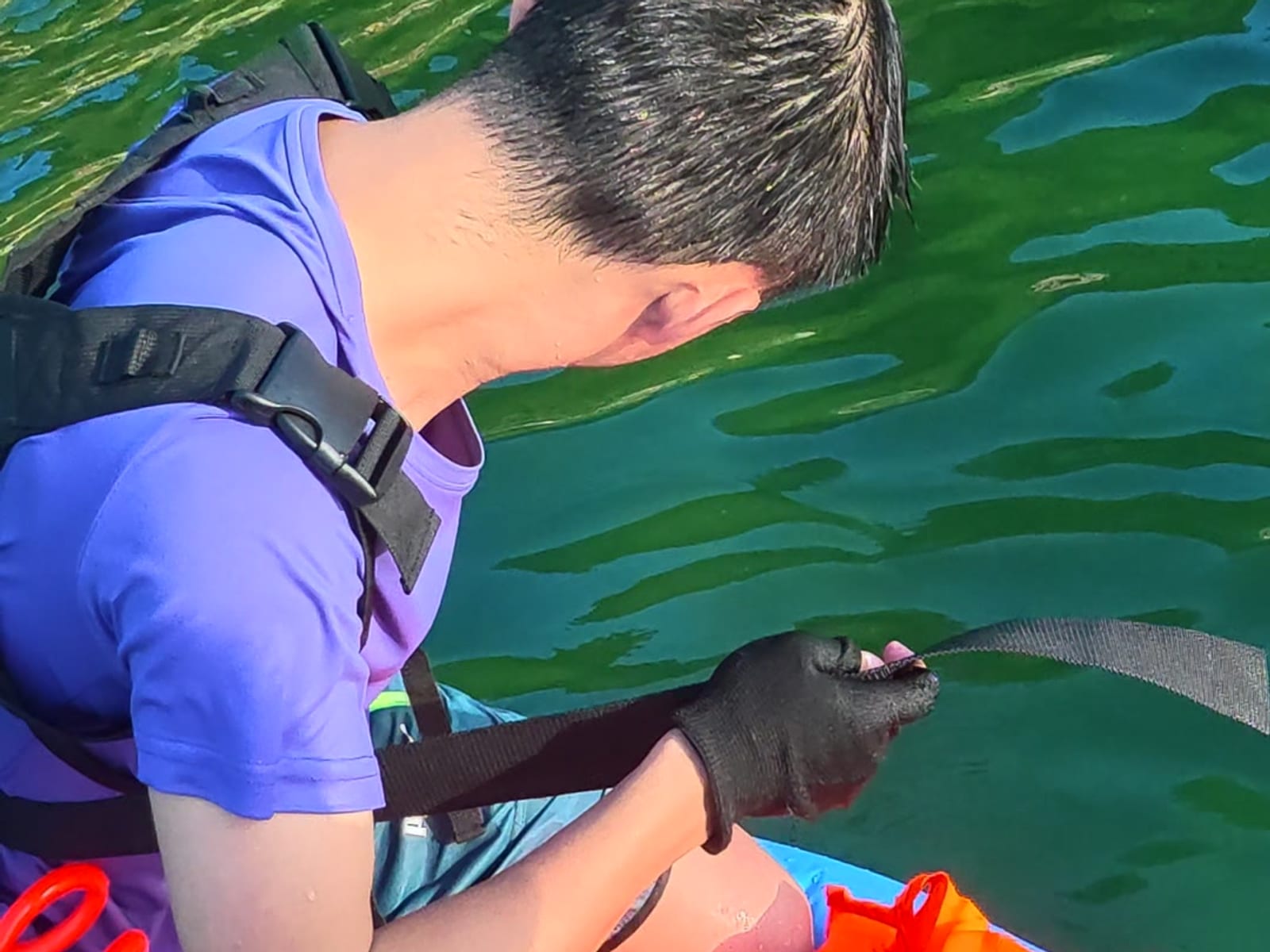
This is where a hose system earns its place with fish, and it is a gear job rather than a stalking job. Pots and traps are set, marked, soaked and lifted. A gill net is set on a line and picked. A longline is run and cleared. All three put a diver under a floating line with a working surface above, which is exactly the situation a hookah is built for: you can work every section thoroughly instead of hurrying through it on a cylinder.
Two things matter more here than elsewhere. The first is that a loaded rope grips a hose rather than sliding over it, so the discipline set out in the hose-tangle article is not optional: hand over hand, never let the hose cross in front of you, and keep the slack on the surface where the float crew can see it. The second is soak time. A trap left too long catches more than it should, and in most fisheries the rule is written about soak duration and marker requirements rather than about the diver. Lifting on schedule is both compliance and better practice for the catch you intend to release.
Hand-catching fish: where it is worth doing
There are conditions where taking fish by hand is genuinely practical, and they are narrow. Nocturnal species that rest in a hole or under a ledge and will not move until they are touched. Flatfish sitting on open sand. Fish sheltering in a rock crevice that you can block at one end and work from the other. On a hose this is slow, methodical, close-quarters work, and the advantage is real: you can spend twenty minutes on a single hole instead of five.
Be honest about the yield, though. Hand-catching is a spot method for particular species on particular ground; it is not a way to fill a catch. If the goal is volume, the trap and net routes are the ones that produce it, and the article on crab and octopus covers the hand-work species that genuinely repay the time underwater.
Handling decides what the catch is worth
- Spike or bleed immediately — a fish left to suffocate is worth less and spoils faster
- Ice slurry rather than ice in a box: fish held in liquid ice cool far faster
- Keep the catch out of the sun from the moment it is in the boat
- Release undersized fish alive and quickly; a size limit only works if the released fish survives
- Record species and numbers, because that log is what a licence is assessed on
The short version
- A hose does not make you quiet. It gives you time on one spot and a surface team that can see you
- Spearfishing with any breathing apparatus is banned in most places, and "breathing apparatus" includes a hose
- Where it is legal at all it is a commercial permit that makes it legal, not the equipment
- Traps, nets and longlines are the routes that actually work on a hose, and they are gear jobs
- Hand-catching is for specific species on specific ground, not for volume
- Spike, bleed and cool the catch, and put undersized fish back alive
FAQ
Do I need a diving certification?
How deep can I go?
What happens if the battery runs low?
Keep reading
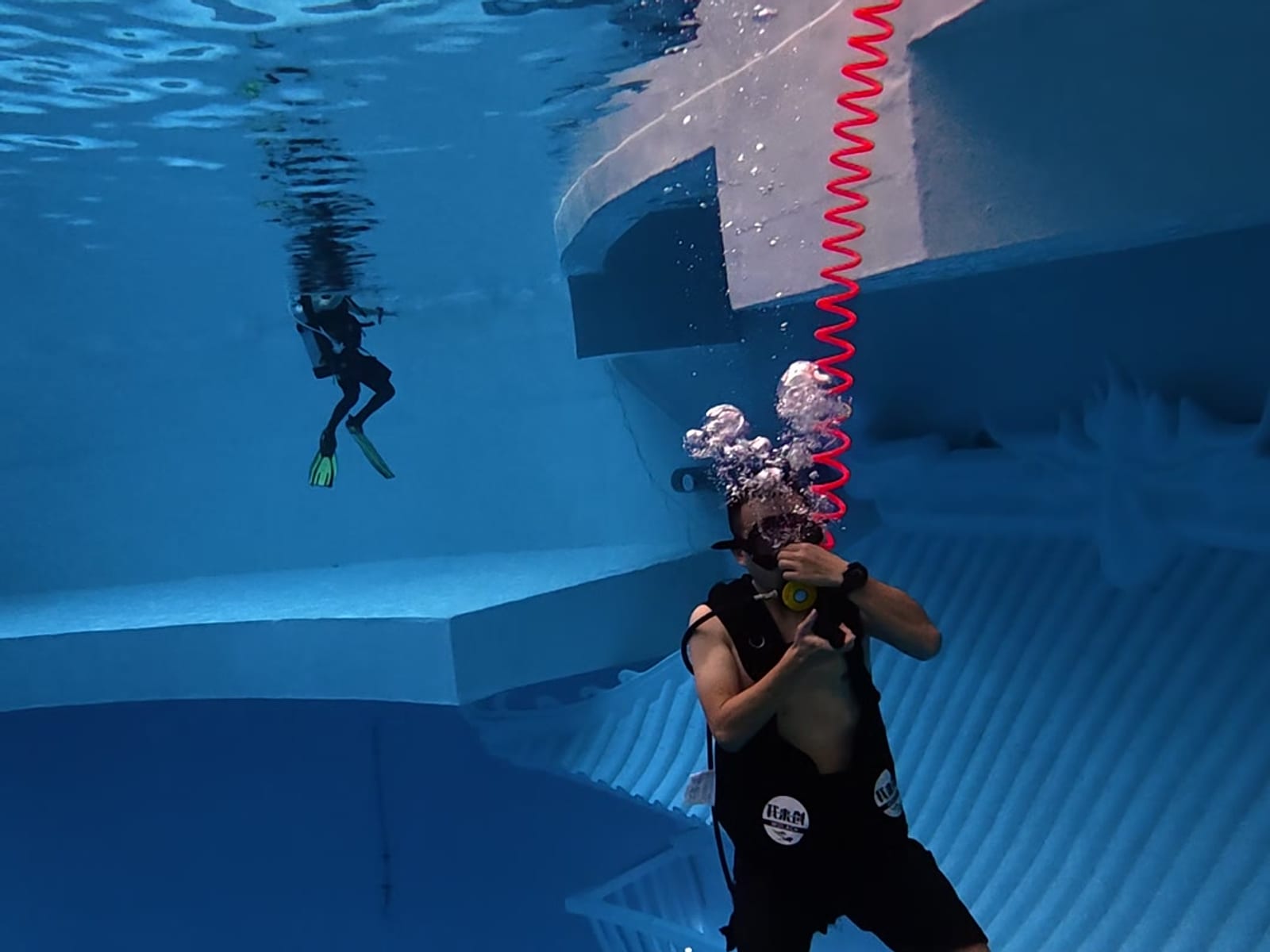
Is Spearfishing on a Hookah System Legal?
In many places, no — and the rule is usually written about breathing apparatus rather than about tanks. What the regulations actually cover, why they exist, and how to check your own water.
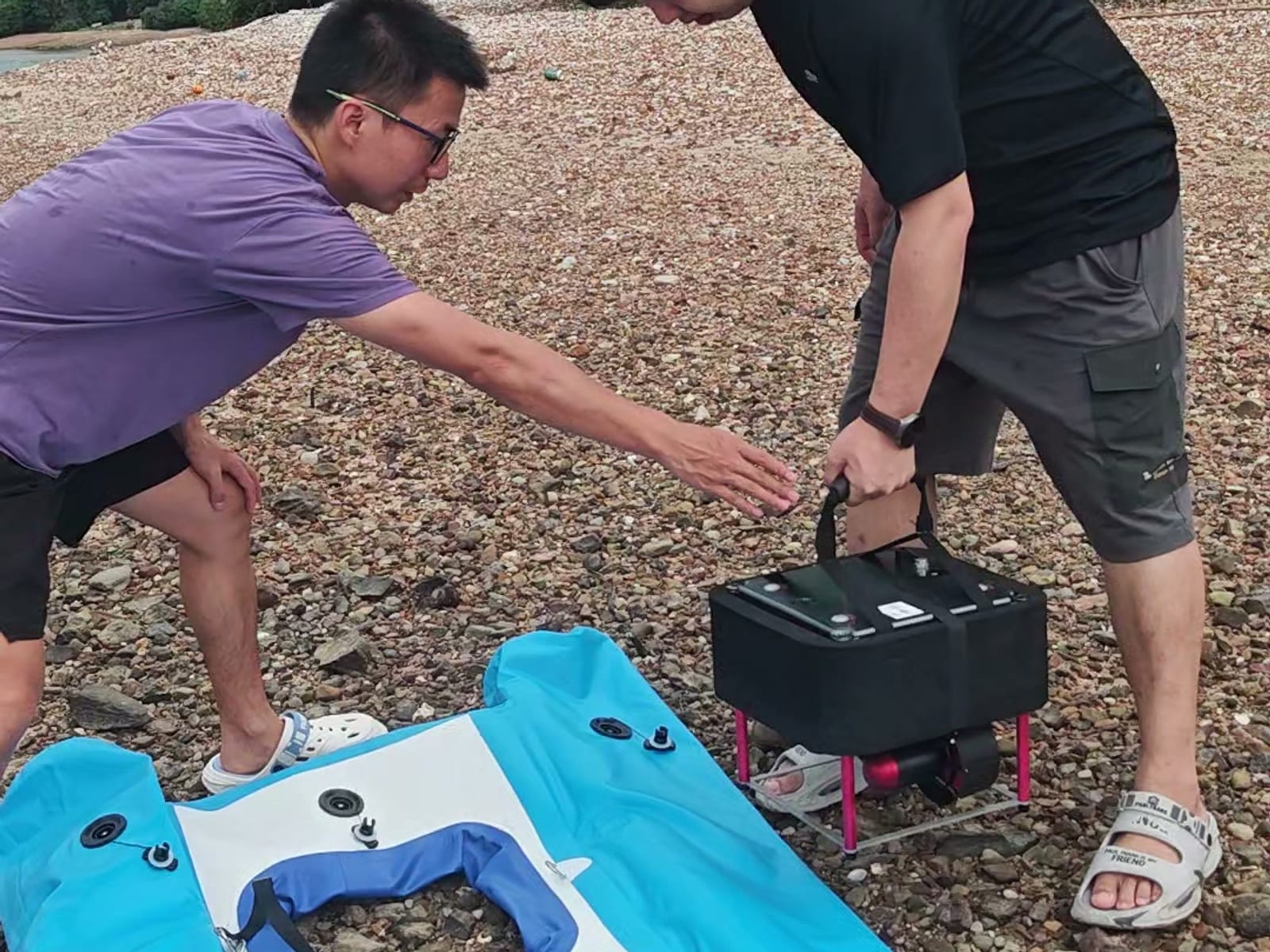
Collecting Shellfish and Snails by Hand
The oldest use of a hose there is, and the one with the fewest rules attached. Reading the bottom for size, working a tide window, and carrying catch without losing it.
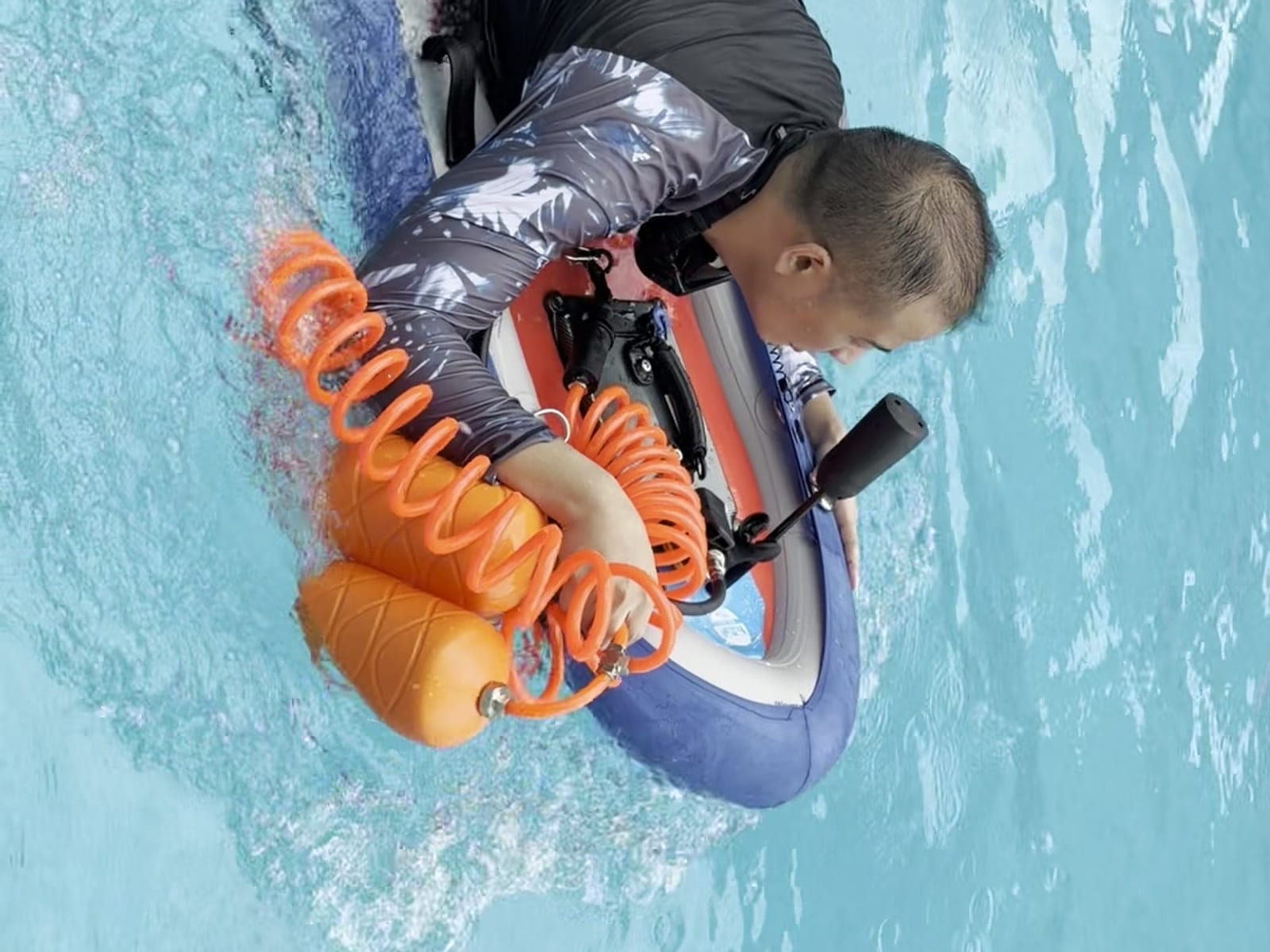
Underwater Harvesting 101: What a Hose System Is Actually For
Collection, catching and trap-tending are three different activities with three different rulebooks. The one question that decides which you are doing, and where a hose is welcome rather than banned.