Sea Cucumber and Abalone: The Most Regulated Harvest There Is
High value, no mobility, and a history of collapse. Why these two attract quotas, size limits, closed seasons and blanket bans on breathing apparatus — and what licensed work looks like.
These two species are the same problem everywhere in the world: high value, no ability to escape, and one individual removed is one individual gone. That is why nearly every country with a population of either has placed them in its most restrictive category — quota, minimum size, closed season, special permit — and a substantial number have written a prohibition on using underwater breathing apparatus directly into the rules. The reasoning is not hard to follow. A mature abalone takes several years to reach size, and a diver with a hose can clear an entire reef face in a single tide. On these two species, establishing compliance first is not caution. It is the precondition for the work existing at all.
The restrictions these two usually attract
| Special permit and quota | Common: issued per person, per trip or per season, often with a total cap |
| Minimum size | Almost always; the measuring method is often prescribed too (shell length or width, drained) |
| Closed season | Spawning closures are usually absolute, and the dates differ by region |
| Breathing apparatus | Prohibited in many places; where allowed, freediving or a depth limit is often specified |
| Records and reporting | Common: position, count and size must be kept, sometimes reported back to the authority |
| Transport and sale documentation | High-value species generally require traceable origin; without it the catch cannot be sold legally |
What licensed work looks like where it is allowed
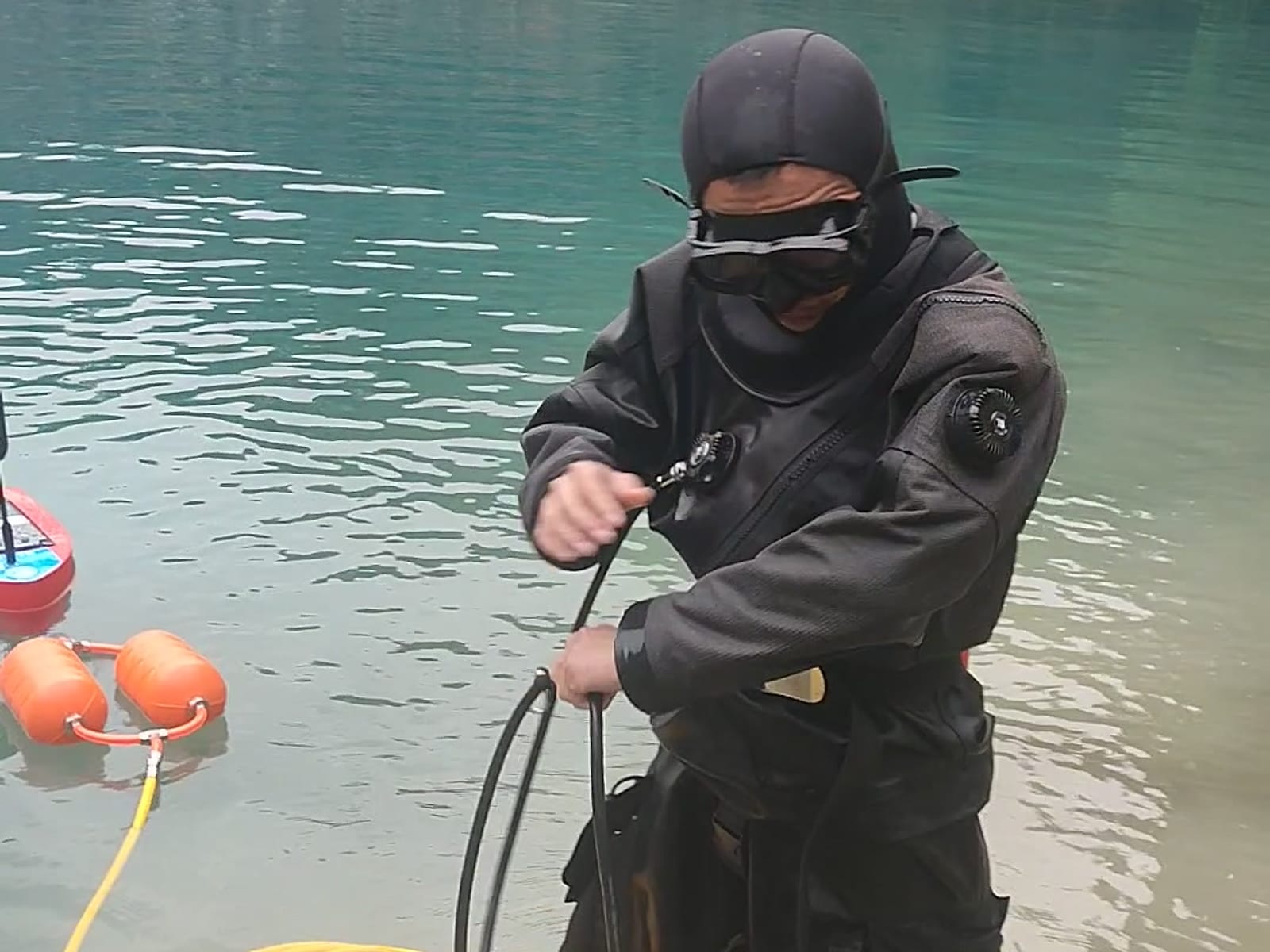
Where it is permitted, the work has a very consistent shape, because the rules shape it: one diver, one trip, a fixed count, and a record. The usual arrangement is a hard cap per session, with measurement on the spot and anything undersized returned exactly where it was found. Because the count is fixed, the job stops being about how much you can find and becomes about how accurately you can find it. Both species are strongly tied to microhabitat: abalone want a current-swept rock face with algal cover and a shaded crevice to sit in, while sea cucumber prefer the sediment band where sand meets rock. Understanding one site properly is worth more than rushing three.
Removing without damaging
The skill that most needs practising in compliant work is not finding, it is not damaging. An abalone is clamped to the rock, and levering it off directly tears the foot and cracks the shell base, and a damaged individual released back will usually die regardless. The correct approach is to slide a thin, blunt tool under the shell edge and push the attachment surface loose from the side, letting the animal release on its own, rather than prising it up from above. Sea cucumber is simpler and more fragile — handling it makes it eject its internal organs, which in most permitted fisheries is treated as damage or waste, so the accepted method is to support it whole, without squeezing and without turning it over. These two techniques have one thing in common, which is that both are slow. Slow is what a hose system is good at.
The compliance list
- Carry the written permit, and confirm it covers the exact water you are entering
- Check the day's minimum size and the prescribed measuring method against a real specimen
- Confirm whether the closed season has started — spawning closures are usually absolute
- Return undersized animals where they were found, not stockpiled and relocated
- Scale, caliper and notebook: record position, count and size on the spot
- Keep the origin documentation chain; without it a high-value catch cannot legally move
Where a hose still belongs when collection is banned
It is worth being explicit: even where these two cannot legally be taken, a surface-supply system has legitimate work in exactly this habitat. Stock survey and monitoring — a diver running transects and recording counts and sizes is standard practice for fishery managers and researchers, and it is work that specifically needs long, slow, low-disturbance bottom time, which a hose does better than a cylinder. Lost gear removal — abalone reef is high-risk ground for ghost net and line accumulation. And aquaculture harvest — seeded or ranched abalone and sea cucumber are your own stock at the harvest stage, so the question returns to the harvest permit and not to the breathing apparatus. All three are real, ongoing lines of work, and all three are more stable than collection.
The short version
- These two are in the strictest management tier worldwide: quota, size, season, special permit.
- Many jurisdictions prohibit taking them with a breathing apparatus outright. Ask before you act.
- Where allowed, the work is shaped into one diver, one trip, a fixed count and a record.
- The job therefore becomes finding accurately — read microhabitat rather than covering ground.
- Practise not damaging: push the attachment surface loose; support sea cucumber whole, never squeeze.
- Even where collection is banned there is work here: stock survey, gear removal, and aquaculture harvest.
FAQ
Do I need a diving certification?
How deep can I go?
What happens if the battery runs low?
Keep reading
Underwater Harvesting 101: What a Hose System Is Actually For
Collection, catching and trap-tending are three different activities with three different rulebooks. The one question that decides which you are doing, and where a hose is welcome rather than banned.
Invasive Species Removal: The Diving Job That Is Encouraged
Lionfish, urchins, mussels, algae. In a growing number of waters, removing certain species is not merely permitted to a hose diver — it is actively wanted.
Collecting Shellfish and Snails by Hand
The oldest use of a hose there is, and the one with the fewest rules attached. Reading the bottom for size, working a tide window, and carrying catch without losing it.