Shrimp and Prawn Harvesting: Two Legal Routes and One That Is Not
Prawns draw the clearest line in the whole harvesting picture. Traps and licensed nets are routine work; pump dredging and electrofishing are not merely unlicensed, they are treated as serious offences.
Prawns draw the sharpest line in this entire body of content, which is why they deserve their own article. The reason is where they live: in the surface layer of sand and mud, or burrowed inside it. That one fact settles everything downstream. To take a prawn you either let it walk into a trap on its own, or you turn the substrate over — and the first is ordinary licensed work while the second is among the most aggressively enforced offences in fisheries management anywhere. There is almost no grey zone between them, and that is why the rules around prawns are written harder than the rules around most other species.
The first route: traps and licensed nets
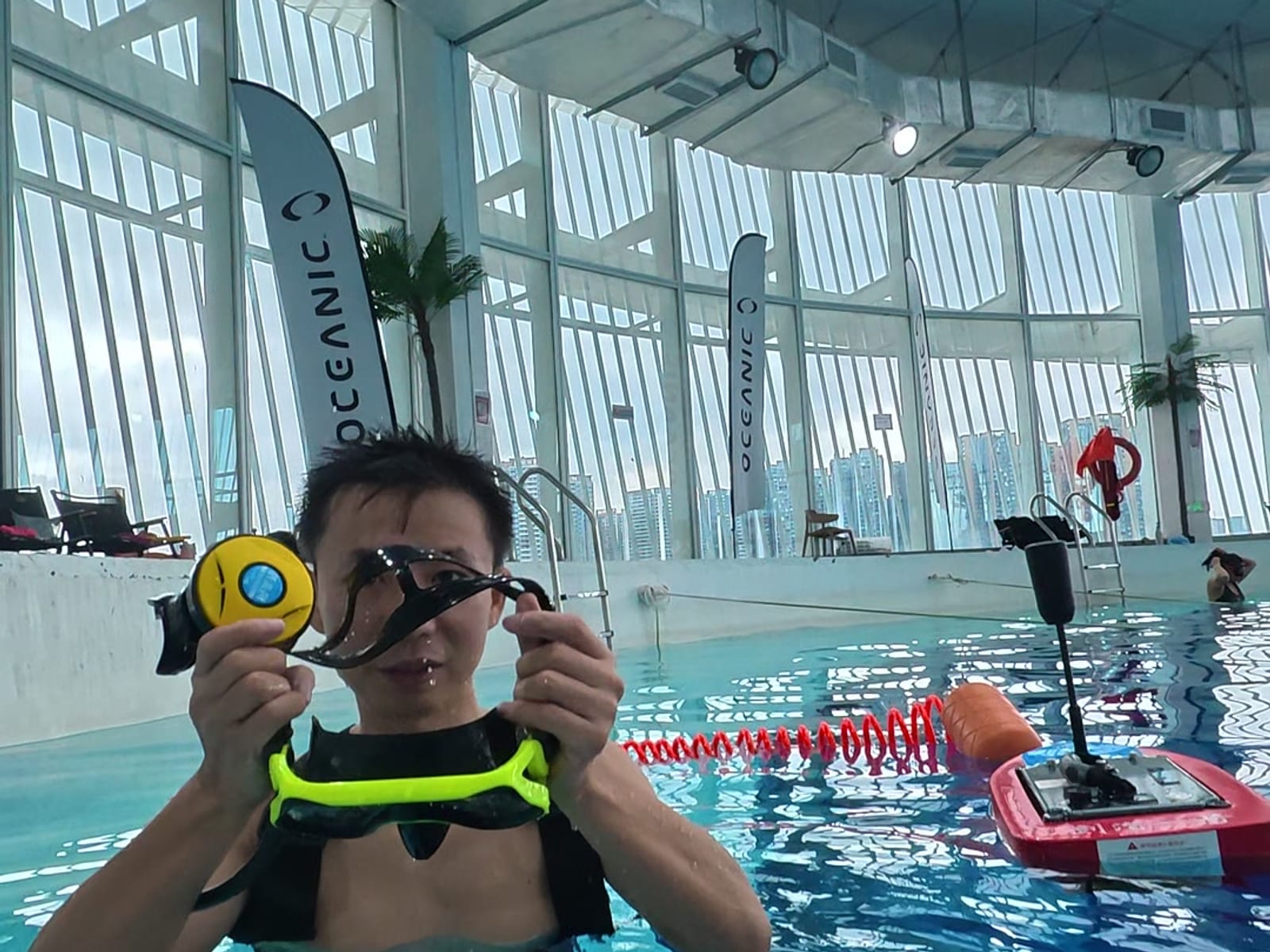
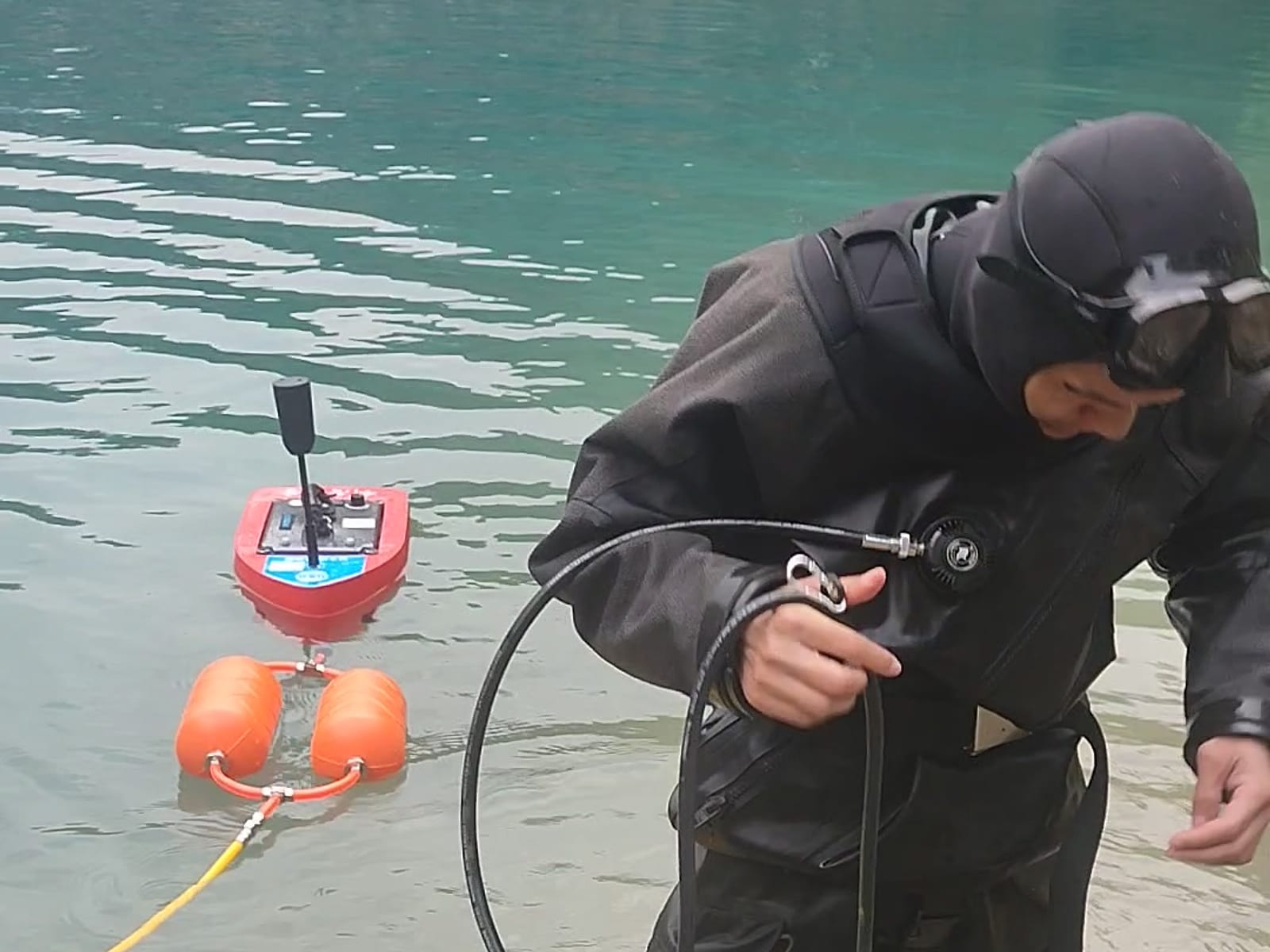
This is what almost all licensed work uses, and it is where a hose system is most clearly appropriate. Prawn traps, pots and set nets are deployed around how the animals move — mostly at night, mostly in moderate current, mostly along the band where sand and mud meet rock — and lifted at intervals to take the catch. The role of the breathing apparatus here is not catching, it is inspection and harvest: checking whether the gear has shifted, whether it has silted in, whether it has been fouled by other gear, releasing anything unwanted, and consolidating the catch. It turns lifting a line from a breath-hold errand into a controlled session, which is exactly why commercial crews and farms accept the equipment without argument.

The second route: by hand and with a scoop net
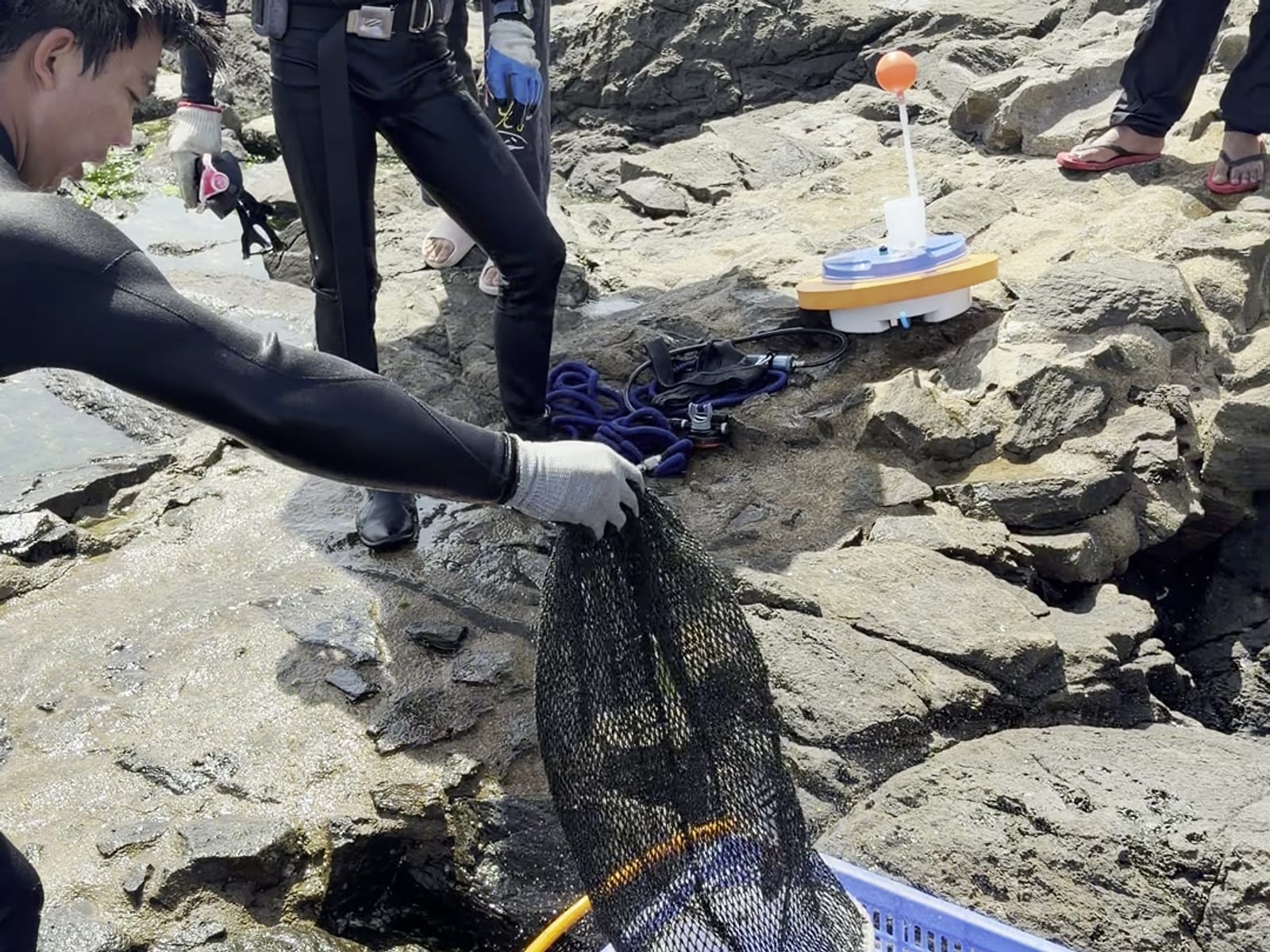
On sand and mud there are also hand methods — working a shoreline with a scoop net for shoaling species in shallow water, or using a hand-held light at night to bring them within reach. The technique is not complicated, but two lessons come up repeatedly. First, disturbing the bottom is what drives the target away, so you move along the surface slowly rather than working the sediment. Second, grading the catch belongs on shore: spending underwater time sorting sizes is simply burning the session. Minimum size and closed seasons are hard constraints here as everywhere — prawn spawning periods are usually absolute closures — and many areas also prescribe a minimum mesh size for any gear used.
The route that is not open, and why
This is worth spelling out so that the strictness of the first two routes makes sense. Pump dredging uses a powered pump to lift the sand and mud, and everything in it, for sorting. Electrofishing drives buried animals out of the sediment, or stuns them, so they can be collected. Both fail for the same reason: they are not catching prawns, they are processing the seabed. Sand and mud is the nursery ground for juvenile prawns, for shellfish spat, for polychaetes, and for the whole benthic food chain, and an area that has been suctioned or electrified degrades for a long time — recovery is measured in years, not months. This is why these methods are treated as serious offences in effectively every jurisdiction, and why they are handled criminally rather than administratively. They are also not a quiet option: enforcement effort against them is among the highest in fisheries policing.
Six things to establish before working prawns locally
- Whether that water permits a breathing apparatus in support of gear work — ask the authority, not other operators
- Gear specification: minimum mesh, maximum number of traps or pots per person or vessel
- Deployment windows and closed seasons, which for prawns are usually absolute
- The list of permitted methods, and whether the one you intend is on it
- Catch recording requirements: position, count, size, and whether reports are due
- Bycatch requirements: which non-target species must be released on the spot
What trap work actually demands
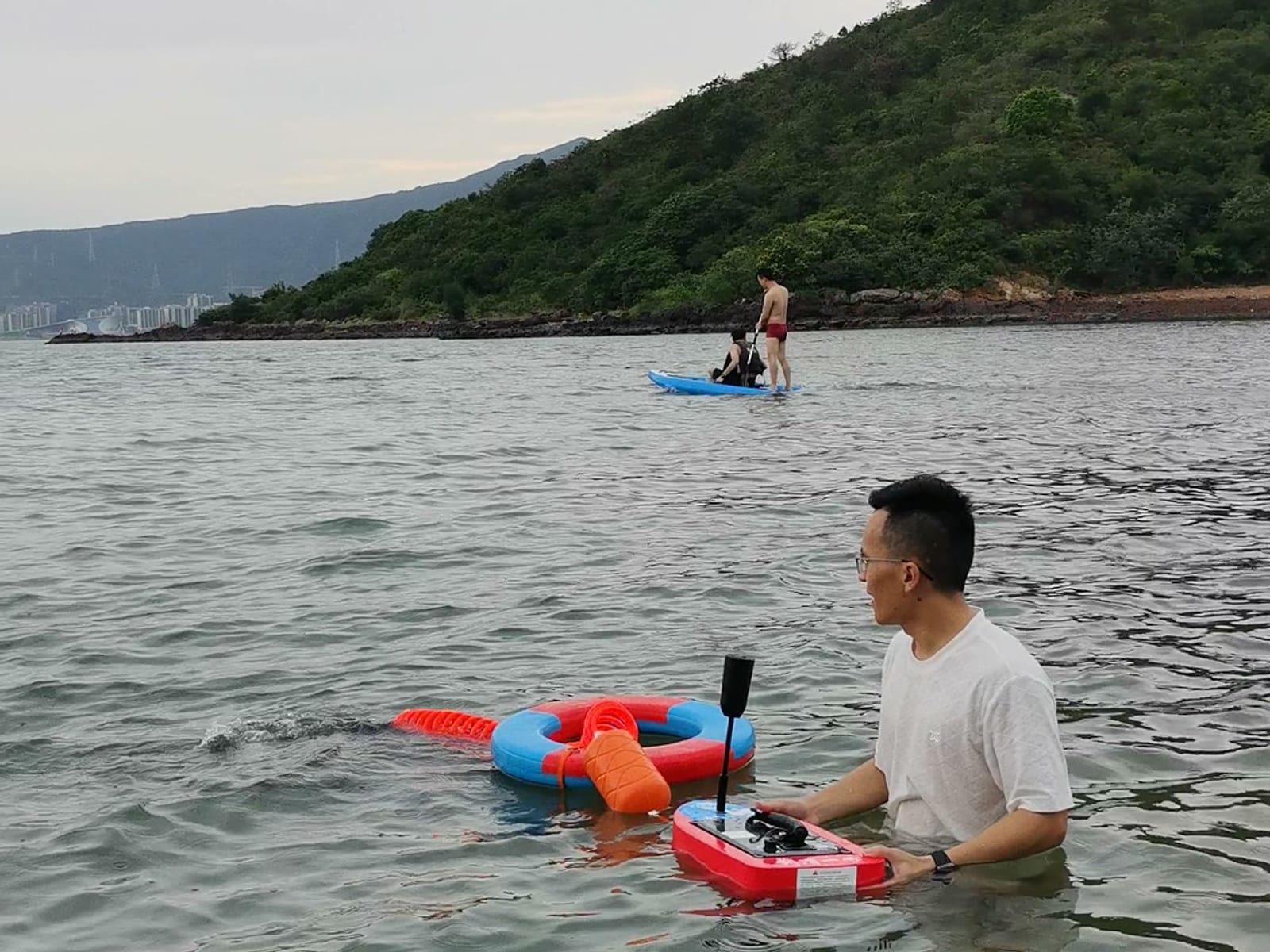
The skill in trap work is not catching, it is scheduling and siting. The same set of pots twenty metres apart can differ by a factor of two in yield, and it usually comes down to three things: current, the sediment transition band, and staying clear of dense jellyfish and crab. That is why experienced operators number every pot position and record the yield from each one — after a few rounds they can move the low performers into ground that deserves them. A hose system pays for itself here in a particular way: it lets you go down and look at the position itself, rather than inferring what it looks like from what came up.
The short version
- Prawns live in or on the sediment, so taking them means either a trap or turning the bottom over.
- Traps and set nets are ordinary licensed work, and the clearest case for a hose system in this whole category.
- Hand and scoop-net methods work, but move slowly along the surface and grade the catch on shore.
- Pump dredging and electrofishing process the seabed rather than catching prawns. They are serious offences with the highest enforcement priority.
- Spawning closures are usually absolute, and mesh and gear-count limits are hard constraints.
- Number your pot positions and record yield per position. It beats adding more pots.
FAQ
Do I need a diving certification?
How deep can I go?
What happens if the battery runs low?
Keep reading
Underwater Harvesting 101: What a Hose System Is Actually For
Collection, catching and trap-tending are three different activities with three different rulebooks. The one question that decides which you are doing, and where a hose is welcome rather than banned.
Tending Nets and Traps on Surface Supply
The one harvesting job where a hose is welcome almost everywhere. Setting a line, working around loaded ropes, releasing undersize catch alive, and the hose discipline that keeps it safe.
Collecting Shellfish and Snails by Hand
The oldest use of a hose there is, and the one with the fewest rules attached. Reading the bottom for size, working a tide window, and carrying catch without losing it.